When You Hope a Client Cancels: Recognizing the Signs of Counselor Burnout
Hoping a client won't show up isn't a moral failing—it's a warning sign. A clinical look at counselor burnout and three concrete strategies to recover.
Key takeaway
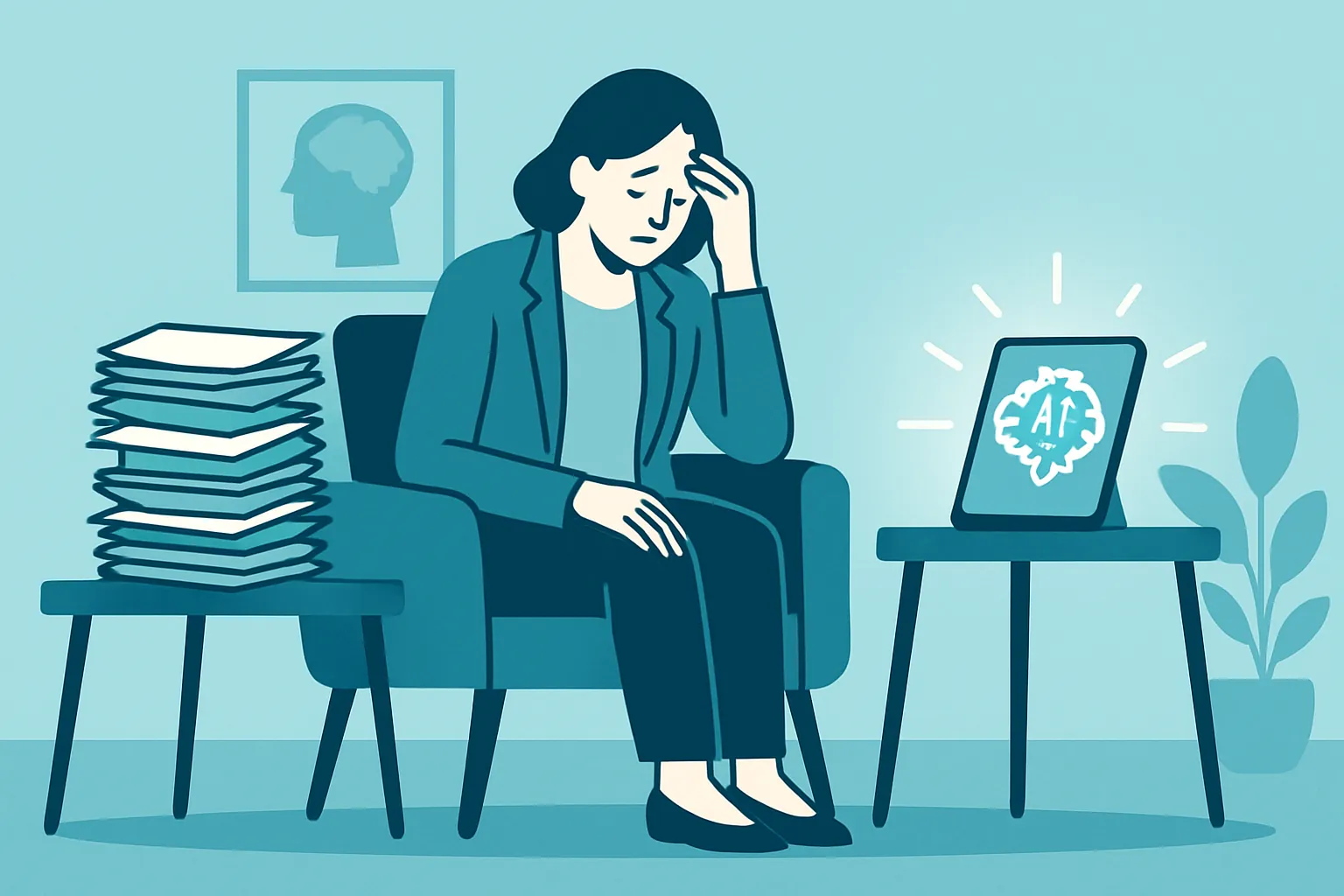
When a counselor catches themselves hoping a client won't show up, it is not an ethical failing—it is a recognized sign of compassion fatigue and burnout. According to the American Psychological Association, more than 40% of mental health professionals experience serious burnout at some point in their careers. The main drivers are vicarious trauma from repeated exposure to clients' pain, unresolved countertransference, and the cognitive overload of documentation. This article distinguishes ordinary job stress from clinical burnout and offers three concrete strategies—honest peer supervision, firmer therapeutic boundaries, and streamlining administrative work—for building a sustainable practice.
"I Hope My Client Doesn't Come Today"—Does That Make Me a Bad Counselor?
Just before opening the door to greet your next client, have you ever caught yourself thinking, "I hope they cancel today"? And then, almost immediately, felt a wave of guilt—wondering whether you're even cut out for this work?
If so, the first thing worth saying is this: you are not alone, and this is not a character flaw. In clinical work, we serve as a kind of vessel, holding and metabolizing other people's pain. But any vessel, no matter how large, eventually fills, overflows, or cracks. According to the American Psychological Association (APA), more than 40% of mental health professionals report experiencing significant compassion fatigue or burnout over the course of their careers.
This article goes beyond the familiar advice to "just take a break." It examines the clinical mechanisms of burnout and offers practical strategies for protecting yourself while still safeguarding the quality of your care—especially for clinicians caught between complex cases and a seemingly endless stream of paperwork.
Why Do We Start Wanting to Avoid Our Clients?
The urge to avoid a client is not laziness. It is a powerful defense mechanism and a warning signal from your nervous system. It helps to break it down clinically.
Compassion fatigue and vicarious trauma
Throughout a session, our mirror neurons fire as we feel the client's emotions as if they were our own. The deeper a client's trauma, the more we experience that trauma indirectly. When this accumulates over time, emotional numbing can set in—and an unconscious urge emerges to disconnect from the very person who is the source of that pain.
Unresolved countertransference
Wishing a particular client wouldn't come often signals that this client is touching something unresolved in us. When a client's resistance, hostility, or dependency activates our own sense of helplessness, the instinct is to avoid the situation altogether. This is both a sign of burnout and a piece of valuable clinical information.
Cognitive overload from administrative work
The reality of practice is not made up of sessions alone. Verbatim and session notes for supervision, psychological assessment reports, and progress notes demand enormous cognitive resources. The complaint that "documenting the session is harder than the session itself" is no exaggeration. This invisible labor is a primary drain on the energy that clinical work actually requires.
Ordinary Stress, or Genuine Burnout? A Self-Check
Not every kind of fatigue is burnout. Distinguishing temporary stress from clinical burnout is crucial for knowing when to intervene. Use the comparison below to take stock of where you are right now.
| Dimension | Ordinary Job Stress | Counselor Burnout |
|---|---|---|
| Core feature | Over-engagement | Emotional withdrawal and detachment |
| Attitude toward clients | "I want to help, but I'm short on time." (anxious, tense) | "I can't bear to listen anymore." (cynical, numb) |
| Physical response | Tired, but recovers after rest | Chronic fatigue, sleep disturbance, ongoing digestive issues |
| Resilience | Motivation returns after a weekend | Returning to the office feels frightening even after rest |
Table 1. Clinical features of ordinary job stress versus counselor burnout.
If the symptoms in the "burnout" column have persisted for two weeks or more, this is not a matter of willpower. Honoring your ethical responsibility as a professional may require systemic change and active intervention.
Practical Strategies for a Sustainable Practice
A healthy clinician is the foundation of a healthy client outcome. Here are three concrete steps you can begin practicing right away to prevent and recover from burnout.
1. Lean on peer support and honest supervision
Many counselors hide their countertransference and burnout in supervision, afraid that admitting "I dread this client" will mark them as deficient. Yet healing begins the moment you confess to a trusted supervisor or colleague: "This client feels like too much for me right now." Setting shame aside and sharing the "counselor's shadow" within a safe peer group is one of the fastest routes to recovery.
2. Revisit your structure and set boundaries
Are you responding to every client demand unconditionally? After-hours calls, extended sessions, and frequent crisis interventions deplete your reserves. Holding the therapeutic frame firmly offers clients a sense of safety—and acts as a shield that protects you. Be honest with yourself about a caseload you can realistically sustain.
3. Streamline documentation with technology
The smartest way to preserve energy without sacrificing quality is to reduce repetitive, draining tasks. Replaying a session recording and typing it out word for word is one of the biggest contributors to burnout. Let technology handle the mechanical capture so you can focus on the client's nonverbal cues and the relational dynamics in the room.
Counselors Are People, Too
Hoping a client won't come is not evidence that you're a bad counselor. It is an inner voice telling you: "The person who needs care right now is me." Ignoring that signal and pushing forward can create an ethical risk that ultimately serves no one—least of all your clients. What sustainable practice calls for is not boundless self-sacrifice, but intelligent self-care.
A practical place to start is removing the single largest physical barrier to your energy: documentation. AI session-notes tools have matured considerably—going beyond simple speech-to-text to separate speakers and surface key themes, freeing clinicians from mechanical typing so they can spend their energy structuring clinical insight instead.
This is exactly the role a security-first AI partner like Modalia AI is built for—supporting counselors with transcription, case conceptualization, and documentation so that more of your attention stays on the work only you can do.
Starting today, rather than striving to be the perfect counselor, choose to be a healthy one—well-rested and working efficiently. The best tool you can offer your clients is a mind that hasn't burned out.
Checklist: Action Items for Today
- ✅ Write down which case in this week's schedule drains you the most.
- ✅ Make time to share an honest feeling ("I want to run away") with a colleague or supervisor.
- ✅ Try an AI session-notes tool that can cut down your documentation time.
If you are in acute distress, reach out to your local or national crisis line or emergency services.
References
- 1.
Frequently asked questions
Is it normal to hope a client cancels their session?
Yes. This reaction is a recognized sign of compassion fatigue or burnout rather than a moral failing. The APA reports that more than 40% of mental health professionals experience significant burnout during their careers. The thought is a signal worth attending to, not evidence that you're a poor clinician.
How can I tell the difference between ordinary stress and burnout?
Ordinary job stress tends to involve over-engagement—anxiety and tension you recover from after rest. Burnout shows up as emotional withdrawal, cynicism, chronic fatigue, sleep problems, and dread about returning to work even after time off. If burnout-type symptoms persist for two weeks or more, it's time for active intervention.
What's the fastest way to start recovering from burnout?
Honesty in supervision is one of the quickest routes. Confessing to a trusted supervisor or peer group that a client "feels like too much" reduces shame and opens space for support. Pair this with firmer therapeutic boundaries and reducing draining administrative work like documentation.
Can technology realistically reduce counselor burnout?
Documentation is a major contributor to cognitive overload. AI session-notes tools can capture sessions, separate speakers, and surface key themes, letting clinicians redirect energy from mechanical typing toward clinical insight and the relational work in the room.
This article was written and reviewed using Modalia AI's clinical guidelines, with professional human review before publication.
Related articles
 Case Conceptualization
Breaking the "Yes, But" Game: A Transactional Analysis Guide for Therapists
Every suggestion you offer gets met with "Yes, but..." Here's the TA structure behind that stall—and four clinical moves to break it.
7 min read Case Conceptualization
Yalom's The Gift of Therapy: Passages Every New Counselor Should Copy by Hand
Irvin Yalom's prescription for therapists who fear silence: meet your client as a "fellow traveler" and let the here-and-now become the heart of the work.
6 min read Case Conceptualization
Working With Silence in Therapy: What Client Silence Means and How to Hold It
Silence in session isn't empty space. Learn to read its clinical meaning, tell productive from defensive silence, and use it as a therapeutic tool.
6 min read