The Doorknob Confession: How to Manage the Final 10 Minutes of a Therapy Session
When a client drops something huge with five minutes left, it isn't a scheduling slip — it's clinical data. Here's how to bridge, contain, and carry it forward.
Key takeaway
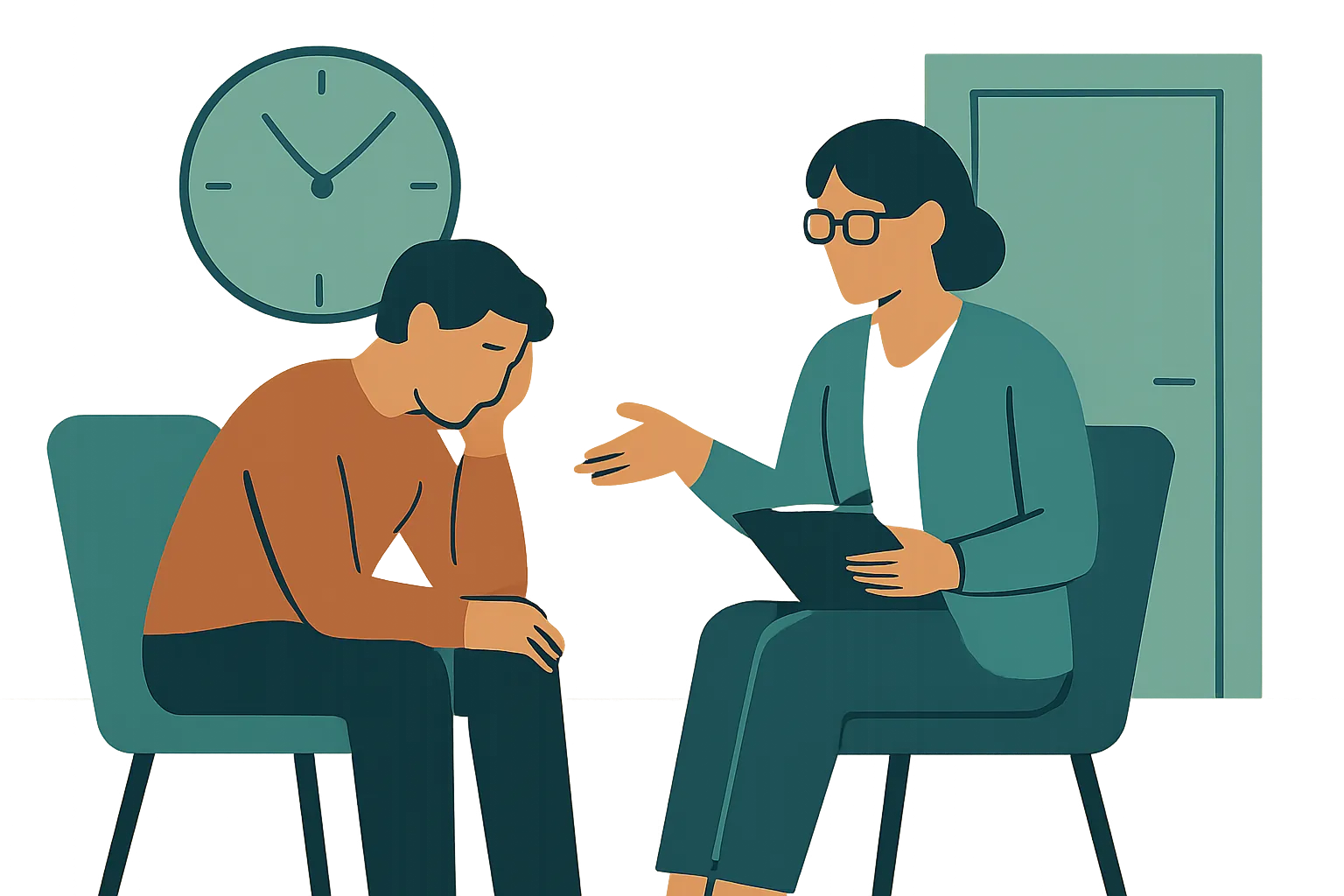
A doorknob confession—when a client raises pivotal material just as the session ends—is a clinical event to interpret, not simply a time-management failure. It usually reflects one of three dynamics: unconscious avoidance of core pain, a safety test of the therapist, or the slow warm-up common in trauma work, and each calls for a different countertransference awareness and clinical aim. The most therapeutic response is to structure the last ten minutes: name the material as too important to rush, hold it with containment, lower arousal before the client leaves, document the closing affect and nonverbal cues, and pre-write the next session's opening so continuity is protected.
The Real Golden Hour Ends at Minute 40, Not Minute 50
You know the moment. There are five minutes left on the clock, your hand is practically on the door, and the client says it: "Actually, my husband and I had a huge fight yesterday—I think I might leave him." Or, after a long silence, "Something from my childhood just came up that I've never told anyone."
Instantly your mind splits in three directions. There isn't time to do this justice. If I stop us now, will it feel like rejection? Can they hold this anxiety until next week?
This is the doorknob confession—the disclosure that arrives precisely when there's no room to work with it—and every practicing clinician meets it. It is rarely a simple failure of pacing. It can be unconscious resistance, a test of safety, or a nervous system that took 40 minutes to feel ready to speak. How you structure the wrap-up phase—the closing stretch of the hour—is both an ethical responsibility and one of the most powerful containment experiences you can offer. The skill is turning an awkward moment into a clinically meaningful one.
Why Clients Save the "Real" Material for the End
Time management in the back half of a session is not about watching the clock; it's about reading the dynamic underneath the timing. Looked at through both psychodynamic and cognitive-behavioral lenses, late disclosures tend to fall into three patterns.
- Unconscious avoidance. The client circles the periphery for the entire hour because approaching the core pain is frightening. By the time the clock runs out, there's a paradoxical relief—we can't really get into it now—that makes the disclosure feel safe. The lateness itself is the defense.
- Testing the waters. The disclosure is a probe: Will you flinch when you hear this? Will you give me more time, cross the boundary, prove you care? The client is checking the therapist's steadiness and commitment.
- Slow warm-up and dissociation. For trauma survivors, returning to the present from a dissociated state—or building enough trust to speak at all—can take most of the session. Forty minutes in may be the first moment they are psychologically ready to open the door.
Distinguishing these dynamics matters, because each pulls a different countertransference and points to a different clinical goal.
| Type | Hallmark | Therapist countertransference | Clinical aim |
|---|---|---|---|
| The Avoider | Light small talk all hour, then a bombshell at the buzzer | Frustration, feeling manipulated, resentment | Gently explore: why did this surface now? |
| The Clinger | Can't end the conversation; separation anxiety | Guilt, pressure to give more | Structure: name the time boundary, hold the next session |
| The Slow-Warmer | Slow to trust and to access affect | Tenderness, the urge to hurry them | Accept their pace, then use bridging |
Table 1. A typology of late disclosure in the closing phase.
The Closing 10 Minutes: Bridging and Structure
So what do you actually do at minute 40? Simply cutting it off with "We're out of time" can register as rejection. The core message you want to convey is the opposite: I'm not refusing this topic—I'm protecting it because it's too important to rush.
1) Shift from content to process
At the 40-minute mark, move from the content of what's being said to the process of where you both are in the hour. Pause the material and orient the client to the moment.
- 🚨 Less helpful: (glancing at the clock) "Oh, we're out of time. Let's pick this up next week."
- ✅ More helpful: "You've just brought something really important into the room. It feels too valuable and too central to squeeze into our last few minutes. So that you have the space to say it fully and feel respected doing it, what if we make this the very first thing we turn to next session?"
2) Build in a cool-down and a safety net
The final stretch should lower arousal so the client can step back into ordinary life, not raise it. Rather than chasing a fresh insight, help them leave with one small, portable piece of what you covered.
- Summarize and affirm: "Because you found the courage to name that today, I think we're closer to the heart of it."
- Safety planning: If what surfaced involves suicidal ideation or acute risk, extend the time and intervene—containment never overrides safety. If it doesn't, close with something steadying: "Before next week, could we pick one grounding exercise you can use when this feeling shows up?"
Documentation That Sets Up the Next Opening
Here's the practical trap: you promise "we'll start here next time," and by next week the precise nuance has evaporated. The client has spent seven days turning that final sentence over—so when you open with "Now, what was it you started to say last week?" the rupture is immediate. Continuity is a trust issue.
The antidote is accurate, transcript-level documentation, and the last 5–10 minutes of a session are an unusually rich clinical resource for the next one.
- Record the affect, not just the topic. "Mentioned her mother" is not enough. Capture the nonverbal and emotional texture: "In a trembling voice, avoiding eye contact, named anger toward her mother for the first time." That detail is what makes the reopening land.
- Use AI note tools to protect the detail. The ten minutes right after a session are chaos—you're already prepping for the next client, and charts written from fading memory lose exactly these closing cues. Many clinicians now lean on secure AI transcription and summarization tools (Upheal, Notta, and security-first options like Modalia AI) to auto-surface the key threads from the back half of a session. Used well, it reduces burnout while preserving clinical sharpness—provided the platform is built for the confidentiality this work demands.
- Pre-write the next opening line. Add a Next Session Plan field to your note and draft the first sentence now: "Right as you were leaving last time, you told me about what happened with your husband. How has that been sitting with you this week—shall we start there?"
Conclusion: Structure Is the Sturdiest Container You Offer
"Let's hold the new material for next time" is not a refusal made for the therapist's convenience. It's a therapeutic act that proves a sturdy container exists for everything the client is carrying. The firm-but-warm stance you take at that delicate 40-minute mark models something they may never have learned: my feelings are not overwhelming; they are manageable.
So the next time minute 40 arrives, instead of checking the clock and tightening up, try holding the client's gaze and saying: "This matters too much to rush. I want it to be the first thing we work on next time, when I can give it my full attention."
Then keep that promise perfectly by auditing how you document right after the session. Capturing each word the client risked at the very end—aided by secure AI voice tools where they help—is part of what continuity, and modern clinical practice, now ask of us. Accurate records are the surest way to honor the trust a client placed in you at the door.
References
- 1.
- 2.
Frequently asked questions
What is a doorknob confession in therapy?
A doorknob confession is a significant disclosure a client makes in the final minutes of a session—often as they're about to leave—when there's little time left to process it. It's best understood as meaningful clinical material rather than a simple timing problem, frequently reflecting avoidance, a safety test, or a slow trauma-related warm-up.
How should I respond when a client raises something major at the end of the session?
Acknowledge the importance of what they've shared, and frame holding it for next time as protection rather than rejection: it's too valuable to rush. Then lower emotional arousal with a brief summary, affirmation, and—if needed—a grounding or safety plan before they leave. If the disclosure involves acute risk, extend the time and intervene immediately.
How do I keep continuity so the client doesn't feel forgotten next week?
Document the closing moments in detail, including nonverbal cues and affect, not just the topic. Add a 'next session plan' note with a pre-written opening line that names the unfinished material, so you can reopen it precisely and the client feels remembered.
This article was written and reviewed using Modalia AI's clinical guidelines, with professional human review before publication.
Related articles
 Case Conceptualization
Breaking the "Yes, But" Game: A Transactional Analysis Guide for Therapists
Every suggestion you offer gets met with "Yes, but..." Here's the TA structure behind that stall—and four clinical moves to break it.
7 min read Case Conceptualization
Yalom's The Gift of Therapy: Passages Every New Counselor Should Copy by Hand
Irvin Yalom's prescription for therapists who fear silence: meet your client as a "fellow traveler" and let the here-and-now become the heart of the work.
6 min read Case Conceptualization
Working With Silence in Therapy: What Client Silence Means and How to Hold It
Silence in session isn't empty space. Learn to read its clinical meaning, tell productive from defensive silence, and use it as a therapeutic tool.
6 min read