The 18 Early Maladaptive Schemas: A Clinician's Guide to Schema Therapy
When clients say "I understand it intellectually, but my feelings haven't changed," Schema Therapy offers a deeper map. A clinical guide to all 18 schemas.
Key takeaway
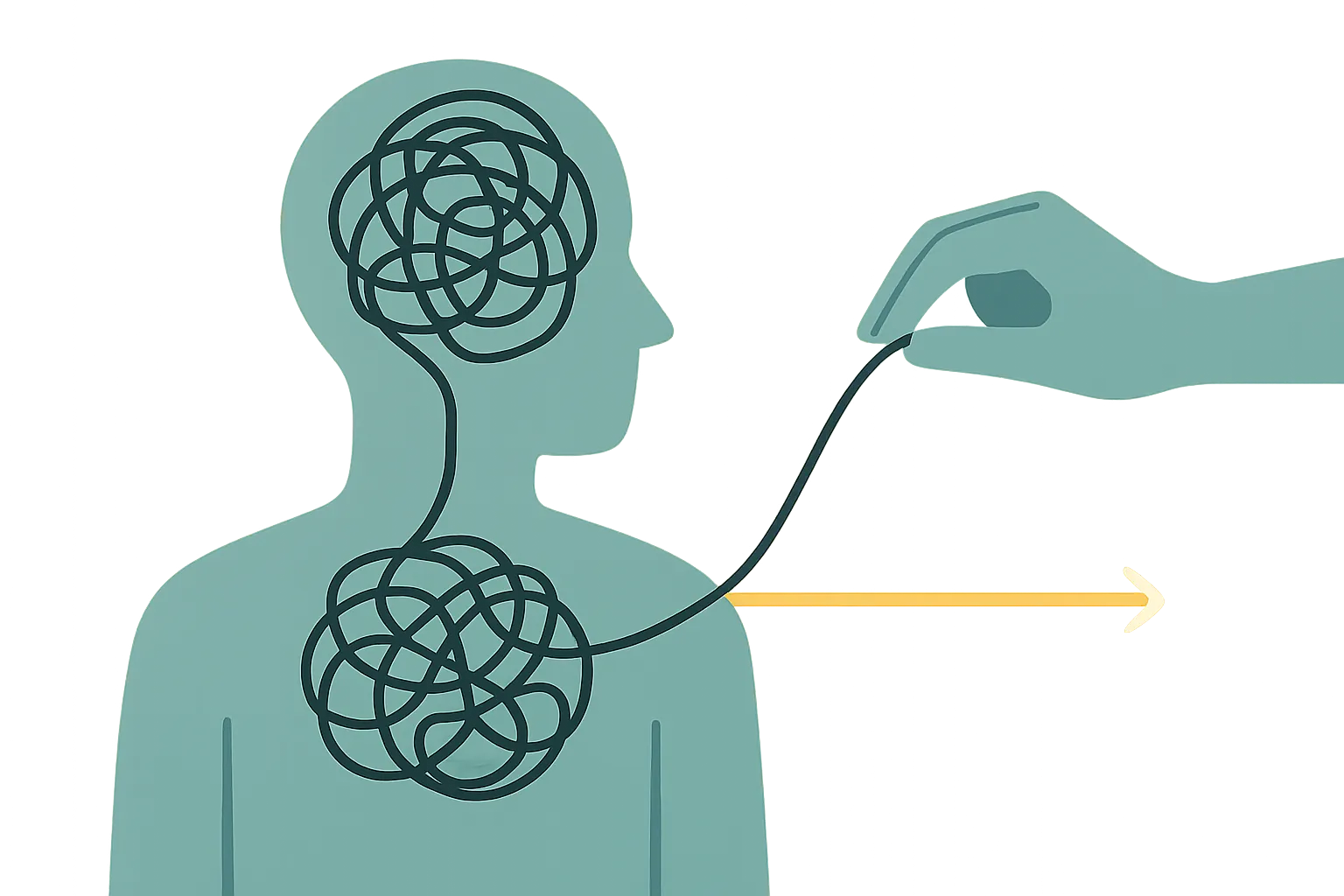
When cognitive restructuring corrects irrational beliefs but emotional change doesn't follow, Schema Therapy—developed by Jeffrey Young—offers a framework rooted in unmet childhood emotional needs. Early Maladaptive Schemas (EMS) are broad, self-defeating patterns of cognition, emotion, memory, and bodily sensation organized into five domains: Disconnection & Rejection, Impaired Autonomy & Performance, Impaired Limits, Other-Directedness, and Overvigilance & Inhibition. This article catalogs all 18 schemas with their clinical signatures and the client's internal language, then details three practical strategies: schema naming, limited reparenting, and empathic confrontation.
"I Understand It in My Head, but My Heart Won't Change"
There's a particular moment in clinical work that can leave even seasoned therapists feeling powerless. You've used cognitive behavioral therapy (CBT) to surface and restructure a client's irrational beliefs. The client genuinely understands the cognitive roots of their distress. And yet they tell you: "I get it intellectually, but my chest is still tight with anxiety." They keep re-entering the same self-defeating relationships, or remain trapped in a chronic emptiness that insight alone won't lift.
For these chronic, character-level presentations, Schema Therapy—developed by Jeffrey Young—gives clinicians a powerful framework. Its central construct, the Early Maladaptive Schema (EMS), traces these patterns back to core emotional needs that went unmet in childhood. Reading a client's schemas is like reading the invisible script that has been quietly directing their life. This guide lays out all 18 Early Maladaptive Schemas clinicians should know, organized for fast clinical reference, and then turns to how you can actually work with them in session.
The Five Schema Domains and the 18 Early Maladaptive Schemas
An Early Maladaptive Schema is not simply a "bad thought." It is a broad, pervasive pattern—encompassing cognition, emotion, memory, and bodily sensation—that forms when a child's core needs (safety, autonomy, realistic limits, validity, spontaneity) are frustrated. To locate the schema underneath a client's presenting problem, it helps to group the 18 schemas into Young's five higher-order domains. The table below organizes each schema with its clinical signature and the kind of internal language clients tend to use, so you can map it against what you hear in the room.
| Domain | Schema | Clinical signature & the client's internal voice |
|---|---|---|
| 1. Disconnection & Rejection (needs for secure attachment frustrated) | Abandonment / Instability | The belief that significant others will leave or that relationships can't last. "In the end, everyone leaves me." |
| Mistrust / Abuse | The expectation that others will hurt, exploit, or deceive you. "You can't trust anyone—drop your guard and you'll get burned." | |
| Emotional Deprivation | The conviction that your emotional needs—for love, protection, empathy—will never be met. "No one truly understands or loves me." | |
| Defectiveness / Shame | A sense of being worthless, inferior, or unlovable. "If people saw the real me, they'd be disappointed." | |
| Social Isolation / Alienation | Feeling fundamentally different and belonging nowhere. "I'm always the outsider. I never quite fit in." | |
| 2. Impaired Autonomy & Performance (needs for competence and identity frustrated) | Dependence / Incompetence | The belief that you can't handle everyday responsibilities without help. "I can't decide anything on my own." |
| Vulnerability to Harm or Illness | An exaggerated fear that catastrophe—illness, accident, financial ruin—could strike at any moment. "Something terrible could happen at any time." | |
| Enmeshment / Undeveloped Self | Over-involvement with a parent or others at the cost of individuality. "Without my parents, I'm nothing." | |
| Failure | The belief that you have failed relative to peers and inevitably will again. "I'm a loser. There's no way I'll succeed." | |
| 3. Impaired Limits (needs for realistic limits and self-control frustrated) | Entitlement / Grandiosity | The belief that you're special, exempt from rules, and can have whatever you want. "What I want, I should have—right now." |
| Insufficient Self-Control / Self-Discipline | A marked inability to tolerate frustration or restrain impulses. "If I don't want to do it, I just won't." | |
| 4. Other-Directedness (needs for free self-expression frustrated) | Subjugation | Suppressing your own needs and deferring to others to avoid rejection or anger. "It's easier if I just go along with what they want." |
| Self-Sacrifice | Voluntarily giving up your own needs to relieve others' suffering. "Helping others is my duty. I don't matter." | |
| Approval-Seeking / Recognition-Seeking | Prioritizing others' approval and attention over authentic self-expression. "What will people think of me? I have to be praised." | |
| 5. Overvigilance & Inhibition (needs for spontaneity and play frustrated) | Negativity / Pessimism | Minimizing the positive and fixating on the negative—pain, loss, betrayal. "It'll all go wrong anyway. No point getting my hopes up." |
| Emotional Inhibition | Severely constraining emotional expression to avoid criticism or stay in control. "Showing feelings is shameful. I have to stay composed." | |
| Unrelenting Standards / Hypercriticalness | Demanding perfection of self and others, with harsh criticism when standards aren't met. "This isn't good enough. I have to be more perfect." | |
| Punitiveness | The belief that those who make mistakes—including oneself—deserve harsh punishment. "Mistakes are unforgivable. There has to be a price." |
Table 1. Jeffrey Young's 18 Early Maladaptive Schemas, organized by domain.
Working With Schemas: Practical Strategies for Clinicians
Once you can recognize the schemas, the real question is how to work with them in the room. Schema Therapy is not about cognitively correcting a schema; it's about providing a corrective emotional experience through the therapeutic relationship. Three strategies are especially useful in practice.
1. Naming and Psychoeducation
Clients are most anxious when they don't know where their pain is coming from. Simply identifying the schema tied to a recurring complaint—and giving it a name—can restore a sense of control. Early in treatment, link the client's present-moment experience to its historical schema. For example: "The intense anxiety you just felt may be less about the current situation and more a sign that an old Abandonment schema—formed in childhood—has been activated." Connecting the here-and-now to the schema's origins helps the client step back and observe the pattern rather than be swept up in it.
2. Limited Reparenting
This is the signature technique of Schema Therapy: within appropriate professional boundaries, the therapist partially meets the core childhood needs the client's parents didn't. A client with a Defectiveness schema may need unconditional acceptance and warmth; a client with an Impaired Limits schema needs firm-but-warm limit-setting. This goes beyond ordinary empathy—it is a therapeutic corrective experience that lets the client encounter, in real time, the responsiveness they once lacked.
3. Empathic Confrontation
This becomes essential when you're working with schema-driven behavior in the relationship itself—a client who repeatedly tests you, or withdraws and avoids. The move is to empathize with the pain (the schema) behind the behavior while clearly confronting its impact on the client's life and on the therapeutic relationship. A model phrasing: "I understand that when you speak to me with that edge, it's because old wounds make you want to protect yourself—you've learned not to trust easily. At the same time, I want to name that this is actually keeping us from getting closer." Practicing this balance—validation and honesty held together—is what makes the confrontation safe and useful.
Conclusion: Reading the Invisible Pattern
Schema Therapy is the work of addressing the large-scale patterns that run through a client's entire life. Knowing the 18 schemas is like carrying a clinical compass into the confusion of a client's presenting problems. When you can quickly identify the core schemas at play and do the corresponding mode work, the client finally begins to experience change "with the heart, not just the head."
Work this deep demands a great deal of a clinician's attention and energy. Tracking the shifting expression of multiple schemas, and documenting the patterns that recur session after session, takes real time. To stay fully present to a client's subtle shifts in affect and the live currents of transference, it helps to lighten the documentation load wherever you can.
This is where a security-first AI partner like Modalia AI can support your practice—accurately transcribing sessions and surfacing the words and emotional keywords a client returns to again and again. With that scaffolding, you're better positioned to catch the schema triggers—the decisive moments when a core schema fires—without breaking your attention. The capacity you reclaim can go entirely toward the limited reparenting and empathic attunement where healing actually happens.
References
- 1.
Frequently asked questions
What are Early Maladaptive Schemas in Schema Therapy?
Early Maladaptive Schemas (EMS) are broad, pervasive, self-defeating patterns of cognition, emotion, memory, and bodily sensation that develop when a child's core emotional needs go unmet. Jeffrey Young identified 18 such schemas, organized into five domains. They are more than 'irrational beliefs'—they shape how clients experience relationships and themselves throughout life.
What are the five schema domains?
The five domains are: Disconnection & Rejection, Impaired Autonomy & Performance, Impaired Limits, Other-Directedness, and Overvigilance & Inhibition. Each corresponds to a category of core childhood need—secure attachment, competence and identity, realistic limits, free self-expression, and spontaneity—that was frustrated.
How is Schema Therapy different from CBT?
Standard CBT focuses on identifying and restructuring irrational beliefs at a cognitive level. Schema Therapy adds an experiential, relational layer—it targets chronic, character-level patterns rooted in unmet childhood needs and uses the therapeutic relationship to provide a corrective emotional experience, which is why it often helps when insight alone hasn't produced emotional change.
What is limited reparenting?
Limited reparenting is Schema Therapy's signature technique: within appropriate professional boundaries, the therapist partially meets the core childhood needs the client's parents did not. It is tailored to the schema—unconditional warmth for a Defectiveness schema, firm-but-warm limits for an Impaired Limits schema—and functions as a therapeutic corrective experience rather than simple empathy.
This article was written and reviewed using Modalia AI's clinical guidelines, with professional human review before publication.
Related articles
 Case Conceptualization
Breaking the "Yes, But" Game: A Transactional Analysis Guide for Therapists
Every suggestion you offer gets met with "Yes, but..." Here's the TA structure behind that stall—and four clinical moves to break it.
7 min read Case Conceptualization
Yalom's The Gift of Therapy: Passages Every New Counselor Should Copy by Hand
Irvin Yalom's prescription for therapists who fear silence: meet your client as a "fellow traveler" and let the here-and-now become the heart of the work.
6 min read Case Conceptualization
Working With Silence in Therapy: What Client Silence Means and How to Hold It
Silence in session isn't empty space. Learn to read its clinical meaning, tell productive from defensive silence, and use it as a therapeutic tool.
6 min read