The Empty Chair Technique: When to Use It — and When Not To
The empty chair technique is a double-edged sword. A clinician's guide to assessing ego strength, timing the intervention, and preventing re-traumatization.
Key takeaway
Gestalt therapy's empty chair technique pulls a client's unfinished business into the here-and-now, producing powerful emotional insight and catharsis. But for clients with fragile ego strength, borderline personality organization, or acute trauma, it can trigger re-traumatization and dissociation, so careful clinical judgment is essential before using it. Safe, effective use depends on a solid therapeutic alliance, graded exposure, grounding skills, and a deliberate de-roling and cognitive integration process after the experiment.
Don't Reach for the Empty Chair Too Quickly
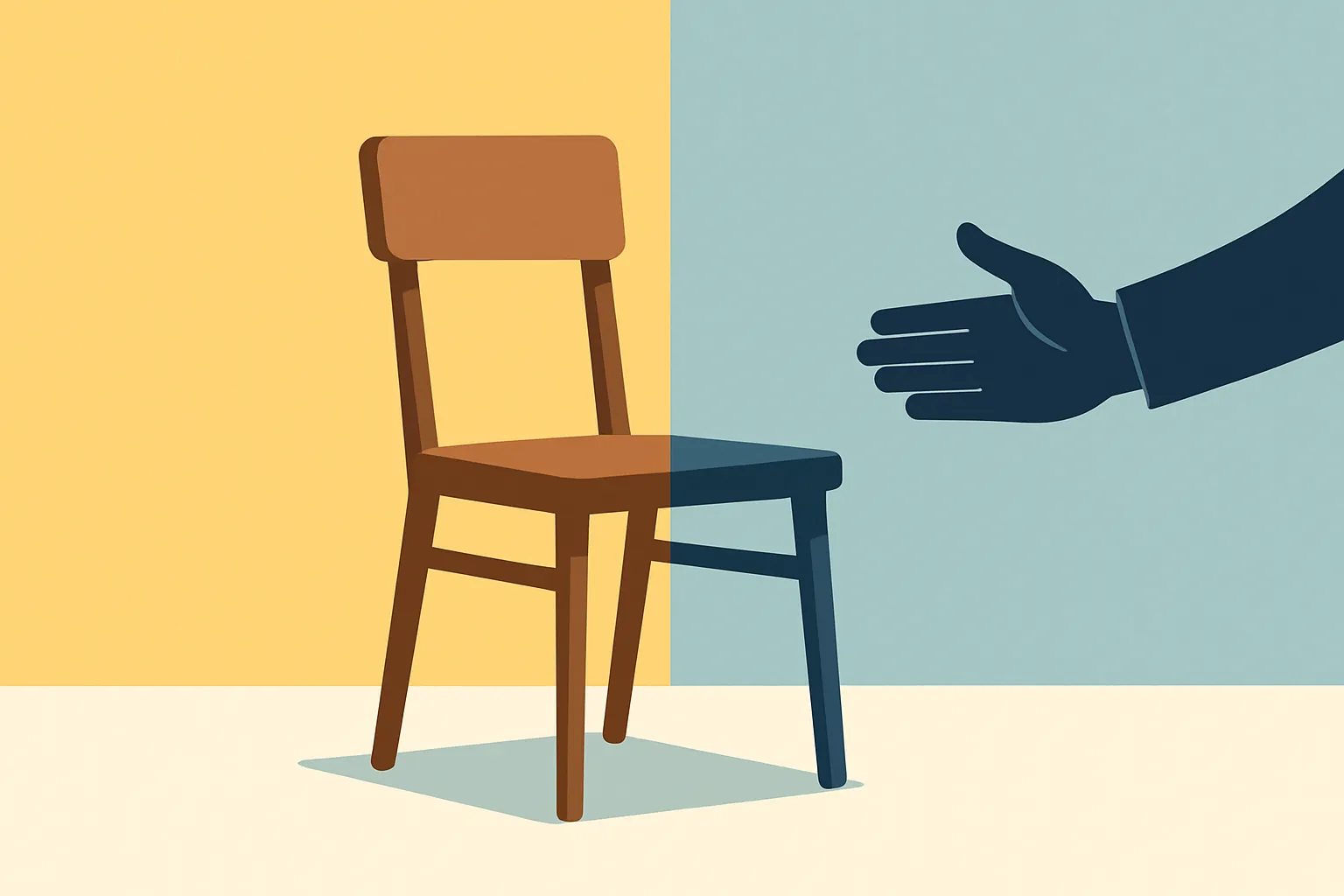
"Imagine the person who hurt you is sitting in that empty chair. Could you say to them, directly, what you've never been able to say?"
Most clinicians have either tried this or worked through it in depth during training. It's the signature experiment of Gestalt therapy: the empty chair technique. By moving a client's conflict out of intellectual understanding and into a vivid, present-moment experience, it can unlock striking emotional insight and catharsis. On a good day, it's one of the most compelling tools in the room.
But a powerful tool is not a universal one. With an unprepared client, the same experiment can drive serious re-traumatization, dismantle defenses that were holding something together, and leave the self feeling fragmented rather than integrated. So we ask the questions every careful clinician asks: Is this client ready for the empty chair right now? What happens if the affect escalates past what either of us can hold?
This article looks closely at when the empty chair technique is clinically appropriate and effective — and when it should be firmly set aside.
From Telling to Showing: Why the Technique Works
The empty chair is potent because it relocates inner experience from the abstract realm of language into the concrete realm of lived experience. As Fritz Perls observed, clients often hide behind intellectualization to avoid contact with feeling. The empty chair summons their unfinished business onto the stage of the present, where it can actually be worked through rather than merely described.
Three situations where it tends to earn its place:
Integrating ambivalence (top dog vs. under dog)
When a client is caught in a chronic internal standoff — a harsh, demanding "top dog" pitted against a helpless, excuse-making "under dog" — moving between the two chairs lets each side speak in its own voice. Voicing the split out loud is often what allows the client to begin integrating it and move toward genuine self-acceptance.
Unfinished business with a significant other
For grief after bereavement, a painful breakup, or unresolved conflict with a parent the client has never psychologically separated from, the technique offers a stage even when the other person is absent. Through the projected image, the client can express suppressed anger or sorrow and, where appropriate, say a goodbye that was never possible.
Re-owning a projection
When a client shows disproportionate contempt — or idealization — toward a particular person, the empty chair is well suited to helping them recognize that the quality they're reacting to is often their own disowned shadow.
Clinical Judgment: Indications vs. Contraindications
Think of the empty chair as a kind of emotional surgery. Just as you'd confirm a patient can tolerate the procedure before operating, you must assess the client's ego strength first. Used prematurely with someone whose ego functioning is fragile or whose reality testing is shaky, the technique can flood the client with overwhelming affect and tip them into dissociation or, in vulnerable individuals, a psychotic episode.
The table below maps where the technique fits and where caution — or outright avoidance — is warranted.
| Dimension | Indicated | Caution / Contraindicated |
|---|---|---|
| Client profile | Neurotic-level conflict; sufficient ego strength; able to verbalize and regulate affect | Severe personality disorder (e.g., borderline); history of psychosis; acute trauma state |
| Therapeutic relationship | Solid rapport; therapist experienced as a secure base | Early in treatment; mistrust or hostility toward the therapist |
| Clinical goal | Emotional awareness and insight; motivation for change; integrating polarities | Mere acting out; avoidance of reality; re-experiencing overwhelming terror |
Table 1. Clinical criteria for the empty chair technique.
The single most important variable is ego strength. A client who can stay connected to an observing self while feeling intensely is a candidate. A client who is likely to be swept away — losing the thread of "this is an experiment, and I am safe" — is not, however compelling the material may be.
A Practical Guide to Safe, Effective Use
So how do you keep the risk low while preserving the power? Handing someone an empty chair and saying "go ahead, talk to them" is not enough. The technique needs a careful process structure around it.
1. Grade the exposure
Don't seat an abusive parent in the chair on the first attempt. Start with a less threatening target — or with a part of the client's own personality ("the lazy part of me") — so they can get used to the form. If the client shows reluctance, stop and work with the resistance itself rather than pushing past it. The resistance is clinical material, not an obstacle.
2. Build in grounding and safety
Before you begin, teach a grounding skill the client can reach for if they hyperventilate or start to dissociate mid-experiment — for example, "Notice the feeling of your feet on the floor right now." Throughout, your job is to keep intervening so the client rides the wave of affect without being pulled under, staying anchored in the observing self.
3. De-role thoroughly, then integrate
What happens after the experiment matters even more. Have the client physically stand, shake out their body, or stretch to step out of the role (de-roling). Then make time for cognitive integration: "What does that experience mean to you now?" Translating raw, lived affect back into reflective understanding is what turns a cathartic moment into lasting change.
4. Capture the verbatim that pours out
During an empty chair experiment, the richest clinical data arrives in a rush — shifts in vocal tone, fleeting changes in facial expression, and the pivotal sentences the client throws toward the chair. A clinician absorbed in directing and observing can easily miss or misremember these details, even though they're exactly what you'll want for your case conceptualization and progress notes later.
The Tool Is Only as Good as the Hand That Holds It
The empty chair can be the key that opens a tightly shut inner door — or the hammer that breaks it off its hinges. What decides the difference is not the technique itself but the clinical discernment and ethical sensitivity of the clinician wielding it. If you're weighing the empty chair for your next session, ask yourself once more: Does this client have the ego strength to tolerate it, and am I prepared to stay with them through the storm?
In dynamic experiments like this, your full attention belongs on the client's eyes and body, not on your notepad — yet losing the decisive moments of what was said can fracture the continuity of care. This is one reason a growing number of clinicians lean on AI-assisted session-note tools to hold the verbatim record while they stay fully present in the contact. When the documentation takes care of itself, the spaciousness you gain tends to translate directly into deeper empathy and sharper insight for the person in front of you. Modalia AI is built for exactly this kind of security-first support — accurate transcription, case conceptualization, and documentation — so your attention can remain where it matters most.
FAQ
References
- 1.
Frequently asked questions
What is the empty chair technique in Gestalt therapy?
It's an experiential intervention in which the client speaks to an imagined person or a disowned part of themselves 'seated' in an empty chair, often moving between chairs to voice each side. It brings unfinished business into the present moment, producing emotional insight and catharsis that pure talking rarely reaches.
When should the empty chair technique be avoided?
Avoid or proceed with great caution when the client has fragile ego strength or impaired reality testing, a history of psychosis, borderline-level personality organization, or is in an acute trauma state. It's also premature early in treatment, before a solid therapeutic alliance exists, when the goal is mere catharsis or avoidance rather than insight.
How do you assess whether a client is ready for the empty chair?
Assess ego strength: can the client feel intense affect while staying connected to an observing self and to the safety of the room? A client who can verbalize and regulate emotion, trusts the therapist as a secure base, and works toward insight is a candidate. One likely to be flooded or to dissociate is not, no matter how rich the material.
How can clinicians use the technique safely?
Grade the exposure (start with less threatening targets), teach grounding skills in advance for hyperarousal or dissociation, intervene continuously to keep the client anchored, and after the experiment de-role the client physically before processing the meaning of the experience cognitively. Working with resistance rather than pushing through it is essential.
This article was written and reviewed using Modalia AI's clinical guidelines, with professional human review before publication.
Related articles
 Case Conceptualization
Breaking the "Yes, But" Game: A Transactional Analysis Guide for Therapists
Every suggestion you offer gets met with "Yes, but..." Here's the TA structure behind that stall—and four clinical moves to break it.
7 min read Case Conceptualization
Yalom's The Gift of Therapy: Passages Every New Counselor Should Copy by Hand
Irvin Yalom's prescription for therapists who fear silence: meet your client as a "fellow traveler" and let the here-and-now become the heart of the work.
6 min read Case Conceptualization
Working With Silence in Therapy: What Client Silence Means and How to Hold It
Silence in session isn't empty space. Learn to read its clinical meaning, tell productive from defensive silence, and use it as a therapeutic tool.
6 min read