Reading the 'Marriage History' in a Genogram: What It Predicts About Couples Therapy Outcomes
How Bowen's multigenerational lens turns a couple's marriage history into a prognostic map — plus practical strategies and AI tools to keep clinicians present.
Key takeaway
In couples therapy, the surface conflict often hides a gap that better communication alone won't close. Bowen's multigenerational family systems theory holds that intimate-relationship patterns transmit across generations — from grandparents to parents to the couple in your office. The way prior generations handled conflict, managed boundaries with the family of origin, formed triangles, and weathered (or repeated) divorce becomes a readable indicator of prognosis. Clinically, four moves raise the quality of care: externalizing through collaborative genogram work, tracking and detriangulating the system, using supervision to manage countertransference, and offloading documentation to AI so the clinician can stay fully present.
When a Couple's Conflict Won't Budge, Look at the Marriage History 💍
Most clinicians who do couples work eventually run into the same wall. Ask a couple what's wrong and you'll hear about communication styles, money, and clashing parenting philosophies. You intervene at that level — and yet a stubborn gap remains. Why do some couples regain their resilience after a single, modest intervention, while others, given the very same therapeutic input, keep accelerating toward rupture?
A useful answer lives in the genogram — specifically, in the marriage history it encodes. Murray Bowen's multigenerational family systems theory reminds us that no intimate relationship is born in a vacuum. The patterns a couple enacts have been carried down through a multigenerational transmission process — grandparent to parent to client — and every link in that chain is a marriage, with its own record of conflict, repair, rupture, or repetition.
There's a practical tension here, too. How do you gather a sprawling family history inside a 50-minute session? How do you translate a complex, multigenerational picture into workable treatment goals? Trying to capture every name, date, and emotional shift in your notes while staying attuned to the couple in front of you burns through cognitive bandwidth fast. And yet tracing how earlier generations married, divorced, fought, and reconciled is exactly what lets you forecast prognosis and choose where to intervene.
Patterns That Travel Across Generations 🧬
The marriage history written into a genogram is a mirror of a couple's unspoken expectations and anxieties. Whether the parental generation handled marital conflict through emotional cutoff or worked toward genuine differentiation tells you a great deal about how the couple in your office is likely to respond to treatment.
Marriage-History Indicators and Couples Therapy Prognosis
| Dimension | Positive prognostic signs | Negative prognostic signs | What it means clinically |
|---|---|---|---|
| Conflict style | Prior generations used compromise and humor | Chronic avoidance, violence, or emotional cutoff | Signals whether the couple has relational resources to draw on under stress. |
| Boundaries | Clear, flexible boundaries with the family of origin | Enmeshment with — or total cutoff from — the family of origin | A pull to prioritize the family of origin over the partner often surfaces as resistance in treatment. |
| Triangulation | The couple works problems out directly, between themselves | A child, extended family, or an affair partner is repeatedly pulled in | When present, the same pull can draw you, the therapist, into the triangle as its third point. |
| Marriage continuity | Healthy grieving and re-partnering after divorce or loss | Repeated divorce, abandonment, or unresolved loss across generations | Suggests an inherited core belief that marriage inevitably fails. |
A history loaded with negative indicators does not doom the work. It does tell you to set early goals with deeper empathy and a longer time horizon. Clients often vow, "I will never repeat what my parents did" — and then, under stress, reproduce the most familiar family-of-origin pattern anyway. When you can name that multigenerational context accurately, the client gains the capacity to see the partner not as an adversary but as a wounded child carrying an inherited script.
Four Ways to Put the Genogram to Work 💡
So how do you actually use this in the room — without exhausting yourself? Four strategies.
1. Externalize through collaborative genogram drawing
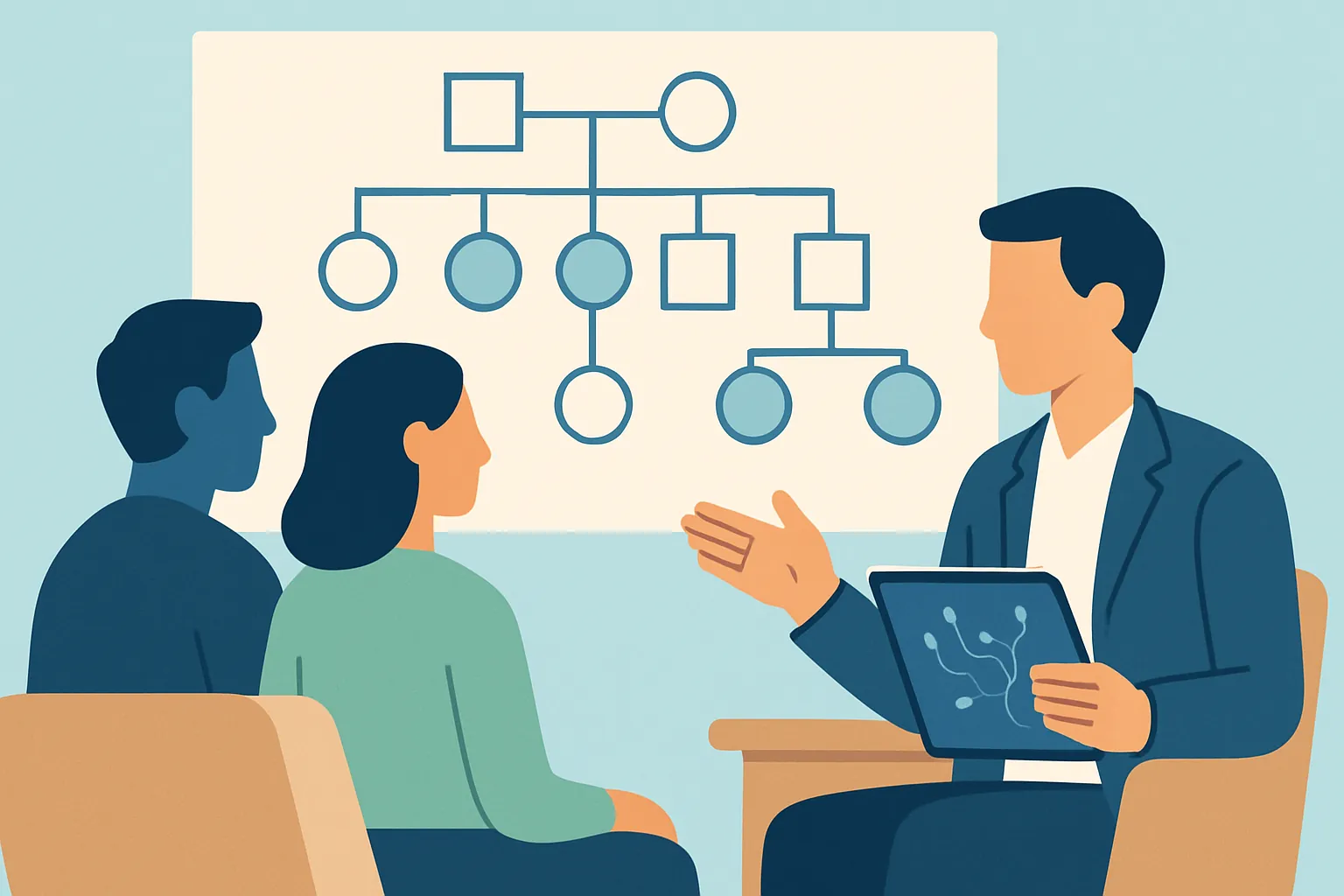
Drawing the genogram is itself a therapeutic intervention. When a couple maps three generations together on a whiteboard or a sheet of paper, they stop blaming each other and start looking at a shared, third object. The move from "You always act just like your mother!" to "Both of our families went silent during conflict — are we falling into that pattern right now?" is the heart of the technique.
2. Track and dismantle invisible triangles
Look at how, in earlier generations, a parent lowered marital tension by making a child the scapegoat. Then you can help the couple see whether they're forming the same triangle today — with their own child, or with you. Naming it lowers anxiety in the family system and frees the partners to invest their energy back into each other.
3. Use supervision to manage countertransference
Dig into a client's genogram and you will, inevitably, brush against your own family-of-origin material. If a couple's particular conflict pattern stirs you up or tilts you toward one partner, that's an ethical risk, not a footnote. Ongoing peer supervision — examining how your genogram and the client's interact — is how you protect clinical objectivity.
4. Use AI documentation to reclaim your attention
A genogram interview is dense with names, dates, occupations, illnesses, and divorce histories. Bury yourself in note-taking and you'll miss the subtle nonverbal cues and shifts in affect that matter most. A security-first AI partner built for clinicians — Modalia AI — can transcribe the session accurately and structure the emotional themes and family-history data for you, so the administrative weight of "getting it down" lifts and you can stay with the relationship and the repair. Used well, it returns your attention to where clinical value actually lives.
Staying Fully Present: The Real Work 🌿
Exploring a marriage history through a genogram isn't an interrogation of the past. It's the more ambitious project of interrupting an inherited cycle of pain in this generation, so a healthier relational legacy can pass to the next. And success hinges on the clinician not getting lost in the sheer volume of data — staying oriented enough to read the family system accurately.
What ultimately carries a couple forward is the therapist's presence: meeting their eyes, sitting with their pain. Bloated documentation and the feeling of always running behind drain exactly the energy that presence requires.
Three concrete next steps. First, retire the flat, schematic genogram template and adopt one that maps emotional-process lines, not just biological links. Second, bring in an AI transcription and documentation tool so you can set the notebook down and give the couple your full attention. Third, take the genogram data into regular peer supervision to deepen your formulation. The time and energy that technology gives back are what let you practice as a warmer — and sharper — clinician.
References
- 1.
- 2.
- 3.
Frequently asked questions
What does a couple's 'marriage history' reveal in a genogram?
It surfaces the multigenerational patterns a couple inherits — how earlier generations handled conflict, set boundaries with their family of origin, formed triangles, and weathered or repeated divorce. These patterns predict how the couple is likely to respond to treatment and where resistance may appear.
How does Bowen's multigenerational transmission process apply to couples work?
Bowen held that relationship patterns and levels of differentiation pass from grandparents to parents to the current couple. Mapping that chain helps a clinician understand why a couple repeats familiar dynamics under stress, even when they consciously intend to do the opposite.
Why is triangulation a negative prognostic sign?
When partners chronically pull in a child, extended family, or an affair partner to lower their own tension, the conflict never gets resolved between them. That same pull often draws the therapist into the triangle, which is why tracking and detriangulating the system is a core intervention.
How can AI documentation tools support genogram interviews?
Genogram interviews are dense with names, dates, and family-history detail. A security-first AI partner can transcribe the session and structure the emotional and family-history data, freeing the clinician from heavy note-taking so they can stay attuned to nonverbal cues and affect.
This article was written and reviewed using Modalia AI's clinical guidelines, with professional human review before publication.
Related articles
 Case Conceptualization
Breaking the "Yes, But" Game: A Transactional Analysis Guide for Therapists
Every suggestion you offer gets met with "Yes, but..." Here's the TA structure behind that stall—and four clinical moves to break it.
7 min read Case Conceptualization
Yalom's The Gift of Therapy: Passages Every New Counselor Should Copy by Hand
Irvin Yalom's prescription for therapists who fear silence: meet your client as a "fellow traveler" and let the here-and-now become the heart of the work.
6 min read Case Conceptualization
Working With Silence in Therapy: What Client Silence Means and How to Hold It
Silence in session isn't empty space. Learn to read its clinical meaning, tell productive from defensive silence, and use it as a therapeutic tool.
6 min read