Histrionic Personality Disorder: The Need for Care Behind the Performance
"See me." Behind the dramatic display of a client with histrionic personality disorder is a desperate hunger for care — and a clinical roadmap to meet it.
Key takeaway
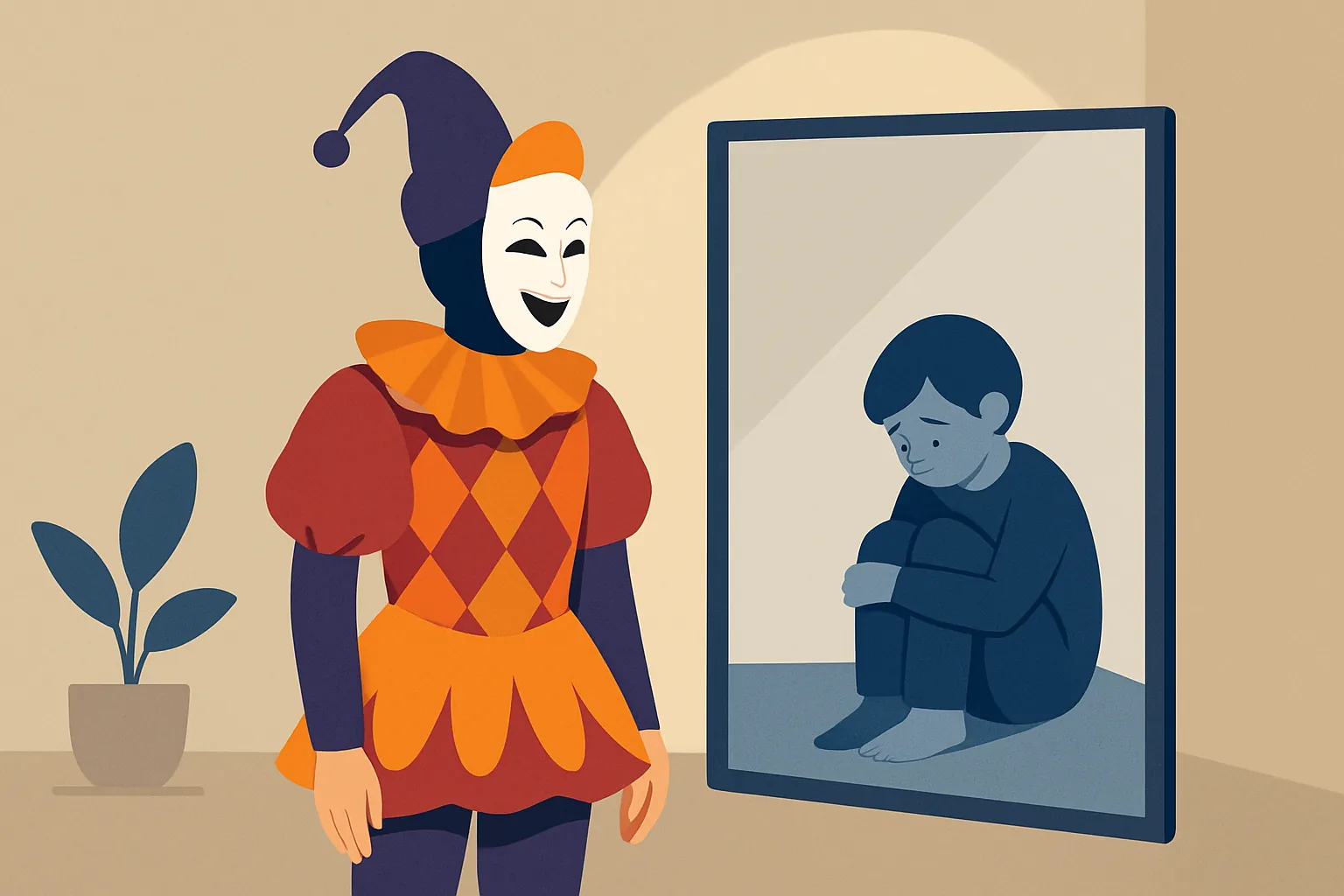
Clients with histrionic personality disorder (HPD) present with vivid, theatrical affect, but underneath sits a core belief that they will be abandoned unless they are captivating, alongside an intense longing for care. Their behavior is best understood not as manipulation or attention-seeking but as a survival strategy. Clinicians can help by using concretizing questions to anchor impressionistic thinking, acting as a witness to the feeling beneath the performance, and holding a firm therapeutic frame so the client can have their need for care met in a healthier way.
"Am I boring you, Doctor?" — Meeting the empty gaze behind the bright performance
One of the most depleting experiences in clinical practice is the session where a client pours out emotion continuously, yet you sense that no real encounter has taken place. From the moment they walk through the door, some clients move like the lead in a stage play — broad gestures, heightened affect, every sentence performed. Many of us recognize this pattern as histrionic personality disorder (HPD).
And it puts us in a bind. Their stories are dramatic and engaging, but what lingers after the session is a peculiar fatigue and emptiness. Is this client actually changing? Or am I just being consumed as the audience for their performance? That countertransference doubt can quietly erode a clinician's sense of competence. What follows is a closer look at what sits beneath the spectacle — an intense longing for care — and how to intervene effectively.
My aim here is to go beyond listing diagnostic criteria: to analyze the defenses clinically and offer strategies you can apply in the room. When we understand that the exaggerated gestures are in fact a distress signal — "see me, don't leave me alone" — a genuine therapeutic alliance can finally begin.
Why the performance can't stop
To understand the core dynamics of HPD, we have to resist reducing the behavior to "manipulation" or "attention-seeking." Viewed through a cognitive-behavioral and object-relations lens, these behaviors are a desperate strategy for survival.
Impressionistic cognitive style
Clients with HPD process the world in broad, vague impressions rather than fine-grained detail. They'll say, "He was just awful!" — but when you ask what specifically happened, the answer is "I don't know, it just felt that way." This cognitive style functions as avoidance: a way of not having to confront the pain that lives deeper down.
Emotional hunger and attachment anxiety
Under the heightened expression sits a core belief: "If I'm not attractive enough or noticed enough, I'll be abandoned." Often this traces back to inconsistent early caregiving — or to being positively reinforced only when charming, pretty, or performing. Over time, a "theatrical mode of survival" becomes entrenched.
Seductiveness as a defense
When a client behaves seductively toward a clinician or expresses intimacy that feels excessive, it is rarely sexual in intent. It is better read as a longing for closeness that can only be expressed in sexualized terms — an immaturity of repertoire. Paradoxically, it arises because genuine emotional intimacy is frightening. The seduction is the defense against it.
Differential diagnosis: navigating the Cluster B landscape
Clinically, it matters a great deal to distinguish HPD from other Cluster B presentations — particularly borderline personality disorder (BPD) and narcissistic personality disorder (NPD). The surface "attention-seeking" can look similar, but the underlying motivation, and the texture of the countertransference you feel, differ markedly.
The table below is a quick reference for identifying the client's core need and setting appropriate treatment goals.
| Dimension | Histrionic (HPD) | Borderline (BPD) | Narcissistic (NPD) |
|---|---|---|---|
| Core motivation | Attention and affection (to be loved) | Relief from abandonment anxiety (not to be left) | Admiration and entitlement (to confirm superiority) |
| Predominant affect | Shallow, rapidly shifting emotion | Intense anger, emptiness, anxiety | Arrogance, shame, envy |
| Interpersonal pattern | Seductive, dependent, highly suggestible | Extreme cycling between idealization and devaluation | Exploitative, lacking empathy |
| Clinician countertransference | Boredom, irritation, a sense of being "performed at" | Strong structural pressure; rescue fantasy or dread | Feeling dismissed; defensiveness |
Table 1. Clinical features of Cluster B presentations and the countertransference they tend to evoke.
Practical strategies for the room
Working with HPD can feel like building a house on sand. Amid the bright emotional bursts, the clinician's task is to set down solid pillars. Here are strategies you can apply directly.
1. Cognitive restructuring through concretizing questions
When a client floods the room with vague affect — "Everything's a disaster!" — respond with questions that recruit logical, sequential thinking: "In that situation, who specifically did what?" or "If you put the feeling on a 0-to-10 scale, where was it?" This helps the client step out of being overwhelmed and look at the situation more objectively.
2. Be a witness, not an audience
Rather than applauding the performance (over-praising) or criticizing it, name the feeling underneath. "You're describing this very brightly, but what reaches me is a deep loneliness." This balance of confrontation and empathy is the key that lets the client stop performing and meet you as their real self.
3. Hold the frame and set limits
Clients with HPD often test boundaries — running past the session time, reaching out between sessions. Here the clinician maintains the frame gently but firmly. Doing so offers a corrective emotional experience: "You don't have to seduce me or throw a fit — for this set time, I am fully on your side."
Conclusion: listening for the real voice beneath the noise
Walking alongside a client with HPD is like watching the dark night sky together after the fireworks have faded. The exaggerated gestures are, in truth, a longing to be found and to be loved. The clinician's role is not to be swept up in the noise but to act as a guide — locating the client's underlying need for care and helping them meet it in a healthier way.
One of the hardest parts of this work is staying present amid a torrent of speech and rapidly shifting affect. When clients talk without pause, a clinician buried in note-taking can miss the very nonverbal cues and transference moments that matter most. Anything that frees you to keep your eyes on the client's face — secure documentation support among them — serves the same goal: letting you set down the burden of recording so you can be fully present to the truth behind the performance.
Is the first act of your client's play winding down? It may be time to dim the stage lights, sit beside them, and listen to the real story.
Frequently asked questions
How is histrionic personality disorder different from borderline personality disorder?
Although both can appear attention-seeking, the core motivations differ. HPD is driven by a longing for attention and affection — to be loved — with shallow, rapidly shifting affect and high suggestibility. BPD is organized around abandonment anxiety, with intense anger, emptiness, and extreme cycling between idealization and devaluation. The countertransference also differs: HPD tends to evoke boredom or a sense of being 'performed at,' while BPD evokes strong structural pressure and rescue or dread.
Is the seductive behavior of clients with HPD sexual in intent?
Usually not. Seductive or overly intimate behavior in session is better understood as a longing for closeness that the client can only express in sexualized terms — an immaturity of repertoire rather than genuine sexual intent. Paradoxically, it often arises because real emotional intimacy is frightening, making the seductiveness a defense against it.
What is the most useful intervention for impressionistic, vague reporting?
Concretizing questions. When a client offers global statements like 'everything's a disaster,' ask who specifically did what, when, and where, or rate the feeling on a 0-to-10 scale. These questions recruit logical, sequential thinking, help the client step back from being overwhelmed, and convert vague complaints into specific, workable treatment targets.
Why does holding the therapeutic frame matter so much with HPD?
Clients with HPD frequently test boundaries — extending the session, reaching out between meetings. Maintaining the frame gently but firmly provides a corrective emotional experience: the client learns they do not have to seduce or escalate to be cared for. Within a reliable, time-limited structure, the clinician remains consistently present, which is precisely what supports change.
This article was written and reviewed using Modalia AI's clinical guidelines, with professional human review before publication.
Related articles
 Case Conceptualization
Breaking the "Yes, But" Game: A Transactional Analysis Guide for Therapists
Every suggestion you offer gets met with "Yes, but..." Here's the TA structure behind that stall—and four clinical moves to break it.
7 min read Case Conceptualization
Yalom's The Gift of Therapy: Passages Every New Counselor Should Copy by Hand
Irvin Yalom's prescription for therapists who fear silence: meet your client as a "fellow traveler" and let the here-and-now become the heart of the work.
6 min read Case Conceptualization
Working With Silence in Therapy: What Client Silence Means and How to Hold It
Silence in session isn't empty space. Learn to read its clinical meaning, tell productive from defensive silence, and use it as a therapeutic tool.
6 min read