Home Visits With Socially Isolated Clients: A Safety Protocol for Outreach Counselors
A field safety guide for clinicians doing home-based outreach with hikikomori and socially isolated youth—risk screening, exit strategy, and post-visit debriefing.
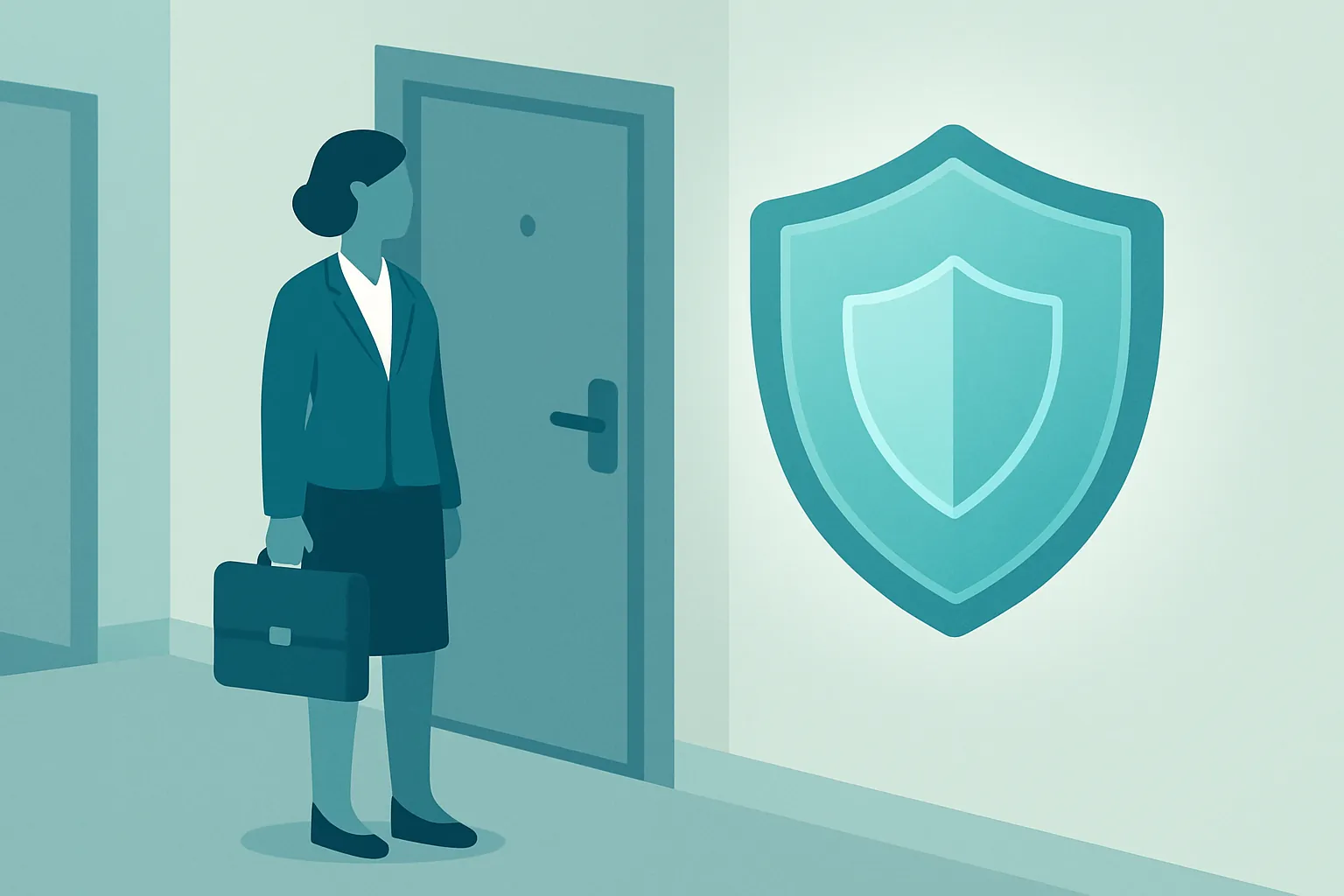
Key takeaway
Home-based outreach takes place on the client's territory, so safety begins long before you knock: complete a thorough risk assessment (violence history, acute psychosis, harm risk), work in pairs whenever possible, and share your itinerary and an emergency contact plan with your agency. In the home, always position yourself nearer the exit, trust your instincts, and withdraw immediately if you sense danger. Afterward, debrief with a colleague or supervisor to guard against vicarious trauma, keep objective observation-based records, and—with consent—use AI transcription to capture detail without breaking field presence.
When the Door Stays Shut: A Safety Guide for Home-Based Outreach
As demand grows for services that reach socially isolated young people—often described by the Japanese term hikikomori, or more broadly as socially withdrawn youth—the traditional model of waiting for clients to come to the clinic has reached its limits. Increasingly, the work means going to them: knocking on the door of a room someone may not have left in months.
Let's be honest about what that asks of us. Stepping out of a controlled clinical environment and into a client's home carries real psychological pressure and genuine safety risk. What if the situation turns violent? What if I get pulled into the family's dynamics? These aren't hypothetical anxieties—they're the practical dilemmas every outreach clinician eventually faces. The longer someone has been withdrawn, the more sensitized they often are to interpersonal contact, and the higher the possibility of an unpredictable reaction. That reality demands preparation, not bravado.
This article lays out the safety protocols and crisis-management practices clinicians should follow when conducting home visits with isolated clients. The premise is simple: your safety is the precondition for the client's healing. Only when you feel secure can you create the steadiness that lets a withdrawn person begin to open up.
1. Pre-Visit Assessment: Safety Starts Before You Knock
Roughly 80% of a home visit's safety is determined back at the office, not on the doorstep. This is not about looking up an address and showing up—it's about a structured risk assessment grounded in clinical data. Arriving unprepared can trigger a client's defenses and permanently foreclose any therapeutic alliance.
Screen for risk at intake
Through the family or the referring agency, confirm the client's history of violence, current risk of self-harm or harm to others, and any active psychotic symptoms (delusions, auditory hallucinations). If the client appears to be in an acute psychotic state or poses a high risk of harm to others, a solo visit is absolutely contraindicated. In those cases, coordinate with a community mental health team, crisis services, or—where warranted—medical and emergency responders, and do not go alone.
Work in pairs
Whenever possible, conduct home visits as a two-clinician team. While the lead clinician communicates with the client (or with the client through a closed door), the second can scan the environment, stay alert to sudden changes, and engage family members in parallel to read the family system's dynamics. Pairing is both the safest and, clinically, often the most effective configuration.
Share your itinerary and emergency plan
Before you leave, give a colleague or supervisor the exact address, your expected duration, and an emergency contact protocol. Never let yourself become the lone person at an unknown site with no one tracking you. This is not administrative box-checking—it's a survival protocol.
2. On-Site Safety: Structuring an Unstructured Space
A client's home is the most vulnerable setting a clinician can work in. The furniture isn't arranged with safety in mind, and a third party—a family member, a pet—can intervene at any moment. From the second you step inside, keep your clinical instincts switched on and quickly scan the physical environment. The table below contrasts the in-clinic and home-visit settings and the strategies each calls for.
| Dimension | In-Clinic | Home Visit |
|---|---|---|
| Power dynamic | Clinician controls the space (clinician advantage) | Client's territory (client holds psychological ground / defensiveness) |
| Physical environment | Standardized layout, panic button, safe distance | Unpredictable layout, cramped space, possible improvised weapons |
| Third-party intervention | Strictly excluded (confidentiality easy to maintain) | Sudden family entry, TV noise, pets—many variables |
| Safety strategy | Centered on therapeutic technique | Centered on securing an exit and situational management |
Table 1. Environmental and safety-strategy differences between in-clinic sessions and home visits.
Seating and your exit strategy
When you enter a room or sit in a living area, never let the client sit between you and the door. Position yourself closer to the exit, with a clear path out if the situation deteriorates. This isn't about being ready to flee—it's that a clinician who feels physically secure won't transmit anxiety to the client.
Manage your belongings and what you wear
Avoid flashy or provocative clothing, and wear shoes you can move in. Keep your bag and personal items out of the client's reach, and skip anything that can be grabbed around the neck—ties, scarves, lanyards. These are basic field-safety habits.
Trust your instincts and withdraw immediately
If the client's voice rises sharply, if they make a threatening gesture, or if your gut simply tells you something is wrong, stop the clinical work and leave. Set a clear limit—"You don't seem to be having a good day; let's pick this up another time"—and move to a safe location. Disengaging is always the first priority over pushing the session forward.
3. After the Visit: Records and Debriefing Complete the Safety Loop
Returning safely doesn't mean the work is done. Home visits can drive high levels of burnout and vicarious trauma in clinicians. And because events unfold in the uniquely uncontrolled environment of someone's home, they must be documented carefully for both legal and ethical protection.
Debrief with a colleague or supervisor
Immediately after a home visit, make time to debrief with a peer or supervisor. You need a space to discharge the fear, tension, and helplessness you felt in the field and to recover an objective clinical perspective. This is the single most important safeguard for a clinician's own mental health.
Solve the field-documentation dilemma
In a client's home—or in a hallway outside a closed door—opening a laptop to type or visibly scribbling notes can make the client feel surveilled, which is genuinely risky. Yet the subtle verbal nuances of a withdrawn client and the content of family exchanges are exactly the data you can't afford to lose for future intervention.
This is where an AI-based session transcription and analysis tool earns its place. In the field, keep your eyes on the client and stay focused on rapport, recording only (always with consent). Back at the office, review the AI-generated transcript at your desk. This approach not only lightens the documentation burden—it helps you catch the faint emotional cues or warning signs you may have missed in the moment. Modalia AI is built for exactly this: a security-first partner for counselors that handles transcription, case conceptualization support, and documentation so you can stay present in the room.
Write incident-focused, observable records
In your notes, favor observed facts over subjective impressions. For example: "The client seemed angry" (avoid) → "The client clenched their fists and struck the table three times, and their voice rose" (preferred). Objective records like these become powerful evidence that protects you in any future safety incident or legal dispute.
Conclusion: Your Safety Is the Client's Safety
Drawing socially isolated young people back out of their rooms is among the hardest—and most necessary—work in our field. The key that opens that closed door isn't, first, the clinician's technique; it's the clinician's safety and psychological steadiness. Only when you feel secure do you have the capacity to hold the client.
Put today's core practices into your workflow: work in pairs, secure your exit, and use technology to make documentation efficient. Disciplined protocol—not heroics—is what protects both you and the people you serve.
Your action item: This week, sit down with your colleagues and review your team's crisis-response manual for home visits. If documentation work is pulling your attention away from the field, raise the idea of adopting a modern AI transcription-and-analysis tool at the organizational level. Here's to safer, more sustainable outreach.
Frequently asked questions
Should home visits with isolated clients ever be done alone?
Whenever possible, conduct home visits as a two-clinician team. Solo visits are absolutely contraindicated when the client shows acute psychotic symptoms or a high risk of harm to others; in those situations, coordinate with a community mental health team, crisis services, or emergency responders rather than going alone.
How should I position myself inside a client's home for safety?
Always keep a clear path to the exit and never let the client sit between you and the door. Position yourself closer to the exit so you can leave quickly if needed. This isn't about being ready to flee—feeling physically secure keeps you from transmitting anxiety to the client.
How can I document a home visit without making the client feel surveilled?
Visibly typing or note-taking can make a withdrawn client feel watched. With the client's consent, record audio only and stay focused on rapport in the field, then review an AI-generated transcript afterward. This captures subtle verbal and emotional cues while keeping you present in the room.
What's the best way to protect my own mental health after a difficult visit?
Debrief with a peer or supervisor immediately after the visit to discharge fear, tension, and helplessness and to recover an objective clinical perspective. Regular debriefing is the most important safeguard against burnout and vicarious trauma in outreach work.
This article was written and reviewed using Modalia AI's clinical guidelines, with professional human review before publication.
Related articles
 Clinical Skills
How to Write Better Supervision Questions: Getting What You Actually Need from Your Supervisor
Stuck on what to ask in supervision? Use these structured question strategies to turn vague check-ins into focused clinical insight.
7 min read Clinical Skills
From "The Client Seems Depressed" to a Clinical Hypothesis: How Word Choice Elevates Your Case Reports
Turn vague observations into precise clinical hypotheses. A practical guide to terminology and sentence formulas that make your case reports read like expert work.
7 min read Clinical Skills
The Wounded Healer Trap: Why "I Want to Heal Myself" Sinks Your Counseling Grad School SOP
Why admissions faculty flinch at "I want to heal my own wounds"—and how to transform personal pain into a research-grade statement of purpose that gets you in.
6 min read