Why Trainee Therapists Need Their Own Personal Therapy (Beyond the Requirement)
Personal therapy isn't just a box to check for training requirements—it's the clinical foundation of becoming a skilled, self-aware therapist.
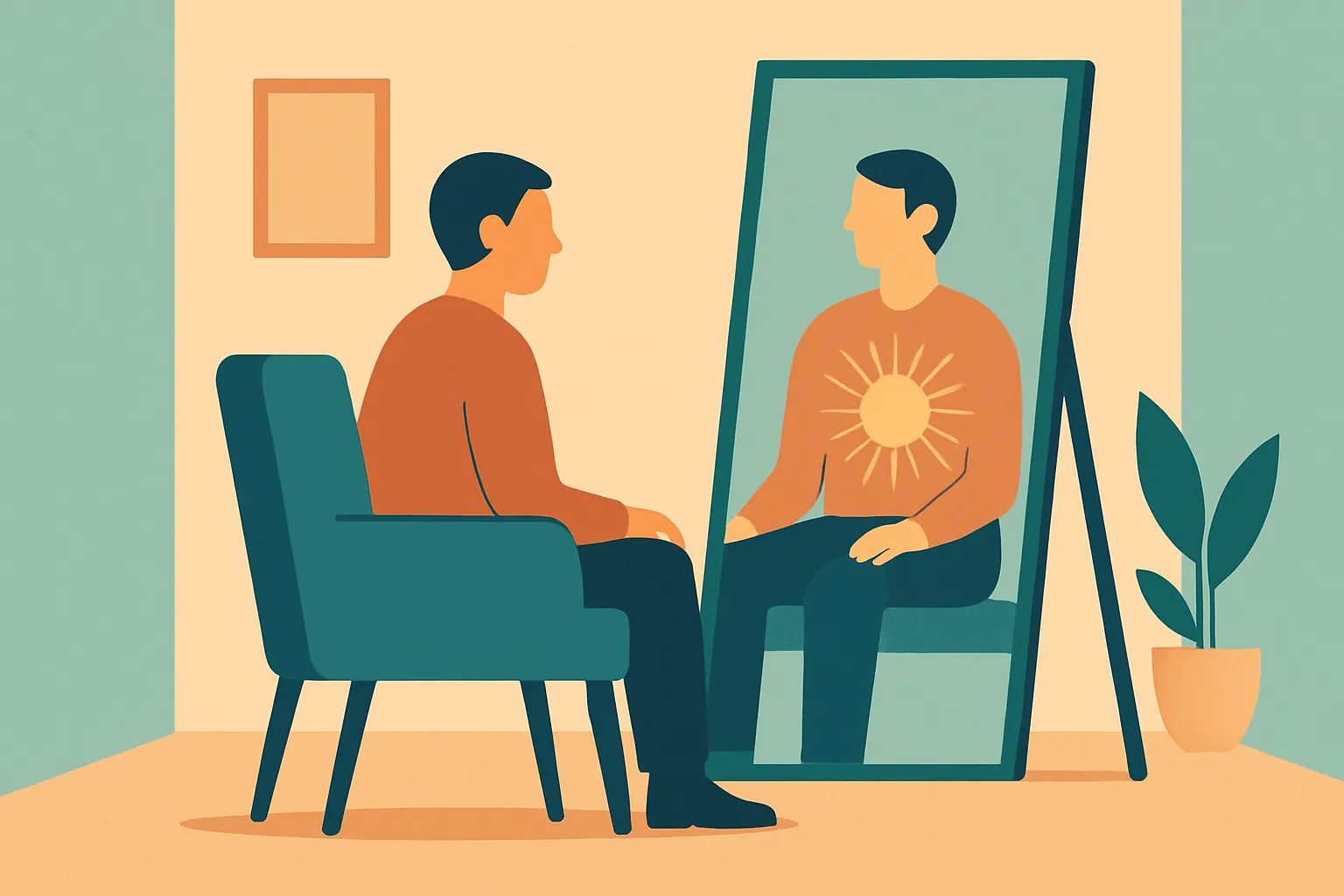
Key takeaway
For counselors in training, personal therapy is far more than a formality—it's a core process for building clinical competence. Research consistently links a therapist's level of self-awareness to better treatment outcomes, and clinicians who confront their own unfinished business can transform countertransference from an obstacle into a source of clinical insight. Trainees with substantial personal therapy experience also show greater resistance to burnout and a firmer professional identity. Sitting in the client's chair—feeling the fear of self-disclosure and the weight of silence firsthand—is what makes a genuine therapeutic alliance possible.
Why Trainee Therapists Need Their Own Personal Therapy—Beyond Checking a Box
If you're working through a clinical training program, you've almost certainly faced this rite of passage: personal therapy (sometimes called personal analysis or training analysis). Many programs list a minimum number of hours of personal therapy among their requirements, and it's easy to look at that line item—on top of supervision fees and tuition—and sigh at the cost in both money and time.
"Supervision is already expensive. Do I really need to become a client myself on top of everything else?" That's a fair, practical question. But you don't have to reach for Henri Nouwen's "Wounded Healer" to see the point: a therapist's own inner work is one of the most powerful instruments they bring into the room. Let's move past the framing of cost and requirements and look at personal therapy through three lenses that actually matter in practice—treatment effectiveness, ethical safeguards, and the formation of professional identity.
1. Tuning the Instrument: Putting Countertransference to Clinical Use
What's the most important tool in psychotherapy? Not a psychological test, not a polished technique—it's the self of the therapist. The capacity to resonate with a client's pain and pick up on subtle shifts in affect depends entirely on a therapist whose own emotional life is well-tuned.
A substantial body of research links a therapist's level of self-awareness to treatment outcomes. Personal therapy is where trainees come face to face with their own unfinished business—and that, in turn, builds the ability to treat countertransference not as interference but as a valuable source of information about the client.
Consider a concrete example. Suppose you notice yourself shrinking, for no obvious reason, in the presence of an authoritative client. A trainee with no personal therapy behind them might simply chalk it up to their own inadequacy—or quietly start avoiding the client. A therapist who has worked through the dynamics of their relationship with their own parents, by contrast, can read the same feeling clinically: "The power dynamic this client struggles with in their relationships is being re-enacted right here, with me." That reframe turns a private reaction into usable clinical data.
2. Cost vs. Investment: What Personal Therapy Actually Delivers
The fees can be a real burden for trainees. But it helps to see personal therapy not as an expense but as a necessary investment in a long, sustainable career. Research suggests that trainees who have undertaken personal therapy show greater resistance to burnout and a more secure professional identity than those who haven't.
The table below compares how the presence or absence of personal therapy tends to shape a clinician's development.
| Dimension | Limited personal therapy | Substantial personal therapy |
|---|---|---|
| Empathy for clients | Tends to stay at a cognitive level (theory-driven) | Deep emotional resonance becomes possible (the client's experience is felt, not just understood) |
| Handling countertransference | Either swept up in one's own feelings (acting out) or suppressing them, leaving sessions flat | Notices feelings as they arise and puts them to therapeutic use |
| Ethical sensitivity | Risk of meeting one's own needs (e.g., the need for approval) through the client | Clear separation between one's own needs and the client's needs (boundary-setting) |
| Sense of efficacy | Persistent vague anxiety; high dependence on the supervisor | Inner steadiness; stronger independent clinical judgment |
Table 1. Clinical competence by level of personal therapy experience.
3. Learning What It's Like to Be a Good Client
We're trained to sit in the therapist's chair—assessing, formulating, analyzing. But moving to the other chair and experiencing firsthand the fear of exposing your own vulnerabilities is an education nothing else can replace. Only when you've felt how much courage it takes to walk through that door, and how long a silence can stretch, can you build a truly authentic therapeutic alliance.
So how do you choose a therapist for your own personal work?
- Theoretical fit—matching or complementing your orientation. It's often valuable to work with an expert in the model you're training in most seriously (psychoanalytic, CBT, Gestalt, and so on). You get to experience the techniques from the client's side and model them firsthand.
- A safe separation. Ethically, steer clear of your current supervisor or faculty. When an evaluative (dual) relationship is in play, honest self-disclosure becomes very hard. Find a trusted clinician outside that structure.
- "Right" over "impressive." Credentials matter less than whether you feel emotionally safe in the first session. The relationship itself is a therapeutic factor.
4. Translating Personal Therapy Into Clinical Skill
If you're already in personal therapy, here are three action steps for converting that experience into stronger clinical competence.
- Track the parallel process. Notice how the resistance or insight you experience as a client mirrors what's unfolding in the cases you're treating—and write it down.
- Learn the "language of the client." Note the words that comforted you most when your therapist met you with empathy—and, conversely, the interventions that stung. This becomes a living clinical textbook.
- Work with anxiety. Early-career clinicians are often haunted by performance anxiety—the pressure to "get it right." Addressing the roots of that anxiety in your own therapy frees up the room you need to attend fully to what your client is actually saying.
Conclusion: The Surest Investment in Becoming a Better Therapist
For a trainee, personal therapy isn't a credential to acquire. It's the oxygen tank and safety gear a therapist needs to descend with a client into the depths. Having hurt, and having healed that hurt alongside a skilled professional, is what lets you offer a client genuine, credible hope: you can get better, too.
Once personal therapy has helped you settle some of your own anxiety and countertransference, you've built the inner steadiness to be fully present with your clients—which is exactly when the routine burden of documentation is worth offloading wherever you can. Modalia AI, a security-first AI partner built for counselors, can help here: it accurately transcribes sessions, surfaces key themes, and supports case conceptualization and progress notes—so the emotional insight you gain in your own therapy is matched by data-level precision in your records.
Action plan: This week, book that personal-therapy appointment you've been putting off—or, if you're already in therapy, start a reflective journal to consolidate what you're learning. And consider reinvesting the energy you used to spend transcribing sessions by hand into caring for your own mind instead. Healthy therapists make for healthy clients.
References
- 1.
Frequently asked questions
Is personal therapy actually required for counselors in training?
Many training programs include a minimum number of personal-therapy hours among their requirements. But beyond fulfilling a program's criteria, personal therapy builds the self-awareness, emotional regulation, and ethical sensitivity that research links to better client outcomes.
How do I choose a therapist for my own personal therapy?
Look for someone whose theoretical orientation matches or usefully complements your own, avoid any current supervisor or faculty member to prevent a dual relationship, and prioritize feeling emotionally safe in early sessions over an impressive résumé. The relationship itself is a therapeutic factor.
How does personal therapy help with countertransference?
By confronting your own unfinished business, you learn to recognize your reactions as they arise rather than acting them out or suppressing them. This lets you treat countertransference as clinical information about the client—often a re-enactment of the client's relational patterns—instead of as interference.
Can personal therapy really reduce burnout?
Research suggests trainees who undertake personal therapy show greater resistance to burnout and a more secure professional identity. Working through your own performance anxiety and emotional load frees up the capacity needed to stay present with clients over a long career.
This article was written and reviewed using Modalia AI's clinical guidelines, with professional human review before publication.
Related articles
 Case Conceptualization
Breaking the "Yes, But" Game: A Transactional Analysis Guide for Therapists
Every suggestion you offer gets met with "Yes, but..." Here's the TA structure behind that stall—and four clinical moves to break it.
7 min read Case Conceptualization
Yalom's The Gift of Therapy: Passages Every New Counselor Should Copy by Hand
Irvin Yalom's prescription for therapists who fear silence: meet your client as a "fellow traveler" and let the here-and-now become the heart of the work.
6 min read Case Conceptualization
Working With Silence in Therapy: What Client Silence Means and How to Hold It
Silence in session isn't empty space. Learn to read its clinical meaning, tell productive from defensive silence, and use it as a therapeutic tool.
6 min read