Polyvagal Theory in Case Conceptualization: Matching Interventions to Your Client's Nervous System State
Why clients shut down or explode at the decisive moment—and how to read hyper- and hypoarousal through a polyvagal lens to choose body-based interventions that actually help.
Key takeaway
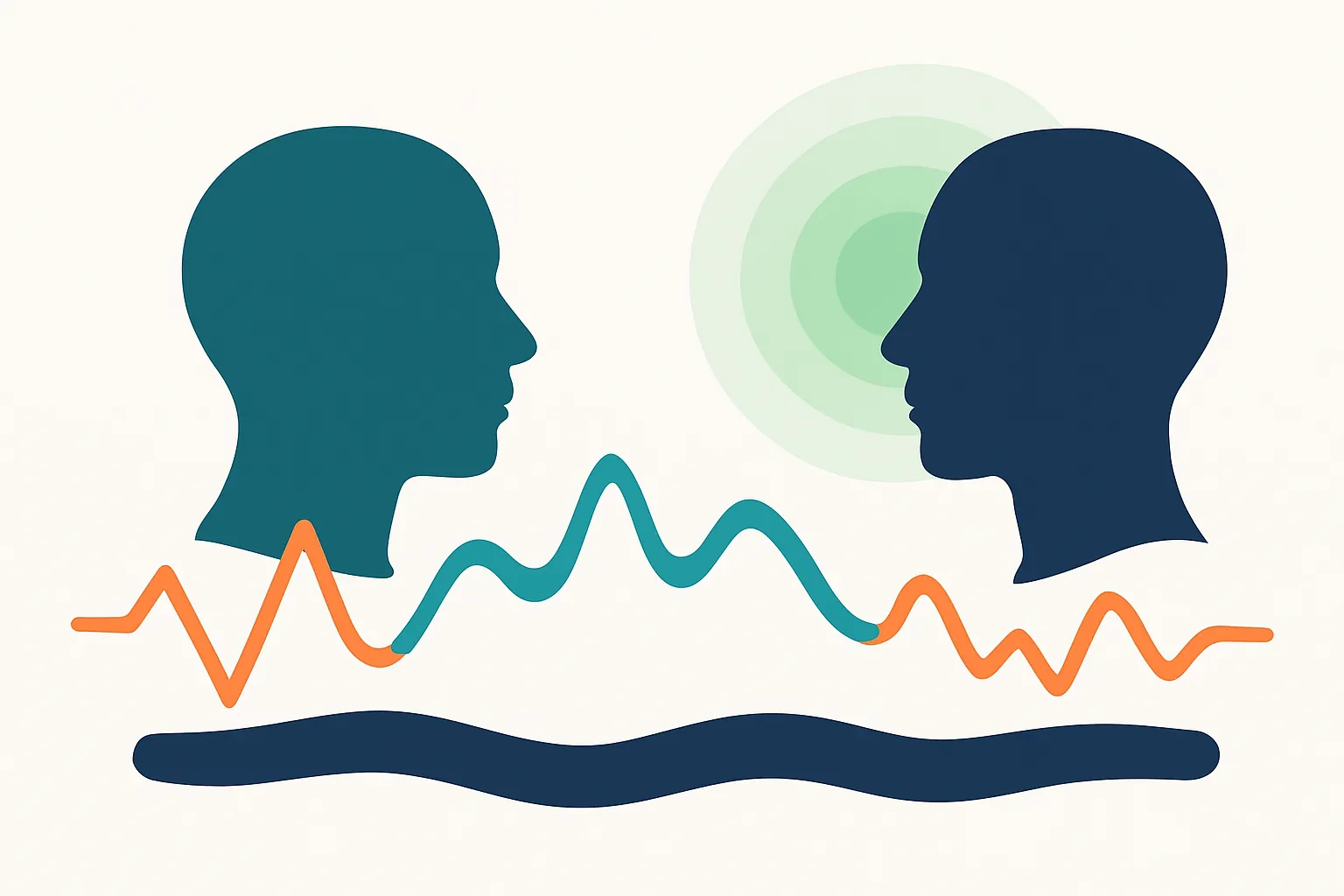
Stephen Porges's Polyvagal Theory reframes a client's sudden silence or angry outburst not as resistance but as an automatic survival response chosen by the autonomic nervous system. The system shifts sequentially through three states—ventral vagal (social connection), sympathetic (fight-or-flight), and dorsal vagal (freeze/collapse)—based on perceived threat, and trauma-exposed clients often misread ordinary cues as danger. This points to bottom-up intervention: discharge trapped energy with grounding when a client is hyperaroused, gently awaken the system with small sensory cues when hypoaroused, and use your own regulated nervous system as the primary tool for co-regulation.
Why Do Clients Go Silent—or Explode—at the Decisive Moment?
Most clinicians know the feeling. A client who has done real cognitive work, who can articulate their patterns with insight, suddenly erupts in disproportionate anger at a single trigger—or goes the other way, sealing their lips and staring through you with a flat, unfocused gaze. In those moments it's easy to wonder: Did my intervention miss? What treatment goal could possibly move this case forward?
For decades, reactions like these were filed under "resistance" or a "non-collaborative stance." Stephen Porges's Polyvagal Theory asks us to see them very differently. The silence and the outburst are not refusals to engage. They are unconscious, automatic defenses the autonomic nervous system deploys in the service of survival. In clients shaped by trauma or chronic stress, the neural machinery for detecting safety is impaired, so even an ordinary cue—a tone of voice, a question, a shift in posture—can register as a threat to life.
The clinical implication is direct: helping these clients requires more than a cognitive approach. It requires the skill to accurately assess a client's physiological nervous system state and to offer body-based interventions matched to it. This is also an ethical matter. Pushing cognitive confrontation onto a nervous system that is already braced for danger risks retraumatization—the one outcome we are obligated to prevent.
Reading the Autonomic Nervous System: Hyperarousal and Hypoarousal
Sound case conceptualization through this lens starts with being able to recognize and classify the three nervous system states the theory describes. The system is continuously appraising the safety of its environment—Porges calls this neuroception—and, as threat intensifies, it recruits evolutionarily older defense systems in sequence.
The table below sorts the behavior you actually see in session by its underlying neural state. Reading these markers helps you judge whether a client is currently inside their window of tolerance or has dropped outside it.
| Nervous System State | Mechanism & Evolutionary Basis | Clinical & Physiological Signs | How It Looks in Session |
|---|---|---|---|
| Ventral Vagal | The most recently evolved mammalian circuit. The system of social connection and communication, grounded in a felt sense of safety. | Steady heart rate, slow easy breathing, smooth digestion, expressive facial range. | Makes eye contact and converses easily. Curious, able to explore emotions with some objectivity. |
| Sympathetic | The activation system that comes online when threat is detected, driving the fight-or-flight response. | Rising heart rate, shallow rapid breathing, muscle tension, narrowed visual field, adrenaline release. | Hyperarousal: restless and agitated, sharp or aggressive language, heightened anxiety and vigilance, escalating abruptly on certain topics. |
| Dorsal Vagal | The oldest, reptilian circuit. The freeze/collapse response that conserves life under extreme threat. | Sharp drop in heart rate, suppressed breathing, blunted pain perception, energy-conserving shutdown. | Hypoarousal: blank expression, unable to answer questions, emotional numbing, low mood, dissociation, a posture of the body caving in on itself. |
Once you see a client's presentation as a survival strategy of the nervous system rather than a cognitive error, the direction of treatment changes entirely. Trying to reason with a hyperaroused client, or pressing a hypoaroused client into intense emotional confrontation, tends only to overload an already overwhelmed system.
Three Intervention Strategies Matched to the Nervous System State
Once you've identified the state, the work calls for a bottom-up approach. Where the familiar top-down model tries to change thinking in order to govern the body, bottom-up work stabilizes the body first—securing a felt sense of safety—and only then moves into cognitive work.
1. Sympathetic Hyperarousal: Discharge the Energy with Grounding
When a client is flooded with anxiety or anger, the sympathetic system is over-activated and the mobilized energy has nowhere to go. This is not the moment for insight. It's the moment to help the body release that trapped charge safely, using somatic methods such as Somatic Experiencing.
- In practice: Direct attention to the sensation of the feet pressing into the floor—a basic grounding technique.
- In practice: Have the client hug a heavy cushion, or stand and gently shake out and stretch the body to burn off the energy held in tense muscles. Widening the visual field also helps release the body's perimeter of guardedness—ask the client to find three safe objects in the room and name them aloud.
2. Dorsal Vagal Hypoarousal: Awaken Small Sensations Without Overwhelm
A dissociated or fully shut-down client meets sudden stimulation by shutting down further. Here the work is to use very small, finely calibrated cues that let the client safely feel that they are present in the here and now.
- In practice: Even eye contact can read as a threat, so sit slightly lower than the client or angle your gaze gently to the side rather than meeting them head-on.
- In practice: Anchor attention to a non-threatening sensation—"What's the temperature like at your fingertips?" or "Can we notice the softness of the blanket?" Invite the smallest self-generated movement (wiggling the fingers, for instance) to wake the system up by degrees.
3. Co-Regulation Through the Clinician's Own Ventral Vagal State
In Polyvagal Theory, the single most important therapeutic tool is the clinician's own nervous system. A client's dysregulated system tends, through neuroception, to detect and synchronize with the calm, safe rhythm of the clinician's regulated state. This is co-regulation.
- In practice: Settle your own breathing first—deep and slow. Use a soft, melodic vocal tone (prosody), and keep a warm, open facial expression. Through these nonverbal cues the client borrows a physiological sense of safety and, over time, widens their window of tolerance.
Catching the Micro-Shifts: Documentation and the Role of AI
Applying Polyvagal Theory transforms the work—and it demands intense, sustained attention. You have to catch fleeting physiological signals (a change in breath, a tremor in a muscle, a shift in vocal tone, a glance away) and offer co-regulation in real time. That is where many clinicians hit a wall: it is physically hard to stay fully present, hold eye contact, and maintain a felt sense of connection while simultaneously taking the accurate notes the session requires. The moment you drop your gaze to write, a hypervigilant nervous system can read the connection as broken and destabilize again.
To resolve this practical bind and stay fully inside the clinical work, more clinicians are turning to AI-assisted transcription and documentation tools. When the AI handles the text capture—and can surface emotional arcs and key themes automatically—the clinician is freed from the administrative burden and can give their attention to the client.
Action items for clinicians:
- Update your case conceptualization template. Add a field for the client's predominant nervous system state, including hyper- and hypoarousal triggers, alongside the usual cognitive and affective sections.
- Use peer consultation. Form a study or supervision group with colleagues interested in Polyvagal Theory and body-based methods, and trade notes on applying them to real cases.
- Evaluate an AI documentation tool. Consider a security-first solution that drafts your session notes automatically—Modalia AI is built for exactly this, handling transcription, case conceptualization support, and documentation so you can put your full energy into the physical and emotional connection of co-regulation.
The key to a client's closed-off inner world often lives in the body. When you respond, through a polyvagal lens, to the rescue signals the nervous system is sending, the deeper work of healing can finally begin.
FAQ
References
- 1.
- 2.
Frequently asked questions
Is a client's silence or outburst really resistance?
Through a polyvagal lens, no. These are automatic survival responses of the autonomic nervous system, not deliberate refusals to engage. Reframing them this way changes the intervention from confrontation to nervous-system regulation.
What is the difference between top-down and bottom-up intervention?
Top-down work changes thinking in order to influence the body. Bottom-up work stabilizes the body and establishes felt safety first, then moves into cognitive work—essential when a client is outside their window of tolerance.
How do I tell hyperarousal from hypoarousal?
Hyperarousal (sympathetic) shows up as agitation, sharp language, anxiety, and rapid escalation. Hypoarousal (dorsal vagal) shows up as a blank expression, numbing, dissociation, and a collapsed posture. Each calls for an opposite approach: discharge energy versus gently awaken it.
What is the clinician's most important tool in this model?
Your own regulated nervous system. Through neuroception, a dysregulated client detects and synchronizes with your calm state—a process called co-regulation—supported by slow breathing, soft prosody, and a warm, open expression.
This article was written and reviewed using Modalia AI's clinical guidelines, with professional human review before publication.
Related articles
 Case Conceptualization
Breaking the "Yes, But" Game: A Transactional Analysis Guide for Therapists
Every suggestion you offer gets met with "Yes, but..." Here's the TA structure behind that stall—and four clinical moves to break it.
7 min read Case Conceptualization
Yalom's The Gift of Therapy: Passages Every New Counselor Should Copy by Hand
Irvin Yalom's prescription for therapists who fear silence: meet your client as a "fellow traveler" and let the here-and-now become the heart of the work.
6 min read Case Conceptualization
Working With Silence in Therapy: What Client Silence Means and How to Hold It
Silence in session isn't empty space. Learn to read its clinical meaning, tell productive from defensive silence, and use it as a therapeutic tool.
6 min read