The Counselor as Emotional Laborer: How to Be a Container, Not a Dumping Ground
Compassion fatigue and vicarious trauma are clinical risks, not personal failings. Learn the boundaries that keep you a containing vessel—not an emotional dumping ground.
Key takeaway
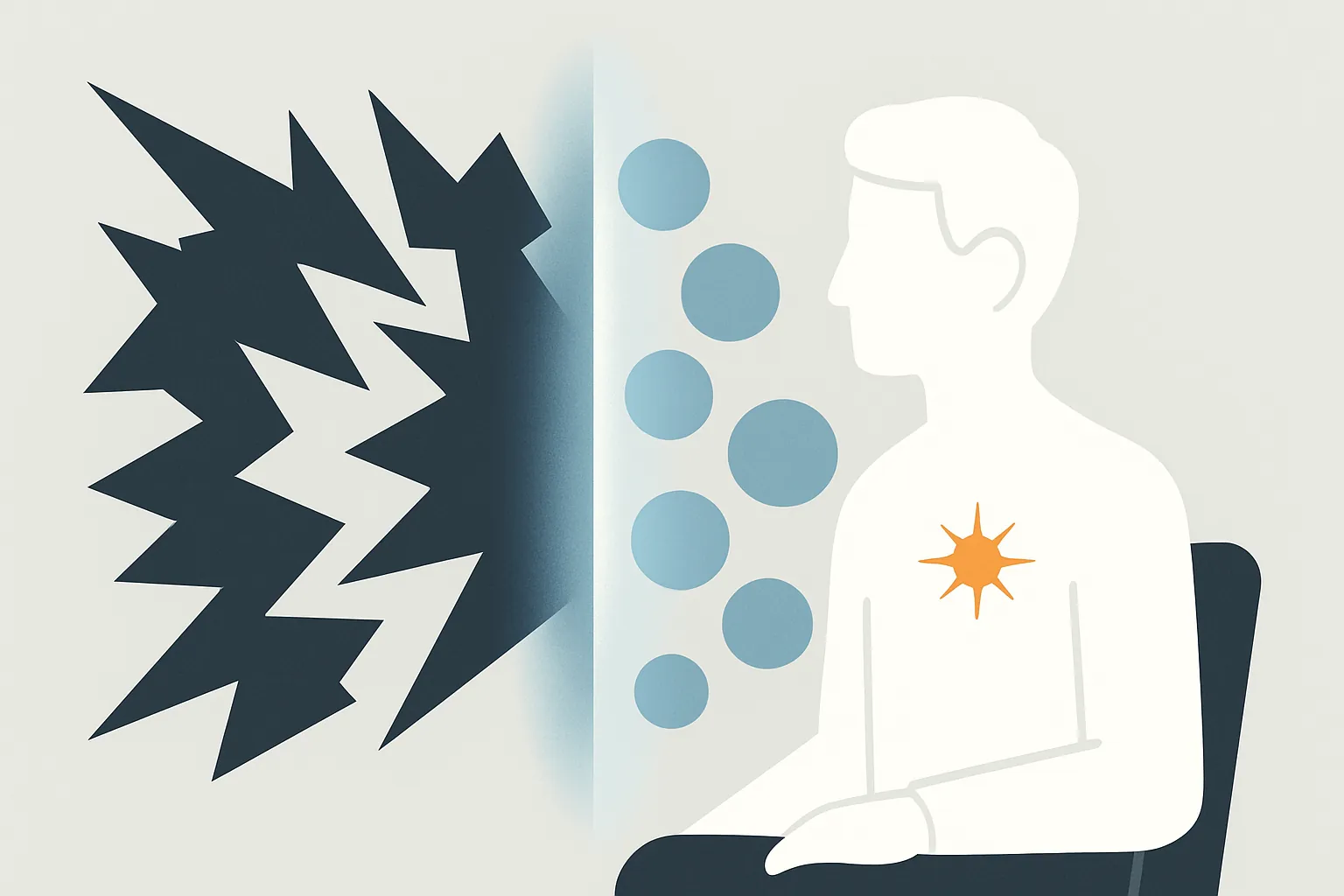
Counselors set out to be a therapeutic container for clients' affect, but without firm boundaries that role can erode into an emotional dumping ground—surfacing as compassion fatigue or vicarious trauma that compromises both quality of care and ethical practice. Projective identification, physiological attunement via mirror neurons, and unrecognized countertransference are the core mechanisms of burnout. Ritualized boundaries before and after sessions, active use of supervision to metabolize countertransference, and minimizing cognitive load are the practical strategies that preserve a healthy therapeutic boundary.
When Your Empathy Runs Dry: A Clinical Survival Strategy for Counselors
Have you ever walked out of the consulting room at the end of a long day feeling like a sponge soaked through—heavy with the pain, anger, and grief you've absorbed since morning? A client says, "I don't know how I'd cope without you," and you feel the worth of the work. Yet hours later, at home, you find yourself wanting to close your ears to your own partner or friend. You are a trained clinician—but you are also a high-intensity emotional laborer, someone whose own affect is the primary instrument of the work.
Many of us set out to be a container for our clients' emotion and, without noticing the drift, become something closer to an emotional dumping ground—a vessel where negative affect accumulates unfiltered. This is not ordinary tiredness. Left unaddressed, it hardens into compassion fatigue or vicarious trauma, eroding the quality of care and raising genuine ethical concerns. This article looks closely at the clinical mindset and the concrete practices that let counselors stay intact—and keep a healthy therapeutic boundary—rather than burning out.
1. The Dangerous Line Between Empathy and Identification
The trap of projective identification
Beneath much of the acute emotional depletion clinicians experience sits a psychoanalytic process: projective identification. A client projects affect they cannot bear onto the counselor and, often unconsciously, exerts subtle pressure for the counselor to feel that affect as their own. If the counselor fails to recognize their own countertransference and gets swept into the feeling, therapeutic neutrality slips away—and the counselor becomes the client's emotional dumping ground. This is one of the fastest ways a clinician's reserves drain to empty.
Mirror neurons and physiological attunement
Neuroscientifically, empathy is in part a simulation of another's distress through the mirror neuron system. Without adequate cognitive distance, sustained exposure to intense affect provokes a stress response in the counselor's own brain—rising cortisol, the physiology of someone who has been directly threatened. "Caring deeply," in other words, is not only a metaphor. It burns real biological resources, and clinicians do well to treat those resources as finite.
Healthy containing vs. pathological absorbing
Bion's concept of containing describes an active therapeutic process: the counselor receives the client's raw, unprocessed affect (beta elements), metabolizes it into something digestible (alpha elements), and returns it in a tolerable form. Becoming an emotional dumping ground is the opposite—the metabolizing capacity (alpha function) stalls, and toxic affect simply accumulates in the body. The goal is not to be a sponge that soaks everything up, but a filter that purifies what passes through.
Table 1. Healthy therapeutic empathy vs. burnout-driving emotional contagion
| Dimension | Healthy therapeutic empathy | Burnout-driving emotional contagion |
|---|---|---|
| Ego boundary | Clear separation between your feelings and the client's | Boundary blurs; the client's pain registers as your own |
| Aim of the intervention | Objective support for the client's insight and growth | A drive to "rescue" the client or erase their pain quickly |
| State after the session | Reasonable fatigue, a sense of accomplishment, ability to return to yourself | Helplessness, chronic headaches, difficulty re-entering daily life |
| Effect on the client | Feels understood; deepens self-exploration | Feels momentary relief, but dependency intensifies |
2. Concrete Strategies to Lighten the Load of Emotional Labor
Build a ritual boundary around each session
Give your brain an unmistakable switch for entering and leaving the clinical space. Lighting a particular candle or taking three slow breaths before a session begins; washing your hands or changing your shoes when it ends—these small behavioral routines signal to the brain, "Therapeutic mode is now closing; I'm returning to myself as a private person." The ritual keeps residual affect from trailing you all the way home.
Use supervision—and your own therapy—actively
Supervision is not only time to review cases. At its best it is a detox—a place to discharge the countertransference residue that has built up inside you. Simply naming, honestly and out loud in front of a supervisor, the anger, boredom, or helplessness a client stirred in you measurably reduces its toxicity. Your own personal therapy serves a parallel function: an ongoing check that your unfinished business isn't becoming entangled with the client's material.
Minimize cognitive load and streamline documentation
Emotional exhaustion is tightly coupled with cognitive fatigue. Tracking a client's nonverbal cues, monitoring your own countertransference, and at the same time trying to remember and record the content of the session is a form of multitasking that drains the brain's energy fast. The low hum of anxiety—I can't afford to miss this detail—steals the psychological spaciousness that empathy depends on. Lifting the burden of administrative work and documentation, where the technology now genuinely can help, becomes a core strategy for conserving emotional energy.
3. Staying in This Work for the Long Haul
A counselor is a mirror held up to a client's life. But if that mirror is smudged or cracked, we cannot reflect the client fully. Resolving not to become an emotional dumping ground is not selfishness—it is the most ethical and professional stance available to us. Tending to your own mind is, quite literally, the best preparation you can offer the people you serve.
To stay focused on what counseling actually is—relationship and insight—it's worth letting modern tools take over the peripheral tasks that drain energy without adding clinical value. This is where a security-first AI partner built for clinicians earns its place. When a tool like Modalia AI transcribes a session accurately and surfaces the core affect and key themes, you're freed from the compulsion to get it all down and can stay fully present to a client's gaze, a catch in the voice, a tremor of feeling. That conserved cognitive bandwidth is exactly what sustains your capacity as a therapeutic presence. The point is to spend your finite emotional energy on holding a client's mind—not on records and admin.
So, today: how is the vessel of your own mind holding up?
Key Takeaways
- Burnout in counselors is often driven by projective identification, physiological attunement through mirror neurons, and unrecognized countertransference—not by personal weakness.
- Healthy containing metabolizes a client's affect; an emotional dumping ground simply absorbs it. Aim to be a filter, not a sponge.
- Ritual boundaries, active supervision, and reduced cognitive load (including lighter documentation) are practical, repeatable ways to protect your therapeutic boundary—and your longevity in the field.
References
- 1.
- 2.
Frequently asked questions
What is the difference between compassion fatigue and vicarious trauma?
Compassion fatigue is the gradual erosion of empathic capacity from sustained exposure to others' distress, often showing up as emotional depletion and reduced satisfaction in the work. Vicarious trauma is a deeper shift—changes in a clinician's own worldview, beliefs, and sense of safety that result from repeated empathic engagement with traumatic material. Both compromise care quality and warrant active prevention.
How does projective identification lead to counselor burnout?
In projective identification, a client unconsciously projects unbearable affect onto the counselor and pressures them to feel it as their own. When the counselor doesn't recognize the resulting countertransference, they get swept into the feeling, lose therapeutic neutrality, and absorb the affect rather than metabolizing it—rapidly depleting their reserves.
What are practical ways to prevent compassion fatigue?
Build ritual boundaries that signal the start and end of clinical mode (a breathing routine, washing your hands, changing shoes); use supervision and personal therapy to discharge and metabolize countertransference; and reduce cognitive load during sessions—including offloading documentation—so your attention stays available for the client.
Is prioritizing your own self-care selfish for a counselor?
No. A counselor is a mirror held up to a client; a smudged or cracked mirror cannot reflect fully. Tending to your own mind is the most ethical and professional stance available, because it is the foundation of the care you provide.
This article was written and reviewed using Modalia AI's clinical guidelines, with professional human review before publication.
Related articles
 Case Conceptualization
Breaking the "Yes, But" Game: A Transactional Analysis Guide for Therapists
Every suggestion you offer gets met with "Yes, but..." Here's the TA structure behind that stall—and four clinical moves to break it.
7 min read Case Conceptualization
Yalom's The Gift of Therapy: Passages Every New Counselor Should Copy by Hand
Irvin Yalom's prescription for therapists who fear silence: meet your client as a "fellow traveler" and let the here-and-now become the heart of the work.
6 min read Case Conceptualization
Working With Silence in Therapy: What Client Silence Means and How to Hold It
Silence in session isn't empty space. Learn to read its clinical meaning, tell productive from defensive silence, and use it as a therapeutic tool.
6 min read