From Deficit to Direction: 5 Formulas for Turning Projective Test Findings Into Treatment Goals
Five clinical formulas that reframe the 'deficits' in TAT and Rorschach findings into concrete, achievable treatment goals your clients can reach.
Key takeaway
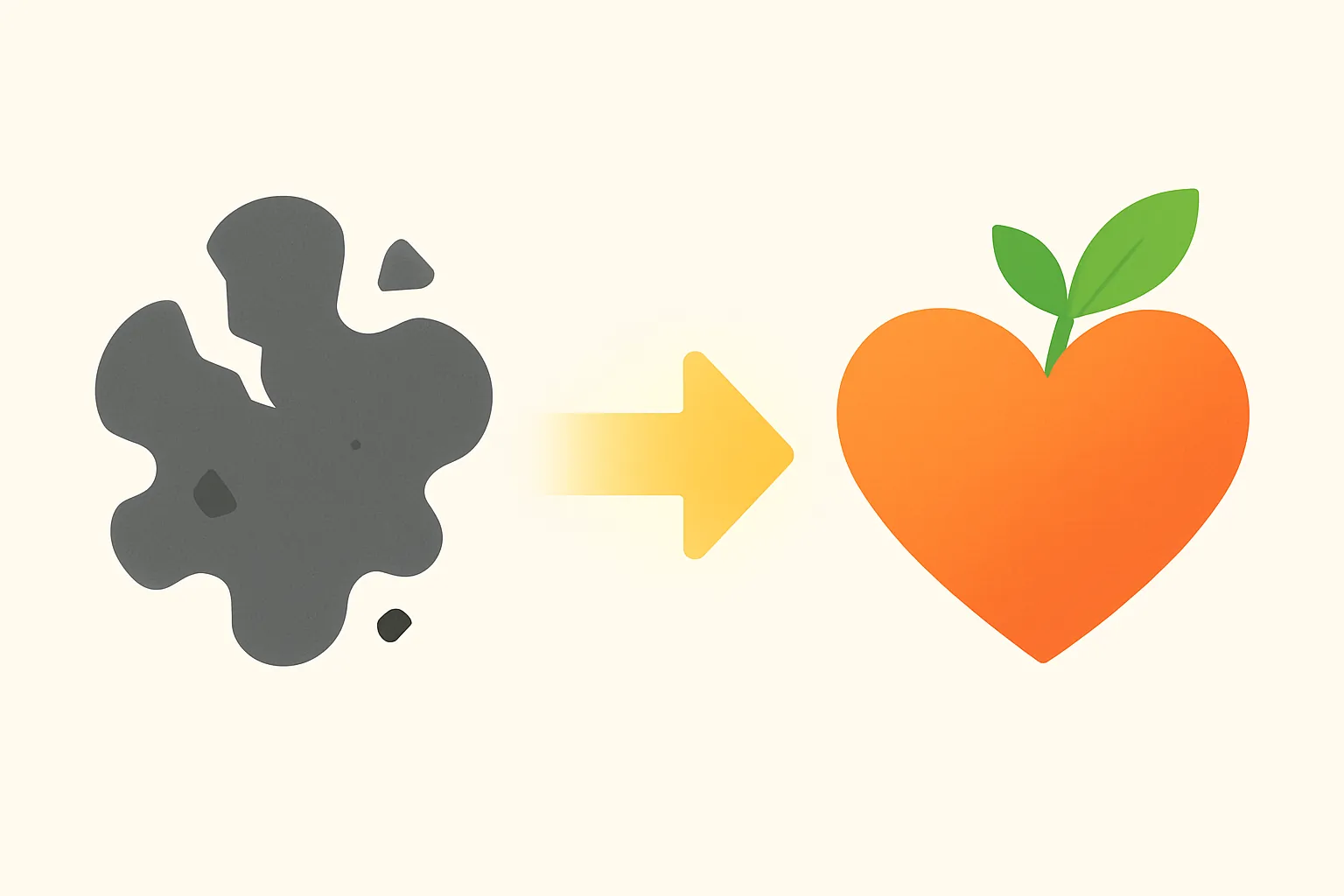
The language of deficit in projective testing—emptiness, passivity, fragmentation—is rarely just a marker of pathology. Read clinically, each deficit also reveals the unmet need the client is reaching toward and an implicit direction for change. By mapping void to core-need exploration, passivity to restored agency, aggression to healthy boundaries, isolation to safe connection, and fragmentation to narrative integration, clinicians can translate a diagnostic report into living treatment goals a client can actually pursue.
The Gap Between What the Report Says and What the Work Requires
If you've ever sat with a freshly written assessment report—your own or a colleague's—you know the particular silence that follows. Projective measures like the Rorschach and the Thematic Apperception Test (TAT) lay a client's unconscious conflicts, defenses, and the recurring "deficits" of their inner protagonist out in plain view. Phrases like frustrated attachment needs, impoverished object representations, or pervasive helplessness are clinically precise. They are also cold. And they leave a real question hanging: Given all of this, what is the actual goal of treatment?
There is a quiet but meaningful gap between assessment and therapy. Assessment aims at an accurate picture of pathology and current functioning. Therapy has to take that picture and aim it at growth and recovery. The hardships of the "hero" in a projective narrative are both the lens through which a client perceives the world and a map of the unmet needs they are urgently trying to fill. Doing this work well—ethically and effectively—depends on a clinical skill that no scoring system supplies: the ability to translate a bleak, fragmented projective narrative into goals a client can pursue in their actual life. This article offers a concrete method for making that translation, turning diagnostic language into therapeutic language.
Why Deficit Is Also Direction
In a projective task, the client meets an ambiguous stimulus—an inkblot, a vague figure on a card—and fills it with their inner world. When a client looks at a TAT card and says, "No one's going to help him, so he just gives up," or fixates on the white space of a Rorschach card and describes emptiness, we're seeing genuinely depleted psychological resources. But if we hand that deficit back to the client as-is, or let it sit as the unspoken premise of the work, the therapeutic relationship tends to stall.
From a clinical standpoint, a deficit in projective material carries pathology and an unconscious sense of direction. The presence of an absence implies that some part of the client already knows what should be there. Our job, then, is to re-file the dry language of the report into something alive enough to breathe inside the consulting room. The table below shows how the same findings read differently through a diagnostic versus a therapeutic lens.
| Deficit in projective material (diagnostic language) | Clinical meaning (interpretive language) | Reframed as a treatment goal (therapeutic language) |
|---|---|---|
| TAT protagonist marked by helplessness and surrender | Learned helplessness; diminished self-efficacy | Rebuilding agency through small, achievable successes |
| Absent or constricted Texture (T) responses on the Rorschach | Frustrated attachment needs; fear of closeness | Allowing emotional contact inside a secure therapeutic alliance |
| Recurring hostile figures across stories | Persecutory stance; projected, suppressed anger | Accepting anger and setting healthy boundaries |
| Markedly low response count (R) and avoidance | Cognitive/affective constriction; rigid defenses | Naming and identifying feelings; widening the window of tolerance |
A note on framework: contemporary Rorschach practice in most English-speaking settings relies on the Exner Comprehensive System and, increasingly, the Rorschach Performance Assessment System (R-PAS). Variables such as Texture, white-space use, and response productivity are interpreted within those systems, and the reframes above are meant to sit on top of valid administration and scoring—not to substitute for it.
Mapping deficits to goals also pays off in managing transference and countertransference. The deficient object relationships a client projects onto test stimuli will, almost inevitably, be re-enacted in the relationship with you. Having anticipated them and mapped them to explicit goals, you're far less likely to lose your footing when resistance or rupture arrives.
Five Mapping Formulas: From the Hero's Deficit to a Treatment Goal
These five formulas are built to be used the moment you close the report. Each one treats a pathological finding as a resource to be recruited rather than a wound to be catalogued.
1. Map Void to Core-Need Exploration
Clinical meaning: Heavy use of empty space on the Rorschach, or TAT narratives dominated by "there's nothing" and "it's been lost," points to deep depression and emptiness.
In session: Give the void a shape. Ask, "What is the thing your protagonist most regrets losing?" The missing object—a warm parent, recognition, rest—becomes the target. The early goal is to identify that unmet need and then explore where, in the client's current life, it could be met in a healthy and sustainable way.
2. Map Passivity to Restored Agency
Clinical meaning: When the TAT hero submits to outside pressure or resigns themselves to fate, it suggests weakened ego strength.
In session: Hand control back to the client inside the room. Let them choose the topic of the session, or set and complete a very small behavioral task of their own design—a five-minute daily walk, for instance. The aim is for the client to feel their own influence: to experience themselves as the protagonist of their life rather than a passenger in it.
3. Map Aggression to Boundary-Setting
Clinical meaning: Frequent blood or weapon responses on the Rorschach, or violent TAT narratives, may reflect suppressed anger—or a primitive effort to protect the self from others.
In session: Reframe aggression as the energy of self-protection. Rather than discharging anger destructively, channel it into assertiveness training and interpersonal boundary work—learning to say a clear, healthy "no." The goal becomes a concrete, repeatable skill.
4. Map Isolation to Safe Connection
Clinical meaning: A protagonist who is utterly alone, cut off from others, signals deep relational injury and a fear of rejection.
In session: Resist the urge to push for immediate improvements in the client's outside relationships. Make the formation of a safe, predictable relationship with you the first-order goal. Use here-and-now technique to help the client notice and gradually internalize the sense of trust and connection that's available in the room.
5. Map Fragmentation to Narrative Integration
Clinical meaning: Bizarre Rorschach responses or TAT stories whose logic leaps and collapses point to instability in cognitive structure.
In session: This is usually not the moment for deep, insight-oriented work. A cognitive behavioral (CBT) or supportive approach that structures daily life tends to serve better. Practice sorting chaotic thoughts and feelings into a concrete situation–thought–feeling–behavior frame, supporting the ego's integrative capacity one organized piece at a time.
Putting Insight Into Practice: Tracking Change Across Sessions
Once you've translated your projective findings into goals, the real work is catching the small signals of change session to session. To know whether these five maps are actually moving—whether "the language of deficit" from the initial testing is shifting toward "the language of agency and recovery"—you have to track subtle things: the words a client reaches for, the emotional nuance underneath them, the slow re-authoring of their personal narrative.
Doing that while also staying fully present is genuinely hard. Producing a thorough progress note in real time is a heavy cognitive tax, and it competes directly with the attention your client deserves. This is where current clinical technology can help. Tools like Otter.ai or open-source models such as OpenAI's Whisper can turn a recorded session into a secure, searchable transcript, freeing you from the keyboard so you can attend to the gaze, the pauses, and the nonverbal cues. With that text in hand, you can objectively review how a client's vocabulary and self-narrative evolve over months—and sharpen your own conceptualization in the process.
This is the role Modalia AI is built for: a security-first AI partner for counselors that supports session transcription, case conceptualization, and documentation so the clinical thinking stays with you and the clerical load doesn't. So pull that assessment report back out. Run today's five formulas across it, and write down the fierce drive to survive hiding inside each "deficit" as a new treatment goal. From your next session forward, consider adopting a new progress-note format—or bringing an AI-assisted transcript to your next supervision group—and see what the combination of warm clinical insight and smart tooling makes possible for the people you serve.
Frequently asked questions
Why shouldn't I share projective test 'deficits' with a client at face value?
Presenting raw diagnostic language—'impoverished object representations,' 'pervasive helplessness'—as the premise of therapy tends to stall the work and can feel shaming. Reframing each deficit as an unmet need and a direction for change keeps the client engaged and gives the work a goal they can actually pursue.
Which Rorschach framework do these reframes assume?
They sit on top of valid administration and scoring in the Exner Comprehensive System or, increasingly, the Rorschach Performance Assessment System (R-PAS), which are the standards in most English-speaking settings. Variables like Texture (T), white-space use, and response productivity (R) are interpreted within those systems before being mapped to goals.
How do these mapping formulas help with transference and countertransference?
The deficient object relationships a client projects onto test stimuli are usually re-enacted in the therapeutic relationship. Anticipating them and mapping them to explicit goals helps you stay grounded when resistance or rupture appears, rather than being caught off guard.
Can AI tools support this kind of close session tracking?
Yes. Secure transcription tools—Otter.ai, OpenAI's Whisper, or a security-first clinical partner like Modalia AI—let you review how a client's vocabulary and self-narrative shift over time without taking your attention away from nonverbal cues during the session.
This article was written and reviewed using Modalia AI's clinical guidelines, with professional human review before publication.
Related articles
 Case Conceptualization
Breaking the "Yes, But" Game: A Transactional Analysis Guide for Therapists
Every suggestion you offer gets met with "Yes, but..." Here's the TA structure behind that stall—and four clinical moves to break it.
7 min read Case Conceptualization
Yalom's The Gift of Therapy: Passages Every New Counselor Should Copy by Hand
Irvin Yalom's prescription for therapists who fear silence: meet your client as a "fellow traveler" and let the here-and-now become the heart of the work.
6 min read Case Conceptualization
Working With Silence in Therapy: What Client Silence Means and How to Hold It
Silence in session isn't empty space. Learn to read its clinical meaning, tell productive from defensive silence, and use it as a therapeutic tool.
6 min read