Breaking the Pursuer-Distancer Cycle in Couples Therapy: An EFT Roadmap for Clinicians
How Emotionally Focused Therapy reframes the pursuer-distancer loop as an attachment protest—and the clinical moves that interrupt it.
Key takeaway
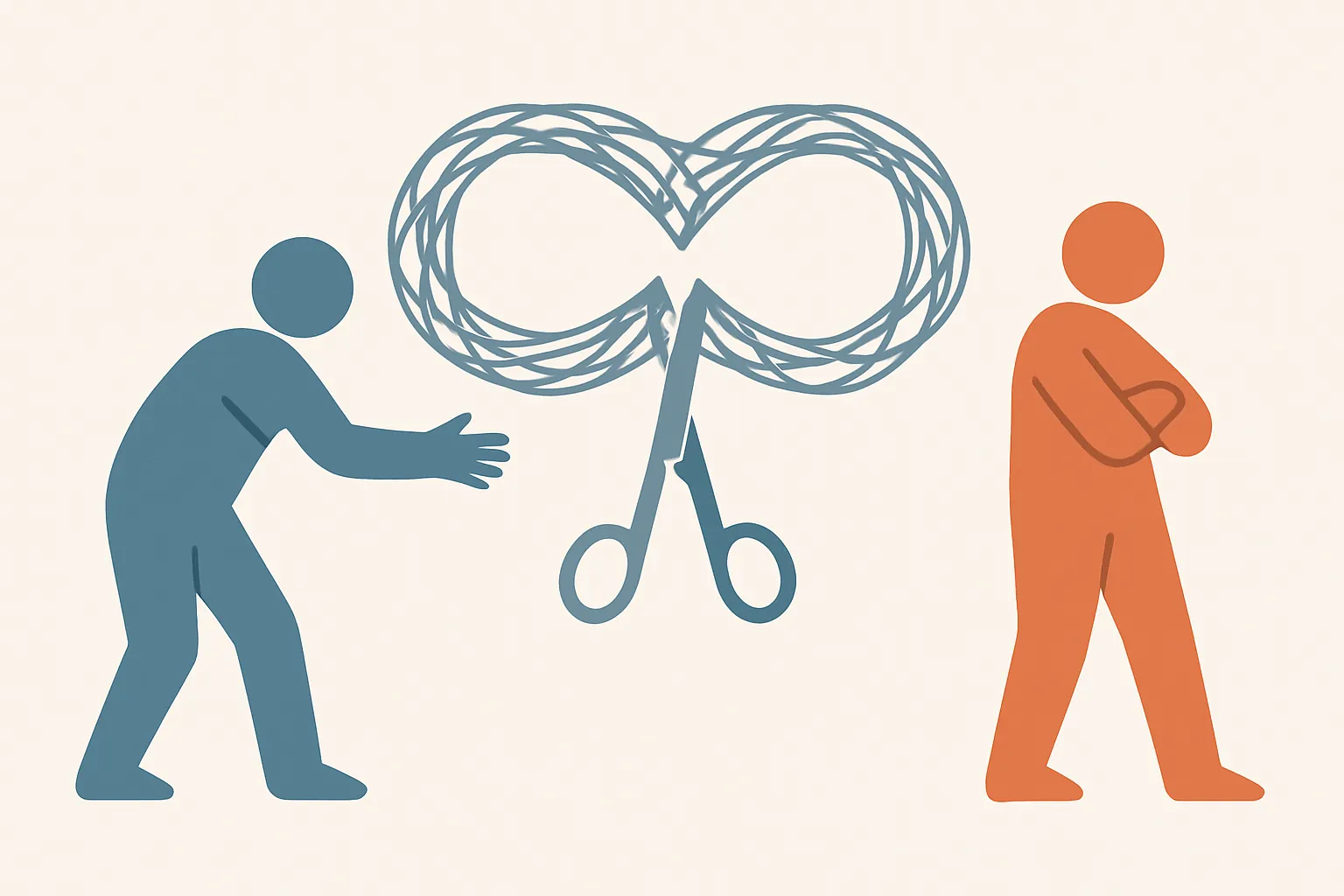
The pursuer-distancer pattern is the most common—and most demanding—dynamic clinicians meet in couples work. Through an Emotionally Focused Therapy (EFT) lens, it is not a communication deficit but two different attachment strategies for managing the same fear of emotional disconnection: the pursuer escalates to win a response, while the distancer withdraws to protect the bond. The therapist's central task is to stop the partners from fighting each other and reframe the negative cycle itself as the shared adversary, using empathic conjecture and enactments to surface primary emotion and create a corrective emotional experience.
"We say we love each other—so why is every conversation a war?"
Think of the couples who walk into your office. One partner is flooded—accusatory, raising their voice, listing every grievance. The other has gone quiet, jaw set, eyes fixed somewhere out the window. As clinicians, we can feel our own helplessness rise in the tension between them. "It doesn't matter what I say—he never listens!" one partner cries. "When she gets like that," the other answers flatly, "I just want to leave the room." It is remarkably easy for the therapist to get lost in the crossfire.
This is not, at its root, a communication problem. It is what Sue Johnson, the originator of Emotionally Focused Therapy (EFT), called a Demon Dialogue—a desperate struggle that surfaces when attachment needs go unmet. The work of couples therapy is not to adjudicate who is right. It is to help the couple see and dismantle the negative cycle they are trapped inside. This article takes a close look at the pattern clinicians encounter most often—the pursuer-distancer dynamic—and offers concrete intervention strategies for interrupting the loop safely.
1. Hearing the Attachment Cry Beneath the Surface Anger
One of the hardest things early in treatment is staying out of the undertow of a client's intense affect—what EFT calls secondary emotion. The pursuer typically shows up as criticism, nagging, and complaint; the distancer responds with silence, intellectual defense, or physical exit. From an EFT standpoint, however, both behaviors are simply different ways of coping with the same thing: the fear of emotional disconnection. Our job is to read the attachment fear and the attachment longing underneath the behavior, and to translate it back into language the couple can actually hear.
Naming and distinguishing the two positions—out loud, for the couple—is central to building the working alliance. The table below offers markers you can use as you observe and classify what is happening in the room.
Table 1. Pursuer vs. Distancer: Clinical Presentation and Inner Experience
| Dimension | The Pursuer | The Distancer |
|---|---|---|
| Surface behavior (secondary emotion) | Blame, criticism, demands, aggression ("You never listen to me!") | Silence, rationalizing, withdrawal, stonewalling ("Here we go again—I'll just wait it out.") |
| Attachment strategy | Hyperactivating — escalates the bid to force a response | Deactivating — shuts down feeling to self-protect and preserve the relationship |
| Core attachment fear | Abandonment, being alone, not mattering | Failing, being seen as inadequate, being controlled or overwhelmed |
| Hidden need (primary emotion) | "Tell me I matter to you." (connection, reassurance) | "Accept me as I am and stop the criticism." (acceptance, peace) |
2. Externalizing the Cycle as the Third Adversary
The therapist's most important move is to stop the couple from treating each other as the enemy and help them recognize that the real enemy they must fight together is the negative cycle itself. This is the externalization of the problem. When a couple escalates in session, the clinician intervenes immediately—stopping the content of the argument and shining a light on the process.
Process consulting
When a client reports content—"He came home late and drunk last night"—the therapist reframes it as a sequence: "So when he came home late (the trigger), you felt suddenly alone and that turned into anger (the pursuer's move), and when he heard that anger, he read it as I've failed again and retreated to the other room (the distancer's move). And the more he disappeared, the louder you had to get (the cycle tightening). This is the pattern that keeps hurting you both."
Catching and reflecting primary emotion
Underneath the pursuer's anger live loneliness and fear; underneath the distancer's indifference live helplessness and shame. The clinician voices these on the client's behalf. "You look angry—but I wonder if what's really there is how terrified you are that he's slipping away from you." An empathic conjecture like this is one of the most powerful tools we have for lowering a client's defenses.
Restructuring the interaction (enactment)
This is the core EFT technique. The therapist invites the client to speak the primary emotion directly to their partner. "That loneliness you just touched—could you say it not to me, but to him, looking him in the eye?" This moment is precisely where a corrective emotional experience can happen.
3. Practical Tips for Clinicians: Managing Countertransference and Intervening Precisely
Couples work is more depleting for the therapist than individual work. Be especially alert to countertransference—being overwhelmed by the pursuer's intensity or frustrated by the distancer's silence, and unconsciously taking a side. A few concrete practices help guard against this and sharpen the work:
- Slow it down. As the couple's exchange speeds up, the blame-and-defend loop fires instantly. Intervene deliberately: "Hold on—something that just went by feels really important. Can we go back to that moment?"
- Be the safe haven. Before a distancer will open up, they need to be certain the room is a place where they won't be attacked. It helps to reframe the distancer's silence not as "having nothing to say" but as "being careful not to make things worse."
- Explore attachment injuries. Check whether the current cycle traces back to a specific past event—a miscarriage, an affair, a job loss—where one partner was absent at a moment that mattered. Healing that injury often needs to run alongside the cycle work.
Closing: Capturing Process, Not Just Content
In couples work—and EFT in particular—what matters most is not the content of what clients say but the way they say it and the emotional choreography of the moment. The tremor in a voice that says "I hate you," the shoulders that tense as the distancer goes quiet—these are decisive cues that plain text notes routinely miss. And it is nearly impossible to track, remember, and document every nonverbal signal and every turn of the cycle while you are fully present in the room.
This is where AI session-note tools can act as a quiet co-therapist. During the session, keep your attention on your clients' eyes and emotions, and let the documentation be captured for you. Beyond raw transcription, current tools can surface patterns worth reviewing—who is holding the floor (talk-time share), where the silences fall, and the frequency of key affect words. Used thoughtfully, that becomes objective material for supervision and a way to track, session over session, whether the pursuer-distancer pattern is genuinely softening.
For the couple sitting in your office right now—the ones wounding each other while quietly, desperately longing for each other—may precise tools and warm clinical instinct walk alongside you as you help them reach for each other's hands again.
References
- 1.
Frequently asked questions
What is the pursuer-distancer pattern in EFT?
It is a self-reinforcing interaction cycle in which one partner escalates (criticism, demands, raised voice) to get a response while the other withdraws (silence, defense, exit) to protect themselves. EFT understands both moves as different attachment strategies for managing the same underlying fear of emotional disconnection.
How does a therapist interrupt the cycle in session?
Stop the content of the argument and slow the process down, reflect the primary emotion beneath each partner's surface reaction through empathic conjecture, externalize the negative cycle as the shared adversary rather than each other, and use enactments to have partners speak their vulnerable feelings directly to one another.
What is the difference between primary and secondary emotion?
Secondary emotion is the reactive, surface response—anger, blame, indifference, withdrawal. Primary emotion is the deeper, more vulnerable feeling driving it—loneliness, fear, shame, helplessness. EFT works to access and articulate the primary emotion so partners can respond to each other's underlying attachment needs.
Why is countertransference a particular risk in couples work?
The pursuer's intensity can overwhelm the clinician and the distancer's silence can provoke frustration, making it easy to unconsciously side with one partner. Maintaining a balanced alliance, slowing the pace, and reframing each partner's behavior in attachment terms help the therapist stay neutral and effective.
This article was written and reviewed using Modalia AI's clinical guidelines, with professional human review before publication.
Related articles
 Case Conceptualization
Breaking the "Yes, But" Game: A Transactional Analysis Guide for Therapists
Every suggestion you offer gets met with "Yes, but..." Here's the TA structure behind that stall—and four clinical moves to break it.
7 min read Case Conceptualization
Yalom's The Gift of Therapy: Passages Every New Counselor Should Copy by Hand
Irvin Yalom's prescription for therapists who fear silence: meet your client as a "fellow traveler" and let the here-and-now become the heart of the work.
6 min read Case Conceptualization
Working With Silence in Therapy: What Client Silence Means and How to Hold It
Silence in session isn't empty space. Learn to read its clinical meaning, tell productive from defensive silence, and use it as a therapeutic tool.
6 min read