Helping Gaslighting and Dating-Abuse Survivors Rebuild Reality Testing
A clinician's step-by-step guide to helping gaslighting survivors restore reality testing, from validation to Socratic reframing and fact-based record-keeping.
Key takeaway
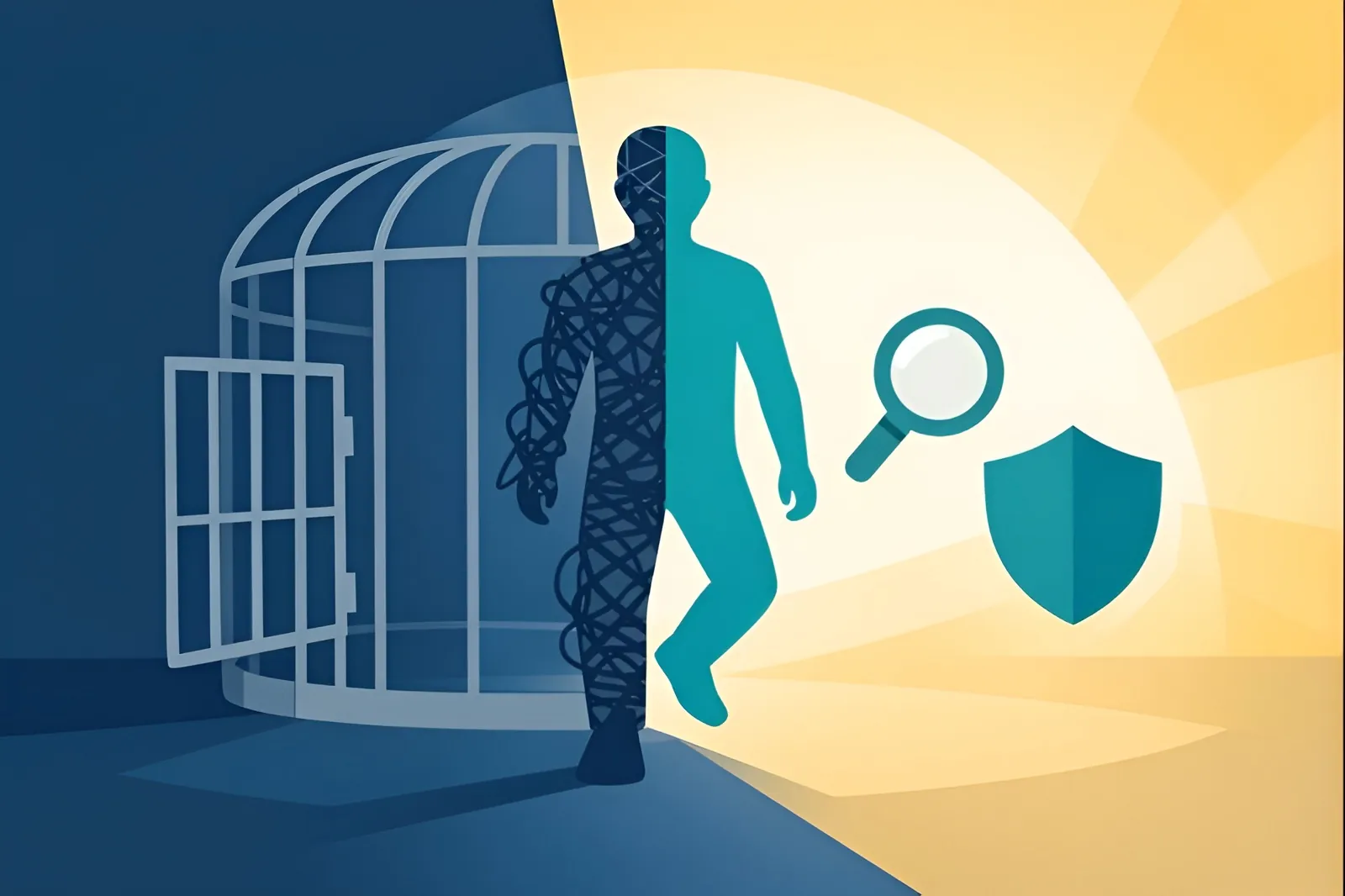
Survivors of gaslighting often stop trusting their own memories and feelings, returning again and again to the question "Am I just too sensitive?" This happens because the abuser systematically erodes the survivor's reality testing to seize psychological control. Effective treatment starts by validating the client's confusion, then uses Socratic questioning to restructure distorted cognitions and builds a habit of objective record-keeping to rebuild reality testing in stages. Accurate, undistorted documentation of the client's own words can itself become a therapeutic anchor that re-grounds the client in fact.
"Am I Really the Sensitive One?" — Freeing Clients From the Invisible Prison of Gaslighting
Some clients walk into the office with no visible trauma, yet sit down with a self that has quietly come apart. Survivors of dating abuse and gaslighting, in particular, tend to ask a strikingly similar question: "Is there something wrong with me?" or "He says he's only telling me this for my own good — am I just taking it too personally?" For a clinician, these questions carry both deep compassion and a heavy clinical responsibility.
Dating abuse that runs on psychological control is categorically different from ordinary relational conflict, because it systematically dismantles the survivor's reality testing. By keeping the survivor in chronic doubt about their own memory, perception, and judgment, the abuser takes hold of the psychological controls. In this dynamic, the clinician often has to serve as an external, objective self — someone who helps restore the client's collapsed self-trust and gently corrects a distorted read of reality. But confronting a client who has become psychologically bonded to the abuser (trauma bonding) is delicate, demanding work. This piece looks at the psychological mechanism of gaslighting and offers concrete clinical strategies for helping clients rebuild their reality testing.
The Psychology of Gaslighting: Cognitive Dissonance and Distorted Reality
Gaslighting is dangerous precisely because it rarely arrives as obvious abuse. It enters disguised as "love" or "advice." Survivors resist at first, but under repeated denial and blame, they begin resolving the resulting cognitive dissonance by editing their own memories and adopting the abuser's logic. In clinical terms, the client's epistemic trust migrates away from themselves and toward the abuser.
This is why the relational dynamic beneath a presenting complaint of depression or anxiety deserves close attention. When a client censors themselves mid-sentence — "…but maybe he's right" — every time they try to name a feeling, their reality testing is likely already significantly compromised. Pushing too hard to condemn the abuser or to urge a breakup at this stage can trigger the client's defenses. The work begins instead by empathizing with and validating the confusion itself.
Healthy Conflict vs. Gaslighting: A Clinical Differentiation Guide
Clients often minimize their situation: "Doesn't every couple fight?" Part of the clinician's role is to help them distinguish ordinary relational conflict from pathological psychological control. The comparison below gives client and clinician a shared frame for stepping back and looking at the relationship objectively.
| Dimension | Healthy relational conflict | Gaslighting / psychological control |
|---|---|---|
| Focus of conflict | Centers on a specific problem or situation | Attacks the partner's character, memory, or sanity |
| Interaction | Both perspectives are acknowledged and negotiated | Only one view is "right"; the other is treated as delusion |
| Accountability | Both parties own a share of responsibility | All blame is assigned to the survivor's "oversensitivity" |
| Aftermath | The relationship repairs or understanding deepens | The survivor is left confused, with lowered self-worth |
| Outside ties | Friendships and family bonds stay intact | "They don't understand you" — outside ties are cut off |
Table 1. Clinical features of healthy conflict compared with gaslighting.
Reviewing this table together — sorting the client's specific episodes into one column or the other — lets the client begin practicing the skill of seeing their situation through a third party's eyes. That act of categorization is the first brick in rebuilding reality testing.
A Three-Stage Intervention for Restoring Reality Testing
The central goal of this work is to help the client trust their own judgment and feelings again. A staged approach works well.
- Stage 1 — Micro-validation and naming. Actively validate even the smallest feeling or flicker of doubt: "It makes complete sense to feel that way in that situation." Equally important is labeling — giving the client's confusion the name "gaslighting," which relocates the source of the problem from inside the client to the dynamic itself.
- Stage 2 — Cognitive restructuring through Socratic questioning. To put cracks in the abuser's logic, ask rather than argue. "He said he got angry because of what you were wearing — objectively, is an outfit a reasonable cause for that anger?" or "If a friend were in the same situation, what would you tell her?" Questions like these let the client discover the logical contradictions themselves.
- Stage 3 — Gathering objective evidence and building a record-keeping habit. Because the abuser works to rewrite the client's memory, a written record is the most powerful defense. Have the client note the situation, the conversation, and their own feelings as soon after an incident as possible — exactly as they occurred. In session, use those notes for a fact check that strengthens reality testing over time.
The Power of Documentation: Holding Up an Objective Mirror
Gaslighting survivors will sometimes contradict their own statements within a session, or deny something they said moments earlier: "Did I say that? I can't really remember." The self-distrust surfaces even in the room. Here, an accurate, verbatim record of the work becomes a meaningful therapeutic tool.
Clinicians once had to handwrite everything, often missing nonverbal cues in the process. Ethically deployed session-documentation and transcription tools change that equation. An objective transcript of the session can show the client "Look — you clearly expressed your refusal here," offering an immovable piece of reality to stand on. Simply knowing that their words are being recorded faithfully, without distortion, helps the client experience the office as a safe space for reality testing. Where such tools are used, security and consent must come first — which is why a privacy-first, security-first partner like Modalia AI matters: the client's own words are preserved intact, never weaponized, and never exposed.
Conclusion: Walking Alongside the Search for a Lost Self
Working with gaslighting survivors is like rebuilding a collapsed structure. You lay the foundation of reality testing first, then raise the pillar of self-worth on top of it. The clinician's task is to wait and support with patience until the client can once again hear their own inner voice instead of the abuser's. Alongside psychotherapeutic technique, objective data and records help the client plant their feet on solid fact.
Accurate documentation does more than reduce administrative burden — it confirms for a gaslighting survivor that their words exist, whole and undistorted. Worth considering: how might tools like this be woven into clinical practice to raise the quality of care and shorten the road to recovery? An accurate record can be where healing begins.
If a client is in immediate danger: encourage them to contact their local or national crisis line or emergency services. In the United States, the National Domestic Violence Hotline is available 24/7 at 1-800-799-7233 (or text START to 88788). Survivors in other regions should be directed to their own national domestic-violence and crisis resources.
Frequently asked questions
What is reality testing, and why does gaslighting damage it?
Reality testing is the capacity to accurately distinguish one's internal experience from external reality. Gaslighting erodes it by keeping the survivor in chronic doubt about their memory, perception, and judgment, until their epistemic trust shifts from themselves to the abuser.
How can I tell whether a client's relationship involves healthy conflict or gaslighting?
Healthy conflict centers on specific problems, shares accountability, and ends with repair. Gaslighting attacks the partner's character or sanity, blames the survivor's "oversensitivity" for everything, isolates them from outside ties, and leaves them more confused and diminished afterward.
Why is record-keeping so important in this work?
Because abusers actively rewrite the survivor's memory, an objective written record of events, conversations, and feelings becomes the strongest defense. Reviewing it in session lets clinician and client fact-check distortions and rebuild trust in the client's own judgment.
Should I urge a client to leave the abusive relationship right away?
Generally no. Pushing too hard to condemn the abuser or force a breakup can trigger a trauma-bonded client's defenses. Effective work starts by validating the client's confusion and gradually restoring their reality testing so the decision becomes theirs.
This article was written and reviewed using Modalia AI's clinical guidelines, with professional human review before publication.
Related articles
 Case Conceptualization
Breaking the "Yes, But" Game: A Transactional Analysis Guide for Therapists
Every suggestion you offer gets met with "Yes, but..." Here's the TA structure behind that stall—and four clinical moves to break it.
7 min read Case Conceptualization
Yalom's The Gift of Therapy: Passages Every New Counselor Should Copy by Hand
Irvin Yalom's prescription for therapists who fear silence: meet your client as a "fellow traveler" and let the here-and-now become the heart of the work.
6 min read Case Conceptualization
Working With Silence in Therapy: What Client Silence Means and How to Hold It
Silence in session isn't empty space. Learn to read its clinical meaning, tell productive from defensive silence, and use it as a therapeutic tool.
6 min read