Beyond the No-Suicide Contract: A 6-Step Safety Planning Intervention You Build With Your Client
No-suicide contracts don't reduce suicide risk. Learn Stanley & Brown's 6-step Safety Planning Intervention—a collaborative crisis tool shown to cut attempts.
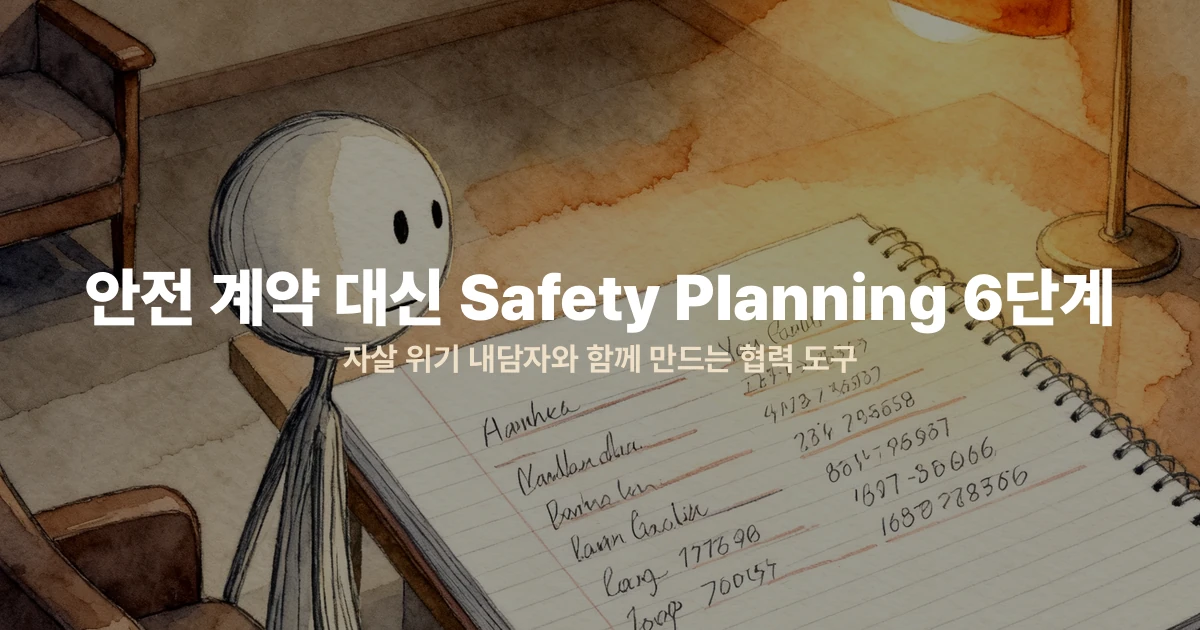
Key takeaway
The no-suicide contract that many clinicians reach for in a crisis does little to reduce actual suicide risk, and it can quietly turn the therapeutic relationship into a control structure. The Safety Planning Intervention (SPI) developed by Stanley and Brown (2012) is a collaborative, six-step crisis tool—from identifying warning signs to restricting access to lethal means—that has been associated with a 45% reduction in suicidal behavior versus usual care in emergency-department research. Its power lies in positioning the client as an active manager of their own crisis rather than a passive signatory, and it works best when treated as a living document you review and update together each session.
Why the No-Suicide Contract Fails to Prevent a Crisis: What the Data Actually Shows
If you've sat across from a client describing suicidal thoughts, you've probably reached for a no-suicide contract at least once. There's a real, if false, comfort in securing a promise—"I won't harm myself or attempt suicide before our next session"—and feeling that you've taken a clinically responsible step. But the accumulated evidence points in a different direction than that intuition.
No-suicide contracts do not meaningfully reduce suicide risk. In an acute crisis, the likelihood that a client will even remember the contract, let alone be guided by it, is low—and the contract itself can quietly reshape the therapeutic relationship into a structure of control and diffused responsibility.
The research-supported alternative is the Safety Planning Intervention (SPI), a six-step collaborative tool formalized by Stanley and Brown (2012). Unlike a contract, SPI has been associated with reduced suicidal behavior in randomized controlled research. This article walks through why contracts fall short, the six-step structure of SPI, the clinical rationale behind each step, and how to operationalize it in everyday practice.
Three Clinical Reasons the No-Suicide Contract Doesn't Work
No-suicide contracts are widely used for two reasons: the intuitive reassurance they offer and the sense that they distribute legal responsibility. The clinical literature, however, challenges their effectiveness on three grounds.
First, the psychological conditions a contract depends on don't hold during a crisis. A contract "works" only when both parties enter it voluntarily and with intact judgment. A suicidal crisis is precisely the opposite state—marked by emotional tunneling, cognitive rigidity, and peak hopelessness. Assuming that a signature obtained in that state will restrain behavior later rests on weak ground.
Second, a contract can convert the therapeutic relationship into a control structure. Once a client fears how their therapist will react if they "break" the contract, they become less likely to disclose suicidal thoughts honestly. The paradoxical result is that the single most important channel for ongoing risk assessment gets shut down.
Third, a contract offers the clinician legal comfort but not clinical safety. Courts weigh the adequacy of clinical judgment far more heavily than whether a contract was signed. The contract itself is not a meaningful defense against liability.
The Six Steps of SPI: A Crisis Plan You Build Together
Stanley and Brown's (2012) SPI is a collaborative tool that can be completed in a single 30–45 minute encounter in an emergency or outpatient setting. The core principle is to position the client as an active participant in managing their own crisis—not a passive signatory to a promise.
| Step | Content | Clinical focus |
|---|---|---|
| 1. Identify warning signs | Thoughts, feelings, behaviors, and situations that precede an escalating crisis | Make them specific to this client's unique pattern |
| 2. Internal coping strategies | Self-directed distraction the client can do alone (a walk, music, a shower) | Must be doable without anyone else |
| 3. Social settings for distraction | People and places that pull attention away from suicidal thoughts | Places they can visit without discussing suicide |
| 4. People to ask for help | Support contacts to reach in a crisis (family, friends) | Confirm the client is actually willing to reach out |
| 5. Professionals and crisis lines | Therapist, mental-health crisis services, suicide prevention lines | Include local/national crisis numbers and emergency services |
| 6. Restricting access to lethal means | Removing or limiting access to lethal means in the environment | The single most powerful intervention |
Step 6 is the most powerful element of the entire plan. Suicide attempts are frequently impulsive, and reducing access to lethal means alone meaningfully lowers attempt rates. This step should include a concrete plan—reviewed with the client—for how medications are stored at home, access to firearms, and where sharp objects are kept, and how each can be limited.
Why SPI Outperforms the Contract: The RCT Evidence
In a 2018 emergency-department study by Stanley and colleagues built on the SPI model, the combination of SPI plus structured follow-up contact outperformed usual care on two key outcomes at six months:
- Suicidal behavior was reduced by roughly 45% compared with usual care
- Engagement in outpatient mental-health treatment increased significantly
Three features distinguish SPI from a no-suicide contract. A collaborative framework—the plan is built with the client, not handed to them. Specificity—it consists of concrete, executable steps rather than an abstract promise. Continuity—it isn't a one-time document but something reviewed and updated together in subsequent sessions.
Five Practices for Running SPI in Real Clinical Settings
1. Assess the crisis first—then decide whether SPI is the right level of response
Not every report of suicidal ideation calls for a full safety plan. Assess the frequency, intensity, specificity of any plan, and access to means first—drawing on a framework like Joiner's interpersonal-psychological theory (thwarted belonging, perceived burdensomeness, and acquired capability)—and then judge whether SPI is the appropriate level of intervention.
2. Co-author it with the client
SPI is not a document you write and hand over. The act of the client putting it into their own words and making their own choices is itself the intervention. Open with a question like, "When you've been in crisis before, what actually helped?"—and fill the plan in using the client's own language.
3. Don't avoid the means-restriction conversation
Means restriction is among the conversations clinicians find most uncomfortable. But skipping this step dramatically reduces SPI's effectiveness. Ask concretely—"Do you keep a lot of medication at home? Where is it stored?"—and agree on an actionable plan, such as changing how medications are stored in collaboration with family.
4. Make sure the client keeps a copy they can actually reach
A safety plan only matters if the client can pull it out in the moment of crisis. Print it, save it in a phone notes app, or photograph it—whatever ensures constant access. "I'm not sure where I put that plan" cannot be the outcome in a crisis.
5. Review and update it next session
SPI is not a document you complete once and file away. Open the next session with: "Which steps from last time actually helped? Is there anything you'd want to change?" As the client's life and context shift, the plan should shift with them.
Crisis Resources to Include in Step 5
When completing Step 5, include the crisis resources relevant to your client's location. Adapt the table below to your own jurisdiction.
| Resource | Contact | Notes |
|---|---|---|
| National crisis/suicide line | Your national line (e.g., 988 Suicide & Crisis Lifeline in the US) | 24/7, free and confidential |
| Local crisis team | Your regional mental-health crisis service | Specialized crisis intervention |
| Emergency services | Local emergency number or nearest ER | For imminent danger |
| Treating clinician | Agreed personal contact method | Non-emergency channel |
Crisis Intervention Is Collaboration, Not Control
Moving from the no-suicide contract to SPI is not a simple swap of tools. It is a shift in clinical philosophy—from seeing a suicidal client as someone to be controlled to seeing them as an active participant in managing their own crisis. SPI is a living tool: built together, reviewed together, and updated together. The quality of any crisis intervention rests on the collaborative relationship you've built with your client—and on records that are kept systematically over time. A secure clinical platform like Modalia AI can help you organize session-by-session risk assessments and track the history of each safety plan update, so the living document stays genuinely alive across the course of care.
References
- 1.
- 2.
Frequently asked questions
Is a no-suicide contract ever clinically useful?
It offers a clinician a sense of reassurance and a perception of shared responsibility, but the evidence does not support that it reduces suicide risk. In an acute crisis—when emotional tunneling and hopelessness peak—the conditions a contract depends on don't hold, and it can discourage honest disclosure. A collaborative safety plan is the better-supported alternative.
How long does it take to complete a Safety Planning Intervention?
SPI was designed to be completed in a single 30–45 minute encounter in an emergency or outpatient setting, which makes it practical even in brief or crisis contexts.
Which step of SPI matters most?
Restricting access to lethal means (Step 6) is the single most powerful element. Because many suicide attempts are impulsive, reducing access to lethal means alone meaningfully lowers attempt rates. It requires a concrete, collaboratively built plan addressing medication storage, firearm access, and other means in the client's environment.
Does SPI replace ongoing suicide risk assessment?
No. SPI is an intervention, not an assessment. You should first assess ideation frequency, intensity, plan specificity, and access to means—and only then decide whether SPI is the appropriate level of response. The plan should also be reviewed and updated each session as the client's situation changes.
This article was written and reviewed using Modalia AI's clinical guidelines, with professional human review before publication.
Related articles
 Case Conceptualization
Breaking the "Yes, But" Game: A Transactional Analysis Guide for Therapists
Every suggestion you offer gets met with "Yes, but..." Here's the TA structure behind that stall—and four clinical moves to break it.
7 min read Case Conceptualization
Yalom's The Gift of Therapy: Passages Every New Counselor Should Copy by Hand
Irvin Yalom's prescription for therapists who fear silence: meet your client as a "fellow traveler" and let the here-and-now become the heart of the work.
6 min read Case Conceptualization
Working With Silence in Therapy: What Client Silence Means and How to Hold It
Silence in session isn't empty space. Learn to read its clinical meaning, tell productive from defensive silence, and use it as a therapeutic tool.
6 min read