Hobbies for Burned-Out Therapists: Why Your Brain Needs Hands, Not Theory
Cognitive hobbies keep a clinician's overworked brain in work mode. Discover why sensory, bottom-up activities prevent burnout—and how to free up the time for them.
Key takeaway
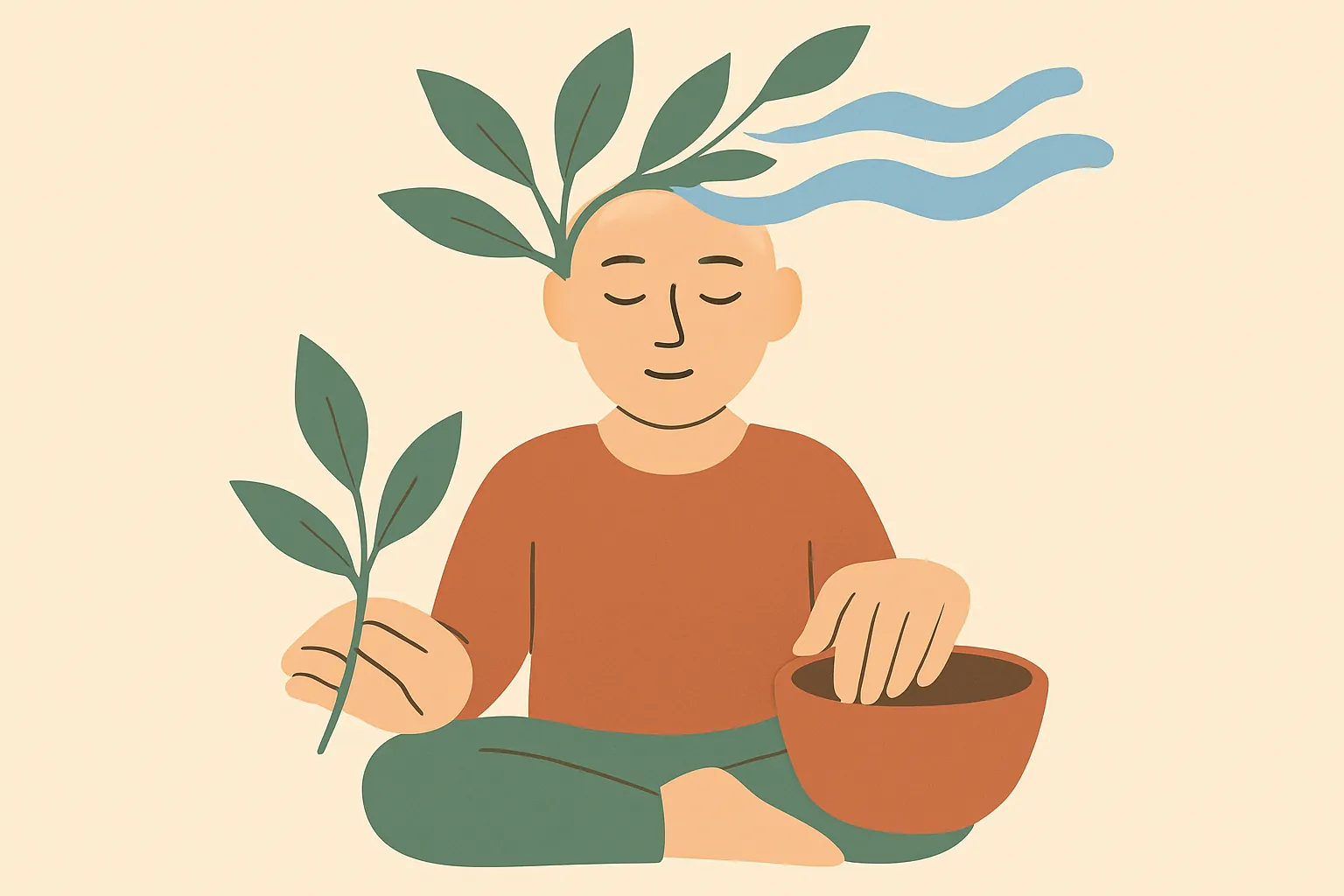
Therapists spend their days in high-cognitive processing—reading nonverbal cues, tracking transference and countertransference—which leaves them chronically exposed to compassion fatigue and vicarious trauma. Continuing cognitively demanding hobbies after hours (reading, film analysis, strategy games) keeps the brain from switching off. Sensory, bottom-up activities like pottery, gardening, and dance instead quiet the over-recruited language centers and engage the parasympathetic nervous system, supporting genuine recovery. When time is the barrier, AI session-documentation tools can shorten administrative work and protect space for embodied self-care.
Did You Clock Out Today With Your Head Still Running? The Case for Sensory Hobbies
If you finished your last session and your mind kept working—rehearsing an intervention, second-guessing a formulation, or planning tomorrow's notes—you're not alone. Clinical work is sustained cognitive labor. In the consulting room we hold high-level attention for hours: catching nonverbal cues, tracking transference and countertransference, and waiting for the right moment to intervene. Our brains are running near-continuous cognitive processing.
Many of us then carry that load home, reading case literature or theory in the name of "professional growth." Ongoing learning is part of the job. But real clinical insight comes from a well-rested brain. For a workforce at elevated risk of compassion fatigue and vicarious trauma, rest isn't a luxury—it's an ethical responsibility and a core self-care strategy. This piece is about the kind of recovery that happens when you stop analyzing and start sensing: hobbies that quiet the head by engaging the body.
Why Sensory, Not Cognitive? The Clinical Rationale
During a session, the brain leans hard on top-down processing centered in the frontal lobe—constructing meaning through language, parsing logical structure, holding a formulation in mind. If your after-hours hobby also draws on those same resources (reading, interpreting films, strategy games), the brain never fully shifts out of "work mode." It stays online.
What clinicians need instead is a bottom-up approach: starting from physical sensation and letting the signal travel up to the brain. This calms an over-activated sympathetic nervous system and engages the vagus nerve, which supports a felt sense of safety. As somatic psychology and trauma-focused work emphasize, immersing in bodily sensation rests the language centers and anchors attention in the here and now—one of the most reliable ways to regulate.
Table 1. Cognitive rest vs. sensory rest for clinicians
| Cognitive hobbies (limit after work) | Sensory hobbies (recommended) | |
|---|---|---|
| Typical activities | Reading, film analysis, language study, chess | Pottery, baking, gardening, woodworking, dance |
| Brain regions engaged | Frontal lobe, language centers | Sensorimotor cortex, limbic regulation |
| Effect on the clinician | Accumulating cognitive fatigue; analysis continues | Emotional release, grounding, resilience |
| Clinical upshot | Good for acquiring knowledge, but raises burnout risk | Builds self-regulation through sensory integration |
Three "Body-First" Hobbies Worth Trying
This is more than "get some exercise." The activities below are chosen because they refill the specific kind of energy clinical work depletes.
1. Touch and creation: pottery and clay work
Clay is a deeply tactile material you shape with your hands. Centering a piece on the wheel is, functionally, a powerful grounding technique. After a day spent holding the formless, shifting interior world of a client, producing something tangible and visible offers a real sense of efficacy. Time spent attending only to the feel of the clay—no language required—is an excellent prescription for an overheated, verbal brain.
2. Nonverbal connection: gardening and plant care
Tending plants resembles tending clients, with one decisive difference: plants don't demand verbal feedback. The multisensory experience—the smell of soil, the texture of a leaf wiped clean, the green in your field of view—activates the parasympathetic system. And the slow pace of growth offers a quiet reassurance: you don't have to produce an immediate solution. It's a gentle antidote to impatience about clinical "results."
3. Waking up interoception: dance, yoga, freediving
Favor movement that draws attention to your own breath and body over pure strength training. Holding your breath underwater while feeling your heartbeat, or letting your body follow a rhythm in dance, turns externally-directed attention inward. This strengthens embodied self-awareness—the capacity to notice your own bodily responses—which in turn sharpens countertransference management in the room.
"I Don't Have Time": A Realistic Constraint and What to Do About It
If you're thinking where exactly do I find the time, with session notes and transcripts already piling up?—that's a fair objection. Many clinicians spend more hours on administration and documentation than on direct client contact. That structural time scarcity is the single biggest obstacle to self-care.
Streamline documentation with AI
There was a time when writing up a session meant replaying the recording and typing it out line by line for hours. AI session-documentation tools can compress that dramatically—handling speaker separation and surfacing the key content in context. Let the machine do the repetitive cognitive labor it's well-suited for. The time you reclaim should be reinvested in the rest and sensory activity that make you a better clinician. (For sensitive clinical material, choose a security-first tool such as Modalia AI, designed for counselors who need transcription, case conceptualization support, and documentation without compromising client confidentiality.)
Build a micro-break routine
If a full hobby feels like too much, use the ten minutes between sessions. Five minutes gazing out a window (visual rest), or massaging your hands with a favorite scented cream (touch and smell), counts as genuine somatic practice. What matters is the deliberate shift from analyzing to sensing.
Closing: A Well Therapist Makes for Well Clients
The body doesn't lie. Stress we override with our minds eventually shows up as physical symptoms, and that erodes the quality of our work. The moment you walk out of the consulting room, set down the theory and the case analysis. Touch soil, break a sweat, breathe in something from the natural world.
Emptying the head to fill the body is never wasted time. It's how you empty the vessel so you can fully hold the next client. This weekend, reach for clay instead of the keyboard, or hiking boots instead of a textbook—and let a trusted AI partner handle the documentation, so you can focus on caring for yourself.
Frequently asked questions
Why are sensory hobbies better than cognitive ones for preventing burnout?
Clinical work relies on top-down, frontal-lobe processing—language, logic, and meaning-making. Cognitive hobbies recruit the same systems, so the brain never leaves work mode. Sensory, bottom-up activities start from physical sensation, rest the language centers, and engage the parasympathetic nervous system, allowing genuine recovery.
What counts as a 'bottom-up' or sensory hobby?
Activities that anchor attention in physical sensation rather than analysis: pottery and clay work, gardening, baking, woodworking, dance, yoga, and breath-focused movement like freediving. The shared feature is that they pull attention into the body and the present moment.
I genuinely don't have time. What's the minimum that helps?
Use the ten minutes between sessions. Five minutes of looking out a window, or massaging your hands with a scented cream, is a legitimate somatic micro-break. You can also reclaim larger blocks of time by streamlining documentation with AI session tools and reinvesting that time in self-care.
How does sensory self-care affect the actual clinical work?
Movement and breath-based practices strengthen interoception and embodied self-awareness—your capacity to notice your own bodily responses. That sensitivity improves countertransference management and protects against the compassion fatigue and vicarious trauma that degrade clinical quality over time.
This article was written and reviewed using Modalia AI's clinical guidelines, with professional human review before publication.
Related articles
 Case Conceptualization
Breaking the "Yes, But" Game: A Transactional Analysis Guide for Therapists
Every suggestion you offer gets met with "Yes, but..." Here's the TA structure behind that stall—and four clinical moves to break it.
7 min read Case Conceptualization
Yalom's The Gift of Therapy: Passages Every New Counselor Should Copy by Hand
Irvin Yalom's prescription for therapists who fear silence: meet your client as a "fellow traveler" and let the here-and-now become the heart of the work.
6 min read Case Conceptualization
Working With Silence in Therapy: What Client Silence Means and How to Hold It
Silence in session isn't empty space. Learn to read its clinical meaning, tell productive from defensive silence, and use it as a therapeutic tool.
6 min read