When a Client Says "I Want to Die": A Counselor's Suicide Risk Assessment Manual
A clinical, step-by-step guide to assessing suicide risk, building a Stanley-Brown safety plan, and documenting defensively when a client discloses suicidal thoughts.
Key takeaway
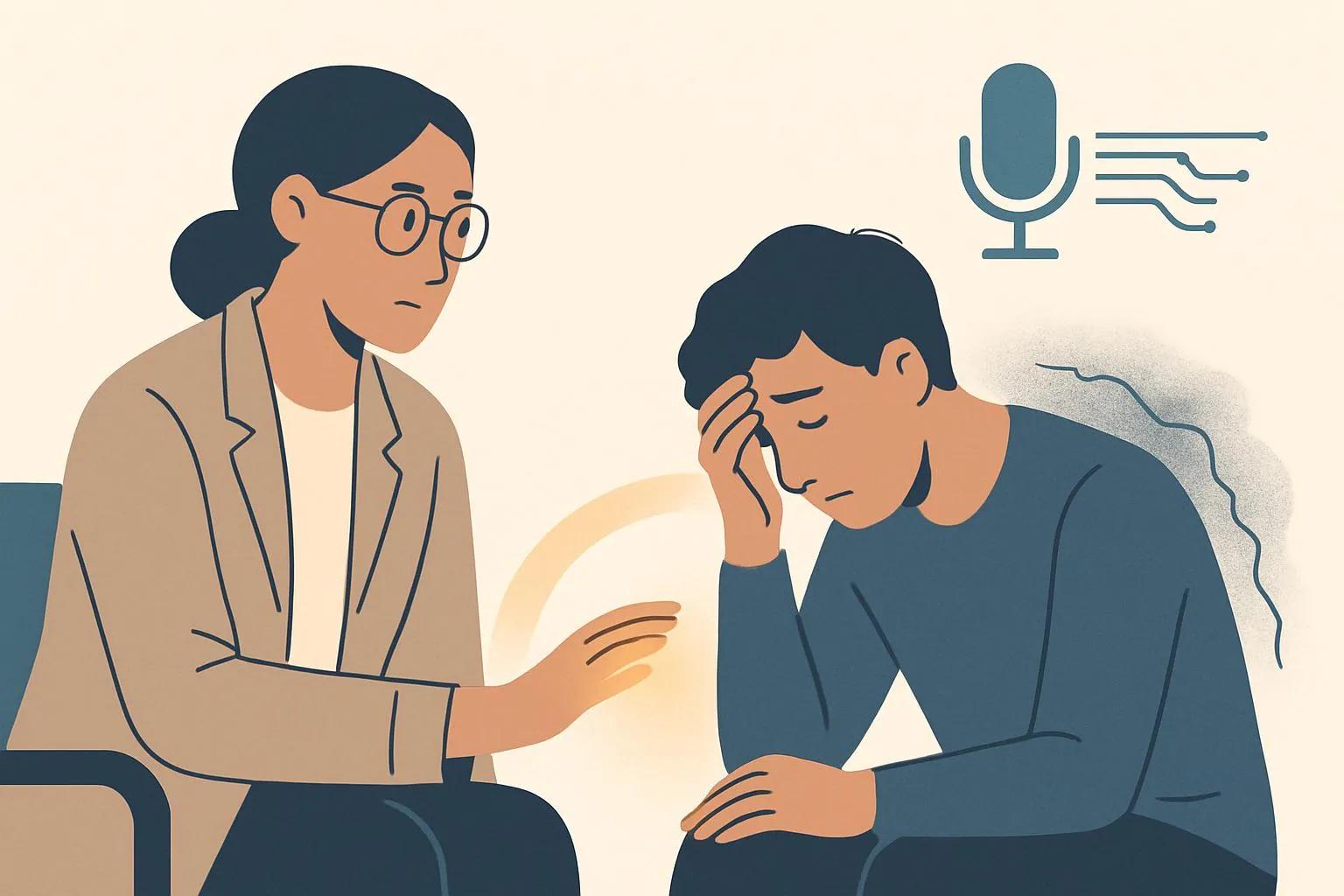
When a client discloses suicidal thoughts, the counselor must hold deep empathy and clear-eyed clinical judgment at the same time. Risk assessment begins by distinguishing ideation, plan, and intent, then integrating static factors (such as a prior attempt) with dynamic factors (such as current hopelessness or a recent loss) to determine a risk level. Intervention rests on collaboratively building a Stanley-Brown safety plan rather than relying on a "no-suicide contract," escalating high-risk cases through supervision and psychiatric referral, and documenting the client's statements and your reasoning in precise detail to meet your ethical and legal obligations.
"To be honest, I started saving up my pills yesterday." What do we do in the moment our stomach drops?
When a client finally breaks a heavy silence to disclose that they have been thinking about ending their life, even the most seasoned clinician feels the cold prickle of adrenaline. As counselors, we are asked to do two things at once: to stay fully present with the depth of a person's pain, and to function as a composed professional in the face of a genuine emergency. In that moment — one tied directly to a client's life — our response is no longer only a therapeutic intervention. It is also bound up with our ethical and legal responsibilities.
Many clinicians, especially early in their careers, hesitate at exactly the wrong place. Some avoid the most important questions out of a fear that "What if I plant the idea, or make it worse, by asking directly?" The evidence is reassuring here: asking about suicide does not increase risk. Others swing the other way, becoming so defensive and procedural that they fracture the very rapport that keeps the client talking. Reading the warning signs accurately — and replacing vague dread with a concrete risk assessment protocol — is one of the most essential competencies a counselor can develop. This article walks through the clinical criteria for assessing suicide risk and the intervention strategies that follow.
1. The Three Components of Risk: Hearing the Real Intent Behind "I Want to Die"
The first task, when a client mentions suicide, is to clearly distinguish ideation, plan, and intent. A passing thought of "I wish I weren't here" and a state in which the person has a concrete, actionable plan represent very different levels of clinical risk.
Thomas Joiner's Interpersonal Theory of Suicide offers clinicians a useful lens. Joiner proposes that the desire for suicide emerges when a person experiences both thwarted belongingness and perceived burdensomeness — the sense that one is a burden to others. A lethal attempt, however, also requires acquired capability: a learned ability to override the natural fear of death and physical self-harm. With that framework in mind, work through the client's state in a structured sequence:
-
Explore the specificity of ideation
Notice whether the client speaks in diffuse terms ("I just want to disappear") or describes having thought concretely about how. Differentiating passive ideation from active ideation is the first step.
-
Assess plan, lethality, and access
Evaluate how lethal the imagined method is and how readily the client can access the means. A client who says "I have pills saved up at home" is far more likely to need immediate intervention than one who speaks abstractly about going to a bridge someday. Means and access turn ideation into acute danger.
-
Gauge intent and protective factors
Determine how firm the client's resolve is to act on the plan, and whether protective factors (family, faith, a pet, responsibilities, hope for the future) remain intact. When protective factors have been stripped away or neutralized, risk reaches its peak.
2. Static vs. Dynamic Factors: Balancing the Risk Assessment
A suicide risk assessment is not a handful of disconnected questions. It requires weighing the client's unchanging historical factors (static factors) against factors that shift with current circumstances (dynamic factors) as an integrated whole. A common pitfall is to fixate on the present crisis (dynamic) while missing the client's chronic, baseline vulnerability (static). The table below compares the two so you can form a layered judgment of the current risk level — Low, Moderate, High, or Imminent.
Table 1. Static and Dynamic Factors in Suicide Risk Assessment
| Static Factors (fixed or long-standing) | Dynamic Factors (present-state, changeable through intervention) | |
|---|---|---|
| Nature | Reflects temperamental vulnerability and history | Reflects current psychological pain and situational crisis |
| Key indicators | • Prior suicide attempt (the single strongest predictor) • Family history of suicide or mental illness • Demographics (e.g., older age, living alone) • Chronic illness or pain | • Severe present hopelessness and worthlessness • Recent loss (breakup, job loss, bereavement) • Active alcohol or substance misuse • Acute anxiety, agitation, insomnia |
| Clinical meaning | Sets the baseline risk level | Becomes the target of acute intervention |
With this frame, the counselor can build an integrated formulation such as: "This client carries an elevated baseline risk because of a prior attempt (static); a recent job loss has now layered on acute stress and increased drinking (dynamic), so immediate safety measures are warranted." Because dynamic factors are precisely what therapy can change, they form the core of the treatment plan.
3. Intervening Without Panicking: Safety Planning and Precise Documentation
Once the assessment is complete, it is time to act. There is broad clinical consensus that simply extracting a promise — a "no-suicide contract" — has little protective value. Instead, build a concrete, achievable safety plan.
-
Build a safety plan
Using a structured tool such as the Stanley-Brown Safety Plan, write the steps out with the client: Step 1 — recognizing personal warning signs; Step 2 — internal coping strategies the client can do alone; Step 3 — people and settings that provide distraction; Step 4 — reaching out to friends or family for support; Step 5 — contacting professionals and emergency resources (such as your local or national crisis line — 988 in the US, 116 123 in the UK — or emergency services). The plan should live somewhere the client can reach instantly in a crisis: a wallet card, or a note saved on their phone.
-
Use peer supervision and multidisciplinary referral
Suicide-crisis work is too heavy to carry alone. When a client is assessed as high-risk, report to your supervisor immediately and bring the case to peer consultation to pressure-test your intervention plan. If the client is not already receiving medication, strongly recommend a psychiatric referral and evaluate whether a higher level of care or hospitalization is needed. A multidisciplinary approach is essential, not optional.
-
Document defensively and accurately
In suicide-crisis work, documentation is the counselor's single best safeguard. Record the client's statements about suicide, the assessment process you carried out, the safety measures you took (contacting a support person, considering an emergency response), and the client's responses — with precision, not paraphrase. Rather than a thin summary like "client said they wanted to die," write something defensible: "Client stated, 'Tonight I thought about jumping from the balcony,' indicating a specific plan; assessed for plan and likelihood of attempt using the C-SSRS." That level of detail is what allows you to account for your clinical decisions if ethical or legal questions arise later.
Free Your Eyes for the Client — Let Go of the Documentation Burden
When a client's voice trembles around the words "I want to die," you need to catch every flicker in their eyes and stay completely inside their pain. But what actually happens? To prepare for a possible legal dispute or a supervision review, you find yourself staring down at your notepad, transcribing their most dangerous statements word for word. In a crisis above all, the counselor must be a healer, not a stenographer.
This is where an AI-based session-transcription tool can serve as a genuine clinical aid. While you give 100% of your attention to the client's emotional shifts and nonverbal cues, the AI captures the exact words, nuance, and context of any plan the client describes, preserving it as accurate text. That goes beyond cutting administrative load: a precise transcript can help you catch the subtle cue you missed when you reassess risk later, and bring objective, verbatim material to your supervisor for consultation. As a security-first AI partner built for counselors, Modalia AI handles transcription, case conceptualization, and documentation so that, in the moments that matter most, you can hand the anxiety about record-keeping over to the technology — and hold your client steady with a warm, undivided gaze. That is the highest form of professionalism a counselor can offer.
References
- 1.
- 2.
- 3.
Frequently asked questions
Does asking a client directly about suicide increase their risk?
No. Research consistently shows that asking directly and openly about suicidal thoughts does not plant the idea or raise risk. Avoiding the question is the greater danger, because it leaves you without the information you need to keep the client safe. Ask clearly and without flinching.
What is the difference between suicidal ideation, plan, and intent?
Ideation is the thought itself, which can be passive ("I wish I weren't here") or active (thinking about how). A plan is a specific, considered method, weighed by its lethality and how easily the means can be accessed. Intent is the strength of the client's resolve to act. Distinguishing the three is the foundation of any risk assessment.
Why is a "no-suicide contract" considered ineffective?
A promise not to attempt suicide has little protective value and offers no concrete support during a crisis. A collaboratively built safety plan — such as the Stanley-Brown model — is preferred because it gives the client a concrete, step-by-step sequence of warning signs, coping strategies, support contacts, and emergency resources to use in the moment.
What is the single strongest predictor of suicide risk?
A prior suicide attempt is the strongest known predictor and is a static (historical) factor that sets the client's baseline risk. It must be integrated with dynamic factors — such as current hopelessness, recent loss, or substance use — to arrive at an accurate, layered judgment of risk.
This article was written and reviewed using Modalia AI's clinical guidelines, with professional human review before publication.
Related articles
 Case Conceptualization
Breaking the "Yes, But" Game: A Transactional Analysis Guide for Therapists
Every suggestion you offer gets met with "Yes, but..." Here's the TA structure behind that stall—and four clinical moves to break it.
7 min read Case Conceptualization
Yalom's The Gift of Therapy: Passages Every New Counselor Should Copy by Hand
Irvin Yalom's prescription for therapists who fear silence: meet your client as a "fellow traveler" and let the here-and-now become the heart of the work.
6 min read Case Conceptualization
Working With Silence in Therapy: What Client Silence Means and How to Hold It
Silence in session isn't empty space. Learn to read its clinical meaning, tell productive from defensive silence, and use it as a therapeutic tool.
6 min read