How to Write the Self-Reflection Section of a Supervision Report (That Supervisors Actually Praise)
Turn raw feelings into clinical hypotheses: a practical guide to writing the self-reflection section of a counseling supervision report.
Key takeaway
The self-reflection section of a supervision report is not a diary or a confession of mistakes—it's the process of converting your countertransference into a working clinical hypothesis. Supervisors care less about *what* you did and more about *why* you felt what you felt and *how* it shaped the therapeutic relationship. Describing somatic cues as countertransference data, examining why an intervention was missed, and linking your own history to the session all deepen the reflection. Accurate session recall plus interpretation of what lies beneath it ultimately determines the quality of the report.
The Cursor That Stops Blinking
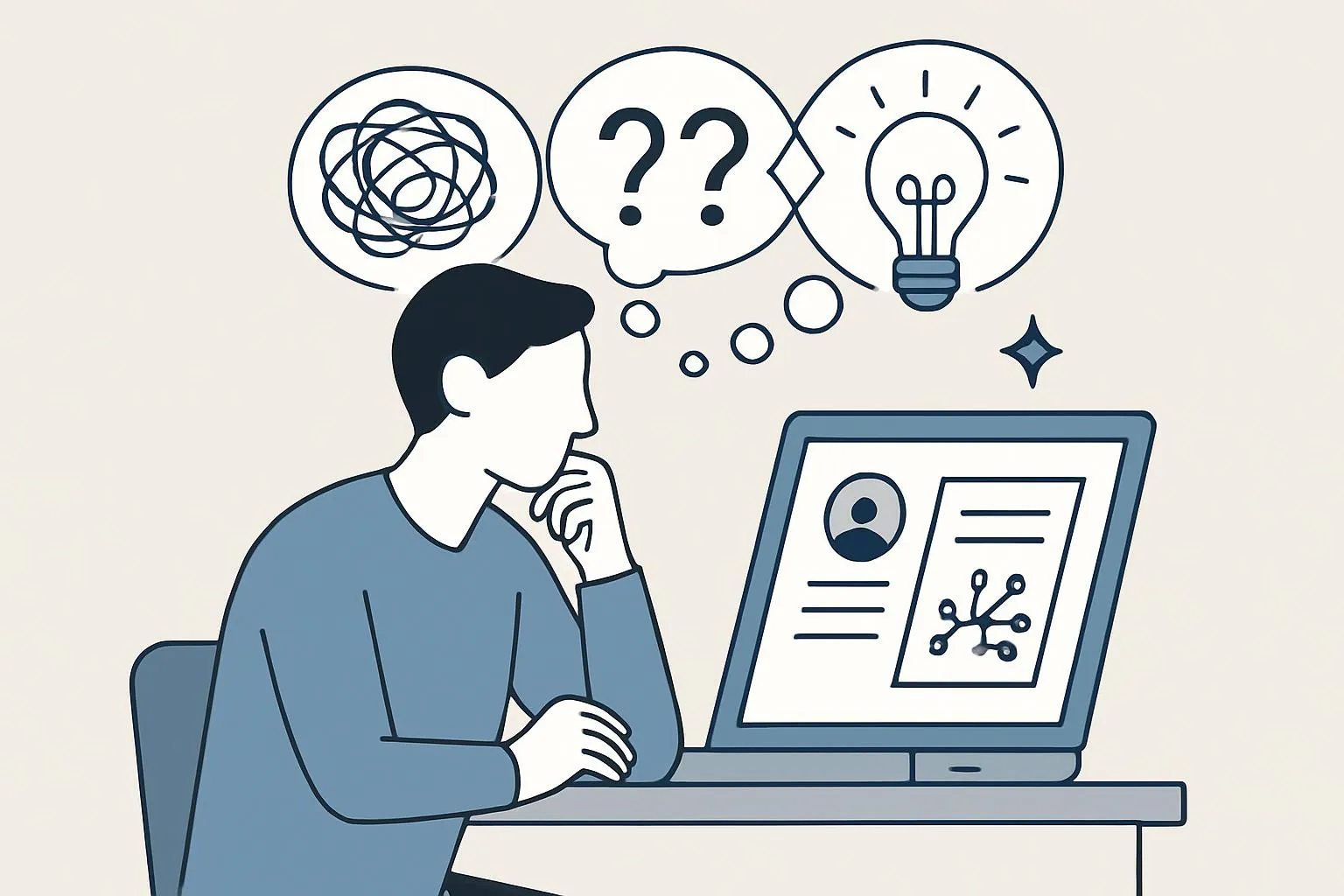
If you've trained as a counselor or worked your early caseload, you know the feeling: client demographics and session summaries flow straight from your notes, but there's one field where the cursor just blinks. It's the Counselor Self-Reflection section—sometimes labeled Counselor Response and Analysis on a supervision form.
Write "I was thrown by what the client said and couldn't intervene well," and you worry it reads as incompetence. Hide behind theory—"I identified the client's defense mechanisms"—and you brace for the inevitable note: "And what was your experience of that?" Yet the deepest growth in supervision comes from exactly this section. Done well, it isn't a feelings diary; it's how you sharpen your use of self as the instrument of therapy.
Many clinicians fixate on what they did. Seasoned supervisors want to see why you felt what you felt and how that feeling moved through the therapeutic relationship. Below are the core things a supervisor is looking for—and concrete techniques for showing clinical insight on the page.
From a List of Feelings to a Clinical Hypothesis
The reflection that disappoints supervisors most is the one that stalls at "diary" or "apology." "I was scared when the client got angry. I need to stay calmer next time" is honest, but it carries almost no clinical signal. Self-reflection should convert your subjective experience into an objective clinical hypothesis.
The anxiety, boredom, or irritation you feel in session—your countertransference—is often the single best clue to the client's dynamics. So the report shouldn't say "I felt anxious" and stop; it should ask, "Why was anxiety triggered at this exact moment?" A simple scaffold helps: fact → feeling → analysis → alternative. The contrast below makes the difference concrete.
| Element | Weaker version (diary / self-critical) | Stronger version (analytic / insight-driven) |
|---|---|---|
| Naming the feeling | The client kept going silent and it was so frustrating and disorienting. | As the client's silence stretched on, I felt sharp frustration alongside pressure that I had to do something. |
| Analyzing the dynamic | I'm still a beginner, so I probably just can't tolerate silence. | That frustration may be the client's habitual "fear of being rejected" in relationships, placed into me through projective identification. |
| Proposing an alternative | I'll try to sit with silence better next time. | Rather than forcing the silence to break, I'd work it in the here-and-now: "I'm curious what's coming up for you in this quiet." |
Table 1. Beginner vs. seasoned approaches to writing self-reflection.
Three Strategies for Concrete, Clinical Reflection
So what actually goes on the page? Here are three techniques for translating a vague impression into professional language. Use them and you raise the odds of hearing, "You have a good read on your own dynamics here."
1. Use somatic sensations as countertransference data
When a feeling is hard to name, start with the body. "My chest felt tight," "I was suddenly overcome with drowsiness," "my shoulders tensed"—these are often unconscious countertransference responses surfacing first. Then link the sensation to a clinical formulation. For example: "When the client began talking about her mother, I felt a sudden wave of sleepiness. As the client used isolation of affect to wall off her own anger, I seem to have caught the same numbed, deadened quality in myself." The body becomes evidence, not noise.
2. Don't write the intervention you should have made—examine why you didn't
Supervision is not a test with a single right answer. If you missed an intervention, write what stopped you in that moment. "I thought I should offer a confrontation, but I hesitated, afraid the client would feel hurt and drop out of therapy." That is excellent reflection. It reveals how your own fear of abandonment or need for approval is shaping the work—and it gives your supervisor a precise target for coaching.
3. Connect your personal life to the clinical scene
When a client's particular complaint touches an unresolved issue of your own—a trigger—it's worth naming in the report, within ethical bounds. "I realized the client's passive-aggressive stance stirred memories of my authoritarian father, and I responded more defensively than usual." Reflection like this signals that you can recognize your own material and work to contain it rather than act it out.
Accurate Records Make Deep Reflection Possible
Ultimately, the self-reflection section rises or falls on two things: how accurately you reconstruct what happened in the session, and how deeply you interpret the meaning beneath it. The practical problem is that many clinicians burn all their energy replaying recordings and typing up a verbatim transcript. By the time they reach the analysis and reflection—the part that matters most—they're spent, and the writing turns thin.
Good reflection comes from spare cognitive resources. The goal is to move out of repetitive transcription labor and spend your time on the expert thinking—reading the context and arc of the session. Increasingly, clinical settings are adopting AI tools to cut exactly this inefficiency.
Where AI transcription can help
- Better source data. Speaker-separated, automated transcription captures the subtle verbal habits and nuances you'd otherwise miss when working from memory alone.
- More metacognition. When documentation time drops sharply, you can reinvest the surplus into rereading the session and asking the questions that matter: "What was I feeling here? What was the hidden intent behind this utterance?"
- Objective pattern data. Modern tools don't just transcribe; some surface your talk-to-listen ratio, silence duration, and word-frequency patterns. That gives your reflection an evidence base beyond subjective impression.
A note on tooling: a number of secure transcription and documentation platforms now exist for clinicians, including Modalia AI, a security-first AI partner built for counseling work—transcription, case conceptualization support, and progress notes. Choose whatever fits your setting and meets your jurisdiction's privacy and consent requirements.
Supervision is not a place where you are graded; it is a secure base meant to protect and grow you. Bring these reflection techniques to your next report—and let routine documentation fall to the tools so you can spend your attention exploring the clinician you are becoming. The deeper the reflection, the deeper the work with your clients.
Frequently asked questions
What's the difference between a diary entry and a true clinical self-reflection?
A diary entry lists feelings and resolutions ("I was anxious; I'll do better"). A clinical self-reflection converts that subjective experience into a testable hypothesis about the client's dynamics and the working alliance—naming the feeling, analyzing why it arose at that moment, and proposing an alternative intervention.
Is it unprofessional to admit I froze or missed an intervention?
No. Supervision is not a test with one correct answer. Writing honestly about what stopped you—fear of the client dropping out, a need for approval—reveals the dynamics shaping your work and gives your supervisor a precise place to coach. Hidden mistakes can't be supervised.
How much of my personal history should I include?
Include it when a client's material clearly touches one of your own triggers and it affected the session, but keep it within ethical bounds and focused on the clinical impact. The aim is to show you can recognize and contain your own material—not to process your personal history in the report.
How can AI transcription improve the quality of my reflection?
By automating speaker-separated transcription, AI tools free up the cognitive resources usually spent on manual note-taking. That surplus can go toward rereading the session, examining your own reactions, and reviewing objective patterns like talk-to-listen ratio—giving your reflection an evidence base beyond memory.
This article was written and reviewed using Modalia AI's clinical guidelines, with professional human review before publication.
Related articles
 Clinical Skills
How to Write Better Supervision Questions: Getting What You Actually Need from Your Supervisor
Stuck on what to ask in supervision? Use these structured question strategies to turn vague check-ins into focused clinical insight.
7 min read Clinical Skills
From "The Client Seems Depressed" to a Clinical Hypothesis: How Word Choice Elevates Your Case Reports
Turn vague observations into precise clinical hypotheses. A practical guide to terminology and sentence formulas that make your case reports read like expert work.
7 min read Clinical Skills
The Wounded Healer Trap: Why "I Want to Heal Myself" Sinks Your Counseling Grad School SOP
Why admissions faculty flinch at "I want to heal my own wounds"—and how to transform personal pain into a research-grade statement of purpose that gets you in.
6 min read