Telehealth by Phone: How to Hold Silence When You Can't See the Client
Three field-tested ways to turn dreaded phone-session silences into therapeutic openings—plus how AI documentation lets you stay present instead of typing.
Key takeaway
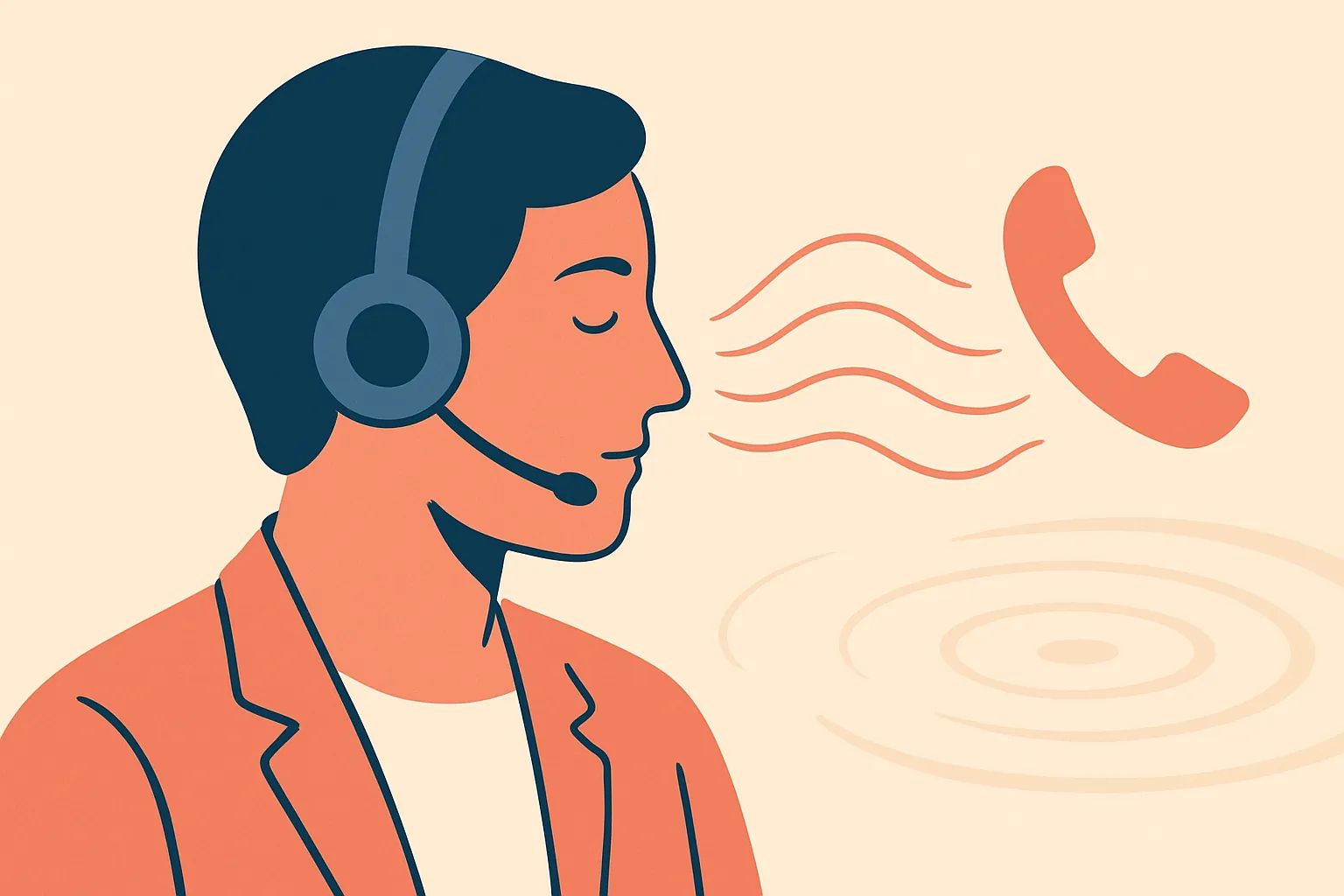
On the phone, you lose roughly the visual half of nonverbal communication, so you must read breath, pacing, and tone instead of a face—and research links that loss of visual cues to higher clinician burnout. Telephone silence falls into three types: productive (the client is regulating or organizing thoughts), avoidant (resistance or not knowing what to say), and environmental (connection or physical interruption), and each calls for a different response. You can convert silence into a therapeutic opening with minimal auditory cues that signal presence, metacommunication that names the pause out loud, and an early agreement about how silence will work. AI documentation tools support this by timestamping silences to the second and transcribing paralinguistic cues, freeing you to listen rather than type.
When the Line Goes Quiet: A Survival Guide for Silence in Telephone Counseling
You know the moment. The client stops talking, and a stretch of dead air opens up on the line. In an in-person session, a pause is something you share—you watch the client wipe away a tear or stare into the middle distance, and you sit in it together. Over the phone, the same silence can spike your pulse. You fight the urge to ask, "Are you still there? Did we get cut off?" while a quieter anxiety runs underneath: is this resistance, a moment of insight, or just a dropped signal?
As telephone and telehealth work has become routine, many clinicians report the same clinical strain: the absence of visual cues. Classic estimates put roughly half of nonverbal communication in the visual channel—posture, gaze, facial expression—and when that channel is gone, the cognitive and emotional load shifts entirely onto your ears. Studies of telecounseling have linked this loss of visual information to elevated clinician fatigue and burnout, in part because reading a single breath or a micro-shift in tone demands sustained, effortful attention. This piece reframes phone-session silence as something other than a threat—as a therapeutic opening—and gives you concrete ways to work with it.
Reframing Silence: From Dead Air to Data
To work with silence on the phone, first classify it. Because you can't see the context that would make the meaning obvious, you have to move from passive waiting to active hypothesis-testing. Silence isn't merely "the absence of speech"—it's often the most powerful auditory signal a client sends.
Clinically, telephone silence tends to fall into three categories. Productive silence is the client regulating an emotion or organizing a thought. Avoidant silence comes from not knowing what to say, or from resistance to you or the material. Environmental silence is the mundane reality of a dropped bar of signal, a passing truck, or someone walking into the room. The table below contrasts how silence behaves—and how you intervene—across the two settings.
| Dimension | In-Person (Face-to-Face) | Telephone (Telehealth) |
|---|---|---|
| Primary cues | Gaze, posture, facial expression, tears—visual data | Breathing, sighs, background noise, a tremor in the voice |
| Clinician's move | Holding, a warm look, offering a tissue | Verbal support ("take your time"), auditory minimal encouragers ("mm-hm," "I'm here") |
| Difficulty of reading silence | Relatively low; often intuitive | High; easily misread, often needs explicit checking |
| Clinician anxiety | Lower; co-presence is easy to establish | Higher; fear of disconnection, loss of control |
Table 1. Reading silence in face-to-face versus telephone settings.
Three Field Techniques for the Silence You Can't See Through
So when the client goes quiet, what do you actually do? Blurting "Hello? Are you there?" can shatter a delicate moment. Here are three techniques that keep the clinical thread intact without losing the felt sense of connection.
1. Maintain auditory presence
When you fall completely silent on the phone, the client can't tell whether you're deep in attention or checking email—and may conclude you're bored or distracted. A few minimal encouragers keep your presence audible.
- How: Rather than going totally silent while the client pauses, offer a soft breath or a low "mm…," "mm-hm" every few seconds. The message is: I'm staying with you, and I'm not going to crowd your silence.
2. Name the silence with metacommunication
Once a pause runs long—roughly ten seconds or more—don't leave it ambiguous. Make the silence itself the topic, in a tone of curiosity and care rather than interrogation. Putting the unseen moment into words lowers the client's anxiety as much as your own.
- Avoid: "Why aren't you saying anything?" / "Are you listening?"
- Try: "I notice we've gone quiet for a moment—would it be okay to ask what's coming up for you, or whether you're just gathering your thoughts?" Or: "This silence feels pretty heavy to me right now—I'm curious how it feels on your end."
3. Build a safety net during structuring
If you set expectations about silence early, during the structuring phase, both of you relax later. This is also part of the ethical structuring unique to remote work.
- Script: "Because we're talking without seeing each other, a silence can leave us both wondering what's happening. If you ever need a moment to think, please take it—I won't rush you, and I'll wait. And if you're ever worried the connection dropped, you can just say 'still here' and we'll know we're good."
Documenting Silence—and Putting AI to Work
Phone sessions carry a heavier documentation burden than in-person ones. Holding a handset (or wearing a headset) with one hand while typing with the other means your keyboard clatter can intrude on the very silence you're trying to honor. And after the session, reconstructing a transcript raises a stubborn question: "Was that pause five seconds, or thirty?" Yet the length of a silence is meaningful data—it can index the intensity of resistance or the depth of an emerging insight.
This is where many clinicians now lean on AI-assisted transcription and documentation. Globally available tools—Otter, Notta, and a growing field of clinical-grade services like Modalia AI—go beyond turning speech into text; they analyze the session's structure and texture.
- Precise silence measurement: AI timestamps the gaps between speech to the second. In supervision, that gives you objective data—"the client went quiet here for fifteen seconds"—to anchor a discussion of countertransference.
- Transcribing paralinguistic cues: Breath, a voice thick with tears, a change in speaking rate—these get detected and noted in the transcript, partly compensating for the missing visual channel of phone work.
- Staying with the client: When you let go of the compulsion to capture every word, you can give your full attention to the voice on the line—strengthening the working alliance that telephone work most depends on.
Not being able to see a client's face is a real limitation. But it's also, paradoxically, an invitation to listen more deeply to the voice itself—the most direct channel to what a person is feeling. Don't fear the silence on the line. Reading the many things contained inside it is exactly the expertise the work asks of you. With a few auditory-presence techniques and the right documentation support, you can hear—and record—the client you cannot see.
Action item: In your next phone session, take your hand off the keyboard during a silence and match your breathing to the client's. Afterward, note in your record what the texture of that silence felt like.
Frequently asked questions
Why is silence harder to manage in telephone counseling than in person?
On the phone you lose the visual channel—gaze, posture, facial expression—that normally lets you read a pause intuitively. Roughly half of nonverbal communication is visual, so over the phone you must infer meaning from breath, tone, and pacing alone, which is more effortful and easier to misread.
How long should I let a silence run before naming it?
There's no fixed rule, but around ten seconds or more is a reasonable point to name the pause with metacommunication. Before that, brief minimal encouragers like a soft 'mm-hm' usually keep the client from feeling abandoned while still giving them room to think.
What's the difference between productive, avoidant, and environmental silence?
Productive silence is the client regulating emotion or organizing thoughts. Avoidant silence stems from not knowing what to say or from resistance. Environmental silence is caused by connection problems or outside interruptions. Each calls for a different response, so forming and checking a hypothesis matters.
How can AI documentation tools help with silence in phone sessions?
AI transcription tools timestamp silences to the second and can flag paralinguistic cues like sighs or a tearful voice. That gives you objective data for supervision and countertransference work, and lets you put down the keyboard and stay fully present with the client's voice.
This article was written and reviewed using Modalia AI's clinical guidelines, with professional human review before publication.
Related articles
 Case Conceptualization
Breaking the "Yes, But" Game: A Transactional Analysis Guide for Therapists
Every suggestion you offer gets met with "Yes, but..." Here's the TA structure behind that stall—and four clinical moves to break it.
7 min read Case Conceptualization
Yalom's The Gift of Therapy: Passages Every New Counselor Should Copy by Hand
Irvin Yalom's prescription for therapists who fear silence: meet your client as a "fellow traveler" and let the here-and-now become the heart of the work.
6 min read Case Conceptualization
Working With Silence in Therapy: What Client Silence Means and How to Hold It
Silence in session isn't empty space. Learn to read its clinical meaning, tell productive from defensive silence, and use it as a therapeutic tool.
6 min read