Text Therapy: Does Counseling by Message Actually Work?
What text-based counseling does well, where it falls dangerously short, and three clinical strategies to make message therapy genuinely therapeutic.
Key takeaway
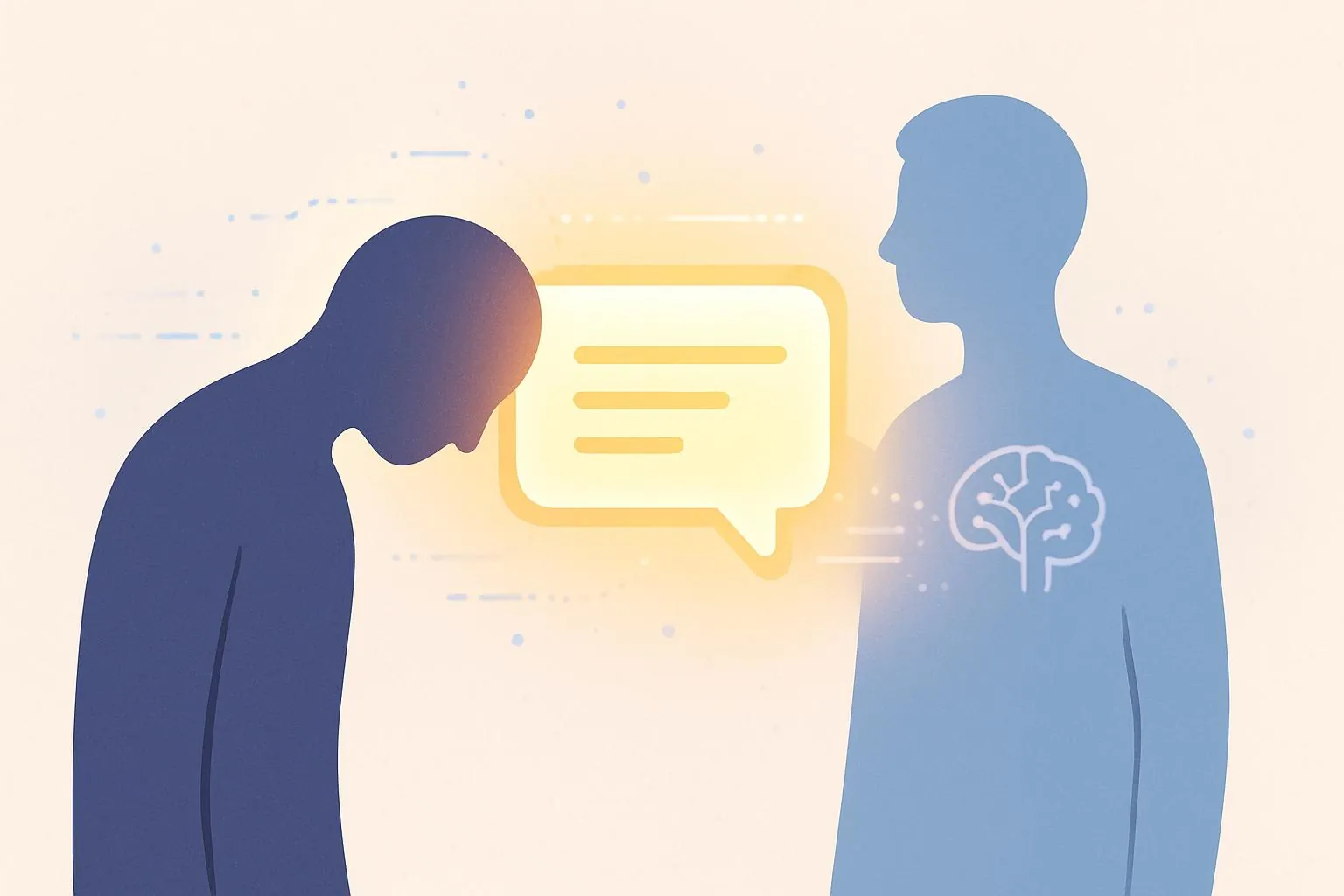
Text therapy leverages the online disinhibition effect, so clients often disclose shame, trauma, and stigmatized material faster than they would face to face—making it a low-barrier entry point for digital natives and socially anxious clients. Its core weakness is the absence of nonverbal cues, which raises the risk of underestimating a client's level of crisis. Clinicians can offset this by developing a deliberate digital-empathy vocabulary, setting clear response boundaries and an explicit escalation protocol for high-risk signals, and using the act of writing as a tool for therapeutic distance. The automatic-documentation advantage of text therapy can also be extended to in-person work through AI transcription and summarization tools.
Can a Single Line of Text Heal? Text Therapy in the Remote-Care Era
Have you noticed the way clients are reaching out to your practice changing? Since the pandemic, remote counseling shifted from optional to expected—and the conversation has moved past video sessions. Text therapy (message-based counseling) is now surging among Gen Z, Millennials, and digital-native clients who would rather type than talk.
The instinctive clinical objection is real: Can genuine empathy happen without a voice to hear or a face to read? Many of us worried early on that text-based intervention would erode the felt sense of presence that anchors the work. But the reality we have to sit with is this: text therapy lowers the psychological threshold to seeking help, and for socially withdrawn or avoidant clients it has become a powerful first point of contact. This article looks closely at what text therapy does well clinically, where it clearly falls short, and the concrete strategies that close the gap.
The Clinical Mechanism—and the Double Edge
Text therapy is not simply speech rendered as writing. It operates on a documented psychological mechanism: the online disinhibition effect. Freed from the felt scrutiny of a counselor's gaze, clients tend to self-disclose faster and more candidly, often surfacing shame or trauma material earlier than they would in the room.
The same coin has a sharp reverse. The absence of nonverbal cues leaves a real diagnostic blind spot. Without tone of voice, a slight tremor, or the texture of a silence, there is more room for misreading—and a genuine risk of underestimating how acute a client's crisis actually is. Comparing modalities side by side makes the trade-offs concrete.
Clinical Characteristics by Counseling Modality
| Dimension | Face-to-Face | Video / Phone (Tele-health) | Text Therapy |
|---|---|---|---|
| Nonverbal information | Rich (expression, gesture, atmosphere) | Limited (off-screen cues lost) | Minimal (relies on emoji, text nuance) |
| Pace of self-disclosure | Gradual, tracks the alliance | Relatively fast | Very fast (anonymity, disinhibition) |
| Documentation & structure | Separate notes / 50-min frame | Separate notes / 50-min frame | Auto-recorded / asynchronous |
| Typical client profile | Prefers traditional care, higher acuity | Working adults, mobility-limited | Digital natives, social anxiety, call phobia |
Table 1. Comparative clinical features and trade-offs across counseling media.
As the table shows, text therapy's standout strengths are automatic documentation and accessibility. Clients can reread the exchange and consolidate insight over time (a bibliotherapy-like effect), and clinicians can challenge cognitive distortions against the client's exact wording. The costs are equally clear: immediate crisis intervention is difficult, and reading the resistance hidden between the lines demands a high level of skill.
Three Practical Strategies for Clinicians
So how do we put this imperfect but compelling tool to responsible clinical use? Three strategies help offset its limitations and maximize therapeutic value.
1. Build a Digital-Empathy Vocabulary
The familiar verbal scaffolding—the reflective "mm," the "that sounds really hard"—can land flat in text. Naming affect has to become more explicit and specific. Beyond appropriate use of emoji, consider bracketed stage directions—(pausing here with you), (holding this gently)—to translate nonverbal warmth into text. These small moves signal to the client that there is a living presence on the other end, not an autoresponder.
2. Set Structured Boundaries and a Crisis Protocol
Messenger-based work can foster the illusion that the counselor is on call 24/7. Before the work begins, agree explicitly on response windows and expected lag. Just as important: spell out, in advance, an ethical escalation protocol for when high-risk signals—suicidal ideation, urges to self-harm—appear in text. The agreement should make clear that such disclosures trigger an immediate move to a phone or in-person contact, and direct the client to their local or national crisis line or emergency services. This protocol protects the client first, and shields you from legal and ethical exposure as well.
3. Use Writing for Therapeutic Distance
Text therapy's greatest asset is that no one has to respond instantly. Try coaching clients, when emotion spikes, not to hit send—to write the message, then look at it for a full minute first. It becomes practice in observing one's own affect from the outside, a genuinely useful CBT tool for clients who struggle with impulse control. The same applies to us: when countertransference rises, editing a message buys time to recover therapeutic neutrality before responding.
A New Era of Documentation—and Less Administrative Drag
Because every exchange is captured as text, message-based work opened a new frontier in documentation. There is no separate transcript to produce, and a client's key words and recurring patterns can be reviewed objectively from the record—freeing the clinician to stay with the client's narrative.
Yet most clinical work is still face-to-face and video. Once you have tasted the convenience of an automatic record, returning to a pile of session recordings and memory-dependent case notes after in-person sessions is its own kind of fatigue. Is there a way to bring text therapy's accuracy of record to in-person work?
This is where AI-assisted documentation is closing the gap. Tools that transcribe a session via speech-to-text, separate speakers, and summarize key themes and the client's emotional arc extend text therapy's documentation advantage into the consulting room. The point is not merely trimming administrative load—it is reclaiming time so the clinician can hold the client's gaze a little longer and listen a little deeper. A security-first partner like Modalia AI is built for exactly this: transcription, case conceptualization, and progress notes that stay with the clinical work rather than competing with it.
Tools change as the era does. If we embrace text therapy's strengths while staying clear-eyed about its limits—and bring modern tools into supervision and record-keeping deliberately—we can protect the unchanging core of healing even as the surface keeps shifting. What tools are you using to reach your clients today?
References
- 1.
Frequently asked questions
Why do clients open up faster in text therapy?
Because of the online disinhibition effect. Without the felt scrutiny of a counselor's gaze, many clients disclose shame or trauma material sooner than they would in person. This makes text therapy a low-barrier first point of contact, especially for socially anxious or avoidant clients—though faster disclosure is not the same as a stable alliance.
What is the biggest clinical risk of counseling by text?
The absence of nonverbal cues—tone, micro-tremors, the quality of a silence—creates a diagnostic blind spot. The most serious consequence is underestimating a client's level of crisis. This is why an explicit escalation protocol, agreed before the work begins, is essential.
How should I handle high-risk signals in a text session?
Establish, in advance, that signals such as suicidal ideation or self-harm urges trigger an immediate shift to a phone or in-person contact, and direct the client to their local or national crisis line or emergency services. Putting this protocol in the working agreement protects the client and clarifies your ethical and legal footing.
Can the documentation benefits of text therapy apply to in-person sessions?
Yes. AI-assisted tools transcribe sessions via speech-to-text, separate speakers, and summarize key themes and emotional arcs—extending text therapy's automatic-record advantage into face-to-face work and reducing the administrative load of writing notes from memory.
This article was written and reviewed using Modalia AI's clinical guidelines, with professional human review before publication.
Related articles
 Case Conceptualization
Breaking the "Yes, But" Game: A Transactional Analysis Guide for Therapists
Every suggestion you offer gets met with "Yes, but..." Here's the TA structure behind that stall—and four clinical moves to break it.
7 min read Case Conceptualization
Yalom's The Gift of Therapy: Passages Every New Counselor Should Copy by Hand
Irvin Yalom's prescription for therapists who fear silence: meet your client as a "fellow traveler" and let the here-and-now become the heart of the work.
6 min read Case Conceptualization
Working With Silence in Therapy: What Client Silence Means and How to Hold It
Silence in session isn't empty space. Learn to read its clinical meaning, tell productive from defensive silence, and use it as a therapeutic tool.
6 min read