The 10 Seconds That Felt Like a Minute: How to Use Therapeutic Silence as a Clinical Tool
Silence in session isn't empty airtime—it's one of your most active interventions. A research-based guide to the clinical functions of therapeutic silence.

Key takeaway
Silence in a counseling session is not the dreaded void clinicians often fear—it is one of the most powerful interventions available. Drawing on Hill, Thompson, and Ladany (2003), therapeutic silence serves five clinical functions: prompting reflection, activating client responsibility, surfacing emotion, preserving the session's flow, and offering empathic presence. The urge to fill silence usually stems from rescuer countertransference, professional-identity anxiety, or activated countertransference—and recognizing that urge is the first step to turning silence into a deliberate tool. Greenberg's (2004) emotion-focused therapy explains theoretically why premature verbal intervention can interrupt emotional processing, and skill with silence develops through practice and supervision.
When 10 Seconds Feels Like a Minute
Fellow clinicians, you know this moment. Your client stops talking. Ten seconds pass. But those ten seconds stretch out like a full minute. A familiar pressure rises: Shouldn't I say something? What if this silence feels uncomfortable to them? Almost without noticing, you start rehearsing your next line.
Nearly every therapist recognizes this pull—the impulse to fill the silence, and the small regret that follows once you have: I should have just waited. The clinical literature is clear about where that impulse comes from and what it costs. Silence in session is not empty airtime. It is one of the most active interventions you have. This article lays out, from the research, the clinical functions of therapeutic silence, why clinicians fear it, and how to use it on purpose.
What Therapeutic Silence Actually Does: Hill and Colleagues' Framework
Hill, Thompson, and Ladany (2003) were among the first to study how therapists use silence systematically. In their work, clinicians reported using silence to serve five distinct clinical purposes.
| Purpose of silence | Clinical function | When it shows up |
|---|---|---|
| Prompting reflection | Gives the client room to process their own experience | Right after an important insight |
| Activating responsibility | Invites the client to carry the work forward | When you're waiting for an answer |
| Surfacing emotion | Lets suppressed feeling rise to the surface | When the client is on the verge of tears |
| Preserving flow | Maintains the session's natural momentum | During deep exploration |
| Empathic presence | Communicates I'm here with you, without words | When the client feels overwhelmed |
None of these five functions is easily replaced by a verbal intervention. What a reflection like "That must have been so hard" offers, and what thirty seconds of sitting together in silence offers, are clinically different things.
Why We Reach to Fill the Silence: The Clinician's Inner Dynamics
The urge to fill silence comes from several internal sources. Understanding them is the first step toward using silence deliberately rather than reflexively.
1. Over-reacting to transmitted anxiety
An internal pressure says you must quickly relieve the client's discomfort. This is often an expression of "rescuer countertransference." When a client looks uncomfortable in the silence, the clinician absorbs that discomfort as their own and rushes to dissolve it.
2. Anxiety about professional competence
Many of us have internalized the expectation that "a good therapist always has something to say." When silence feels like "doing nothing," our identity as a professional can feel threatened.
3. Activated countertransference
When a client's particular theme or affect touches something unprocessed in us, filling the silence becomes a way to avoid our own discomfort.
In Hill and colleagues' (2003) study, the single biggest reason clinicians struggled to use silence was the prediction that "the client will be uncomfortable." Yet research on the client's actual experience tells a different story: well-timed silence is frequently experienced as a signal that this therapist is really listening to me.
When and How: Applying Therapeutic Silence Clinically
Not all silence is therapeutic. Using it well requires reading the context of the silence and the state of the client in front of you.
When silence tends to help
- The client has just disclosed something significant — they need room to reflect.
- The client's eyes are welling up, or affect is rising — emotional processing is already underway.
- The client is working toward their own answer — silence activates responsibility and autonomy.
- A verbal intervention would interrupt the client's internal process — silence preserves the flow.
When silence can backfire
- Severely disorganized clients — long silences can amplify anxiety; maintaining low-intensity verbal contact is usually safer.
- Immediately post-trauma or in a dissociative state — grounding takes priority over silence.
- When the client reads silence as rejection or judgment — a brief verbal check-in is needed.
The core question: does this client need words right now, or space? Asking yourself that, deliberately, moment to moment, is the clinical discipline that turns silence into a tool.
Silence in Greenberg's Emotion-Focused Therapy
Greenberg's (2004) emotion-focused therapy (EFT) provides theoretical grounding for the clinical value of silence. In EFT, emotional processing first occurs at a bodily, felt-sense level—before it is put into words.
If a verbal intervention arrives before the client has fully experienced the emotion, that processing gets cut off. A reflection like "That must have been so hard" can stop a client's tears and shift them prematurely into cognitive processing—a textbook example of words interrupting affect.
Silence guarantees the client space to fully experience and process emotion. This is precisely why, in EFT, the therapist's empathic presence matters as much as verbal reflection.
Building the Skill: A Clinical Practice Set
The ability to use silence clinically is trainable. These small disciplines build it.
| Practice | How | Clinical function |
|---|---|---|
| Notice the impulse | Catch the urge to fill silence as it rises | Shifts you from reactive to deliberate |
| Wait three more seconds | Delay your reply by three seconds | Secures processing space for the client |
| Observe your body | Track your own physical state during silence | Picks up countertransference cues |
| Check in afterward | "What was that like just now?" | Explores the client's experience of the silence |
| Bring it to supervision | Examine silence moments in supervision | Makes the dynamics of silence clinical material |
In Hill and colleagues' (2003) study, the clinicians who used silence well shared one thing in common: they had directly observed silence working in their own clinical experience and internalized it. Skill with silence develops less through reading theory than through clinical practice and supervision.
Silence Is Not Empty Time—It's Your Most Active Intervention
In that moment when ten seconds feels like a minute, resist the urge to fill the discomfort fast. First ask what that silence is doing for your client.
Does this client need words right now, or space? Asking that question, deliberately, is the first step from fearing silence to wielding it as a clinical tool. To every clinician who has held a silence today instead of rushing to break it—the research agrees with your instinct: that silence was never empty.
References
- 1.
- 2.
Frequently asked questions
Is silence in a therapy session actually therapeutic, or just awkward?
It can be either—context decides. Research by Hill, Thompson, and Ladany (2003) found clinicians use deliberate silence to prompt reflection, activate client responsibility, surface emotion, preserve flow, and offer empathic presence. Well-timed silence is often experienced by clients as a sign of being truly heard. Reflexive, anxiety-driven silence is a different matter.
Why do I feel such a strong urge to fill silences with clients?
Usually one of three dynamics: rescuer countertransference (absorbing the client's discomfort as your own), anxiety about professional competence (the belief a therapist must always be saying something), or activated countertransference (a client's theme touching something unprocessed in you). Naming which one is operating is the first step to choosing silence on purpose.
When should I avoid using long silences?
Be cautious with severely disorganized clients, who may find long silences anxiety-amplifying; immediately after trauma or during dissociation, where grounding takes priority; and when a client reads silence as rejection or judgment. In these situations, low-intensity verbal contact or a brief check-in is safer.
How can I get more comfortable using therapeutic silence?
Practice catching the urge to speak, waiting three more seconds, observing your own bodily reactions, checking in with clients afterward ("What was that like just now?"), and bringing silence moments to supervision. The research suggests the skill develops mainly through clinical practice and supervision rather than reading alone.
This article was written and reviewed using Modalia AI's clinical guidelines, with professional human review before publication.
Related articles
 Case Conceptualization
Breaking the "Yes, But" Game: A Transactional Analysis Guide for Therapists
Every suggestion you offer gets met with "Yes, but..." Here's the TA structure behind that stall—and four clinical moves to break it.
7 min read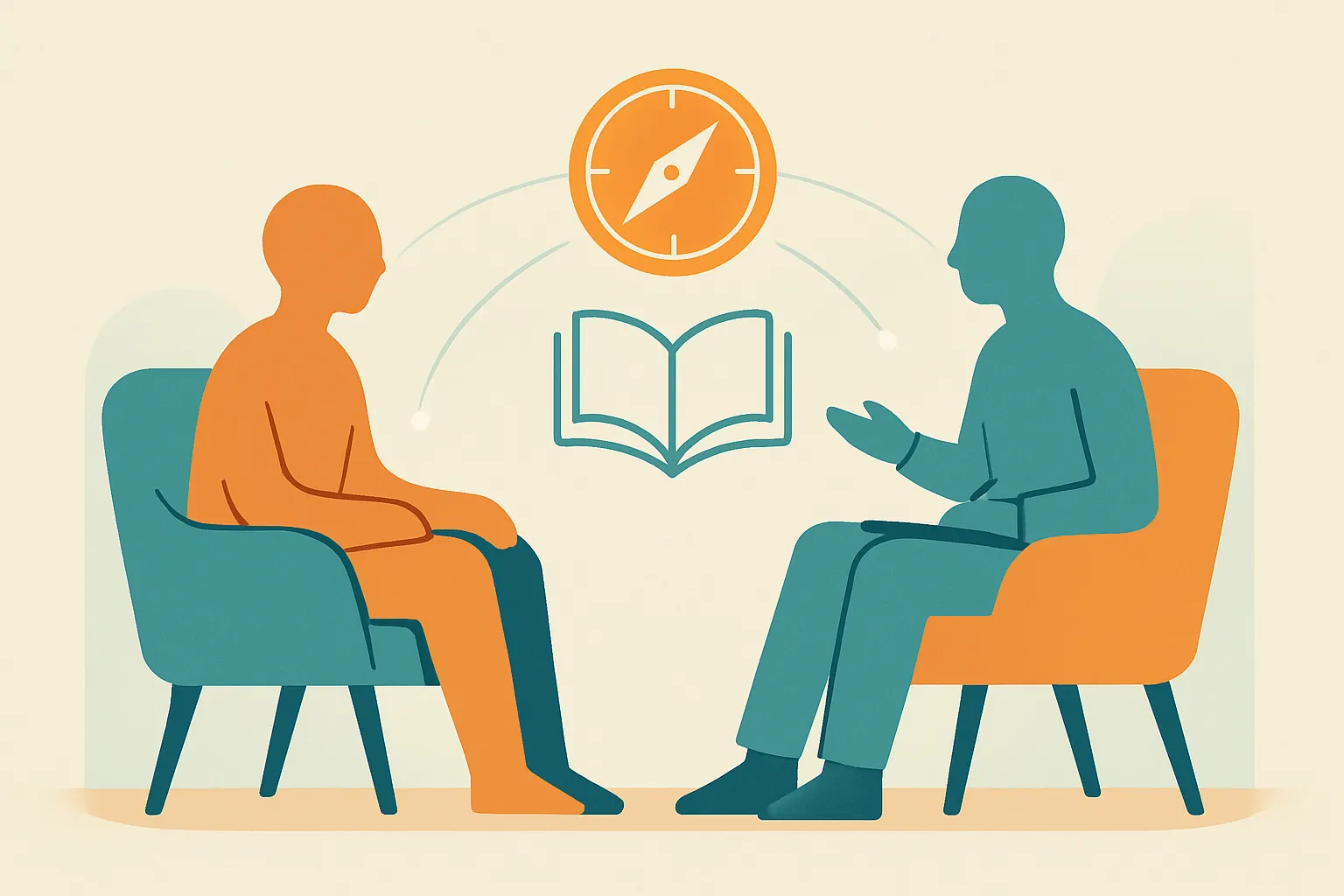 Case Conceptualization
Yalom's The Gift of Therapy: Passages Every New Counselor Should Copy by Hand
Irvin Yalom's prescription for therapists who fear silence: meet your client as a "fellow traveler" and let the here-and-now become the heart of the work.
6 min read Case Conceptualization
Working With Silence in Therapy: What Client Silence Means and How to Hold It
Silence in session isn't empty space. Learn to read its clinical meaning, tell productive from defensive silence, and use it as a therapeutic tool.
6 min read