Cave Time: Why Therapists Need Solitary Weekends to Prevent Burnout
Craving a weekend alone after a full caseload isn't avoidance — it's your nervous system asking to recover. Here's the science of protective solitude.
Key takeaway
When a counselor feels the pull to cancel weekend plans and retreat into solitude, it is rarely a pathological symptom — it is an over-activated nervous system signaling its need to recover. Drawing on Arlie Russell Hochschild's concept of emotional labor and Stephen Porges's Polyvagal Theory, this piece reframes weekend 'cave time' as an active, parasympathetic recovery process rather than withdrawal. It distinguishes restorative solitude from anxiety-driven isolation, explains how unfinished documentation hijacks rest through the Zeigarnik effect, and argues that protected solitude is part of a clinician's professional competence, not a failure of it.
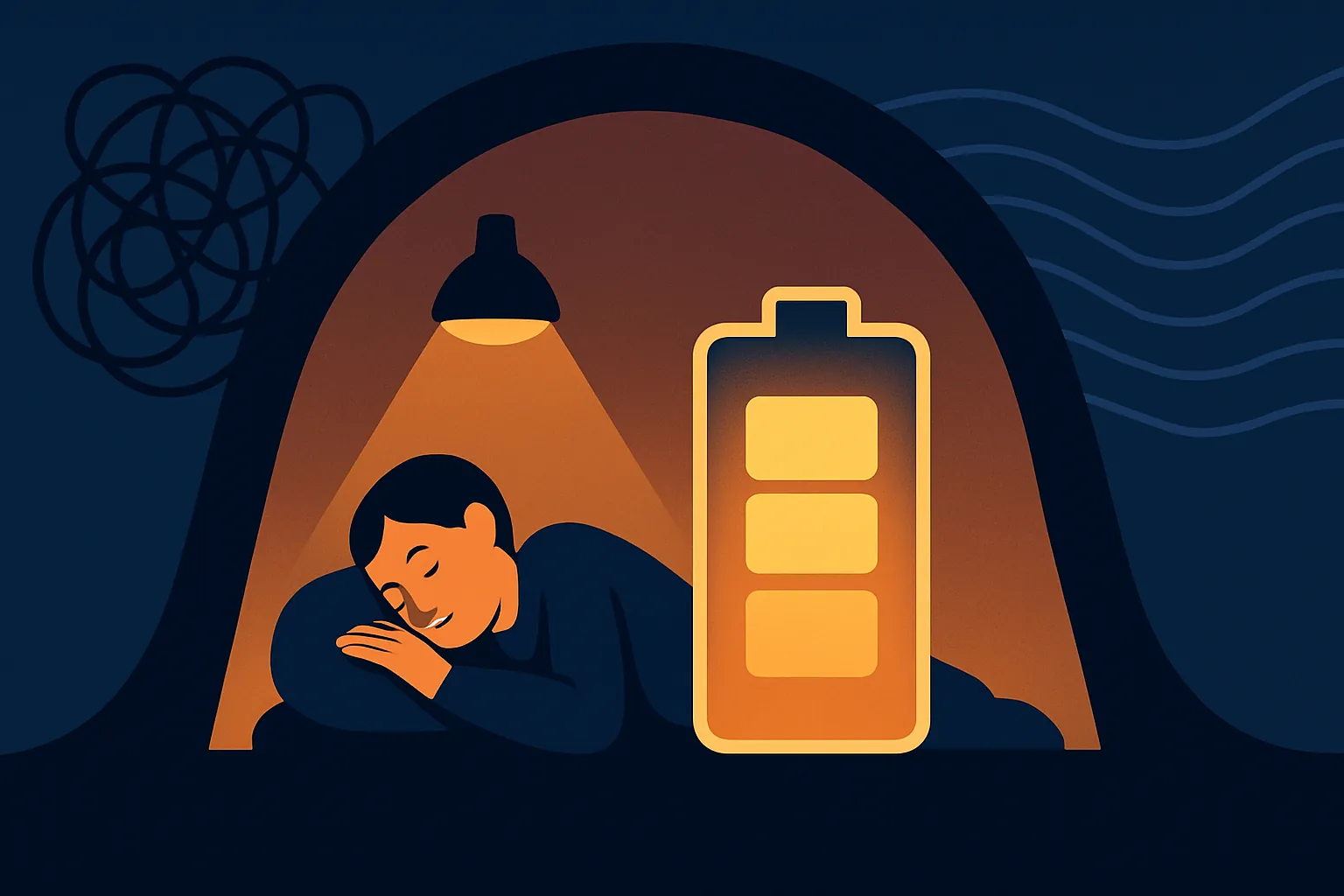
When the Battery Hits Zero: Why Hiding Out on Weekends Is a Healthy Signal
Friday evening. Your last client closes the door behind them. What happens in your body? For many clinicians, the honest answer is a sudden urge to cancel the weekend's plans — to lie in a dark, quiet room and not speak to anyone. And right behind that urge comes the guilt: I'm a professional who helps people connect. Why do I want to avoid people?
When you account for the sheer intensity of the emotional labor we perform every day, that pull toward social withdrawal looks less like a symptom and more like a homeostatic survival mechanism. We spend our working hours as a container for other people's trauma and pain, which puts us squarely in the path of compassion fatigue and vicarious trauma. To protect against burnout and preserve clinical insight, counselors sometimes need — paradoxically — deliberate, thorough solitude. This article looks at why weekend "cave time" is essential for clinicians from a psychological and neurobiological angle, and how to use it strategically, without the guilt.
1. Emotional Labor and Nervous-System Overload: Why We Want to Disappear
Emotional exhaustion and surface acting
In session, a counselor does far more than listen. Sustaining the therapeutic alliance requires high-order emotional labor — continuously regulating and shaping your own affect in service of the client. In Arlie Russell Hochschild's framing, we repeatedly suppress what we actually feel and perform what is therapeutically needed (surface acting). Run that loop for forty-plus hours a week and the prefrontal cortex burns enormous resources on affect regulation. By the weekend, those cognitive reserves can be completely spent.
Cave time through the lens of Polyvagal Theory
According to Stephen Porges's Polyvagal Theory, holding a safe connection with a client means keeping the Social Engagement System switched on, continuously — a metabolically expensive state. The flatness many of us feel after a full day isn't ordinary tiredness; it's an over-activated system demanding a shutdown. Read this way, cave time isn't avoidance. It's the active search for a restorative niche — a setting that lets the parasympathetic branch come back online and rebalance the system.
Sensory flooding and the need to defend the senses
A counselor's brain runs hot, tracking every micro-expression, shift in tone, and nonverbal cue. Wanting to see no one all weekend is an attempt to cut off excess sensory input and let the brain detox. That's not a deficit in social skill — it's an unconscious move to protect sensory equipment that the job has overused.
2. Healthy Solitude vs. Pathological Isolation: The Clinical Distinction That Matters
Many counselors worry about their weekend retreats precisely because, on the surface, they resemble the avoidance and isolation we associate with depression. Clinically, though, chosen solitude and involuntary isolation differ in mechanism and in outcome. Learning to tell them apart is how you diagnose whether you're recharging or escaping.
Use the table below to check your own weekend pattern.
| Criterion | Healthy Cave Time (Solitude) | Pathological Withdrawal (Isolation) |
|---|---|---|
| Motivation | A chosen move toward growth; conserving and storing energy | Flight driven by anxiety or fear; aversion to others |
| Emotional tone | Calm, relief, reflective satisfaction | Loneliness, alienation, worthlessness, persistent anxiety |
| After the fact | Vitality returns; ready to be with people again | Fatigue lingers or depressed mood deepens |
| What you do | Reading, meditation, walking, sleep — low-stimulation activity | Mindless scrolling, oversleeping, leaning on alcohol |
Table 1. The clinical difference between restorative solitude and pathological isolation in a counselor's weekend.
3. A Strategic "Cave Prescription" for Counselors: How to Retreat Well
So how do we use cave time more effectively? Locking the door is a start, but real recovery calls for a rest strategy that actually restores clinical capacity.
Practice a sensory diet
Session work is a constant stream of visual and auditory processing. On weekends, deliberately build a low-stimulation environment: dim the lights, cut ambient noise or swap it for white noise, and minimize sensory load. Research on threat processing suggests that reducing visual stimulation meaningfully lowers amygdala activation, which supports emotional downregulation.
Switch from "to-do" mode to "being" mode
Counselors are wired for problem-solving. Even on a day off, it's easy to weaponize productivity — I should read that book, I should catch up on those seminar recordings. But genuine cave time centers on being, not doing. Protect at least an hour a day to stare out a window with no agenda or simply follow your breath. This is essential to restoring psychological availability.
Redefine boundaries: "No" is a "Yes" to yourself
Don't feel guilty for declining weekend invitations. Saying no is an extension of your ethical responsibility to deliver good care. Practice saying it plainly — to yourself and to the people close to you: I need to recharge on weekends so I can be fully present for my clients next week. Healthy boundary-setting is among the most powerful clinical tools you have, and it works outside the consulting room as much as inside it.
4. The Shadow Over the Cave: Administrative Load and Documentation Pressure
There's a practical reason many counselors never get a real cave weekend: the pressure of the unfinished case note and the session transcript. At precisely the hour they should be psychologically separating from clients, they're reconstructing conversations from memory, typing, and analyzing. This triggers the Zeigarnik effect — the mind treats an interrupted, unfinished task as still open, which blocks the psychological release that rest requires. Even though the session ended, the brain insists it hasn't.
Real rest depends on a workflow where the administrative work closes out when the clinical hour does. Not dragging the residue of the week into your weekend is the single most reliable way to protect your cave time.
Conclusion: Solitude Is Part of Your Clinical Competence
For a clinician, a solitary weekend isn't mere downtime. It's the demanding professional work of healing a brain that has absorbed other people's pain — and clearing space to hold someone's story again. So rename it. Time spent seeing no one isn't something to feel guilty about; it's time spent managing your professional capacity.
It's also worth addressing the practical obstacles that keep you from fully entering the cave. Modern documentation tools that handle accurate transcription and clinical summarization can shorten the hours a counselor would otherwise spend hunched over a computer all weekend, freeing you to stay in the territory of recovery and intuition. Letting a system carry the memory and the record — so you don't have to — may be one of the most ethical and effective forms of preparation you can offer your clients.
Action Items for Counselors
- This weekend, plan a digital fast — at least four hours with your phone off, cutting external input.
- Use Table 1 to self-assess whether your rest is avoidance or genuine recharge.
- Audit your documentation workflow: identify which repetitive note-writing tasks eat into your weekend, and decide how to contain them so the work closes when the session does.
References
- 1.
- 2.
- 3.
- 4.
- 5.
Frequently asked questions
Is wanting to avoid everyone on weekends a sign that something is wrong with me as a counselor?
Usually not. After days of sustained emotional labor, the pull toward solitude is more often a homeostatic recovery signal than a pathological symptom. The key is to distinguish restorative solitude — which leaves you calmer and ready to reconnect — from isolation driven by anxiety, which deepens fatigue and low mood over time.
What is the difference between solitude and isolation?
Solitude is a chosen move to conserve and rebuild energy; it tends to feel calm and reflective, and you emerge with renewed capacity to be with others. Isolation is involuntary flight driven by fear or aversion; it feels lonely and worthless, and time spent in it tends to worsen rather than relieve distress.
Why is unfinished paperwork so disruptive to weekend rest?
Because of the Zeigarnik effect: the mind registers an interrupted, incomplete task as still open and keeps cycling on it. Carrying unfinished case notes or transcripts into your weekend signals to your brain that the work hasn't ended, which blocks the psychological release rest depends on.
How much solitary time do I actually need?
There's no universal dose, but aiming for at least an hour a day of low-stimulation, agenda-free 'being' time — plus a protected block of digital fasting on weekends — gives an over-activated nervous system room to rebalance. Use how you feel afterward as your gauge: restored versus still depleted.
This article was written and reviewed using Modalia AI's clinical guidelines, with professional human review before publication.
Related articles
 Case Conceptualization
Breaking the "Yes, But" Game: A Transactional Analysis Guide for Therapists
Every suggestion you offer gets met with "Yes, but..." Here's the TA structure behind that stall—and four clinical moves to break it.
7 min read Case Conceptualization
Yalom's The Gift of Therapy: Passages Every New Counselor Should Copy by Hand
Irvin Yalom's prescription for therapists who fear silence: meet your client as a "fellow traveler" and let the here-and-now become the heart of the work.
6 min read Case Conceptualization
Working With Silence in Therapy: What Client Silence Means and How to Hold It
Silence in session isn't empty space. Learn to read its clinical meaning, tell productive from defensive silence, and use it as a therapeutic tool.
6 min read