The Art of Rest: How Therapists Can Mentally Clock Out After Work
Can't stop thinking about clients after hours? A psychology-backed guide to psychological detachment, closing rituals, and rest that actually restores.
Key takeaway
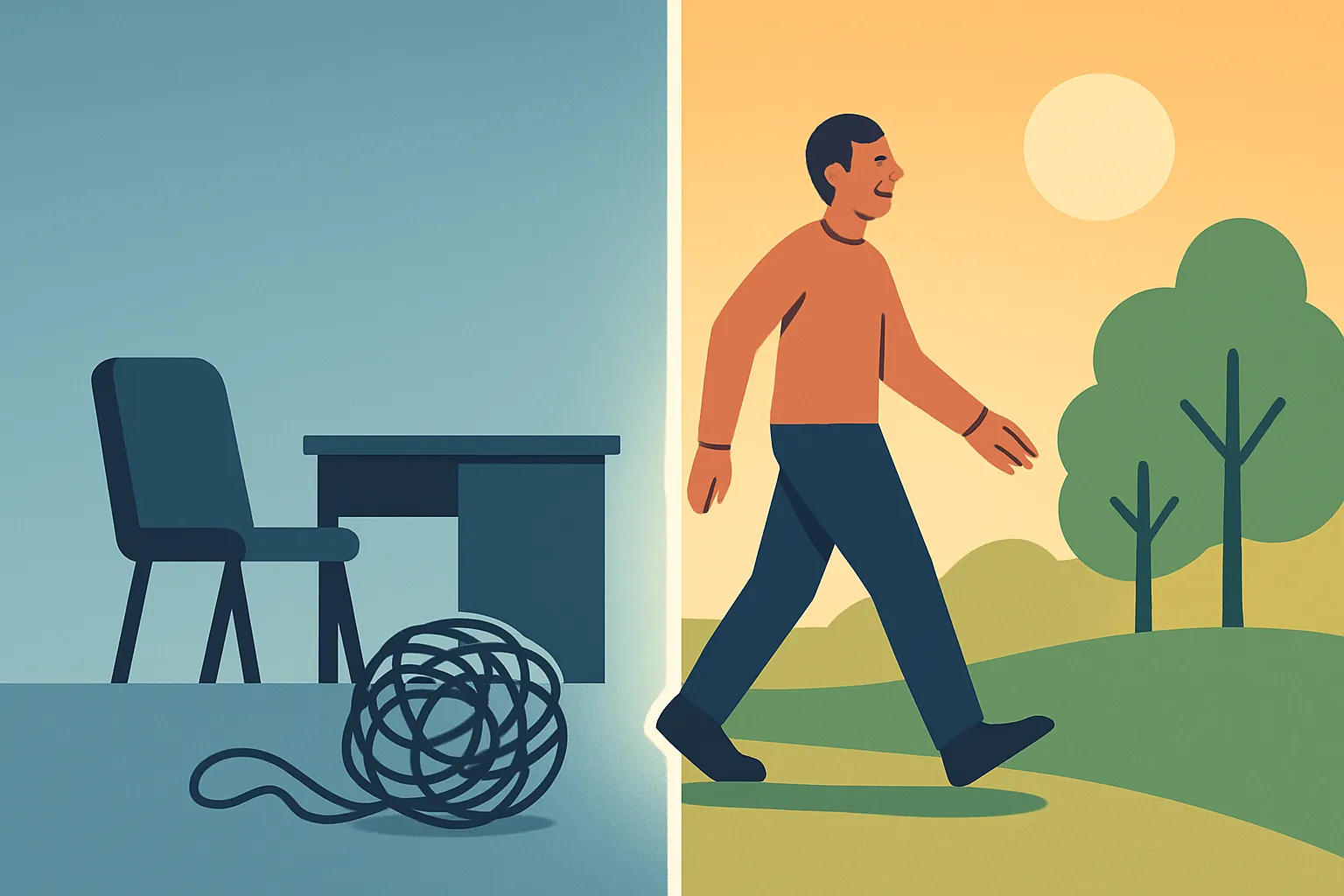
Many therapists struggle to mentally "clock out"—client stories keep replaying long after the session ends. Psychology explains this through the Zeigarnik effect (we remember unfinished tasks better) and compassion fatigue, both of which erode clinical judgment and countertransference management. Genuine recovery isn't passive sleep or screen time; it requires active detachment that engages parts of the brain your clinical work doesn't. Practical strategies include a deliberate closing ritual, externalizing worries on paper, immersing in nonverbal sensory activities, and reducing the documentation load that keeps you working long past the last appointment.
"Do You Still Think About Your Clients on the Weekend?"
It's Friday evening. You lock the office door behind you—but is your mind actually lighter, or is it still in the room? What did that client's expression in the final minutes really mean? Which intervention should I try next session? Maybe a high-risk client has you reaching for your phone all weekend, unable to fully set the work down.
In clinical practice we walk alongside our clients' pain and help them toward healing. But this meaningful calling casts long shadows: burnout and vicarious trauma. We teach our clients to respect their own boundaries, yet our own work–life boundary is often the first thing to collapse. When client stories keep circling in your head after you've left the building, that isn't simple tiredness. The failure to psychologically clock out is an ethical and clinical issue—one that directly affects the quality of care you can offer. This article looks at the psychology of genuine rest and offers practical strategies for leaving the work behind.
1. Why We Can't Clock Out: The Zeigarnik Effect and Compassion Fatigue
Leaving the office physically while staying there cognitively has clear psychological and neuroscientific roots. The most familiar is the Zeigarnik effect—our tendency to remember unfinished tasks far more vividly than completed ones. Therapy is, by its nature, a continuous process with no clean "done." A client's struggles aren't resolved in a single session, and that built-in incompleteness keeps the brain hunting for solutions long after you've stopped working.
Layered on top is compassion fatigue. When we attune deeply to a client's emotional experience, our mirror-neuron systems fire continuously. This not only drains emotional reserves; it over-activates the brain's default mode network (DMN), so that even idle, blank moments fill with negative rumination rather than rest. Research on psychological detachment—the ability to mentally disengage from work during off-hours—links low detachment to blunted clinical judgment and greater difficulty managing countertransference. In other words, resting well is part of practicing well. That isn't a wellness slogan; it's a measurable clinical reality.
2. Redefining Rest: From Passive Downtime to Active Disengagement
Many clinicians try to recover by catching up on sleep or binge-watching something on the weekend. Physical recovery matters. But for cognitively demanding work like ours, true recovery requires active disengagement—deliberately switching off the analytic, helper-mode circuitry and lighting up entirely different regions of the brain. Not doing nothing, but doing something that has nothing to do with clinical thinking.
It helps to separate the common myths of rest from the kind of rest that actually restores a therapist. Use the table below to audit your own patterns.
Table 1 — A Rest Prescription for Clinicians
| Type of Rest | Common Misconception (Ineffective) | What Clinicians Actually Need | Expected Benefit |
|---|---|---|---|
| Physical | Lying down all day, oversleeping | A light walk, stretching, yoga—waking the body up | Releases muscular tension; prevents somatic symptoms |
| Emotional | Suppressing feelings, processing alone | Talking with a trusted peer; journaling to discharge emotion | Clears emotional residue; lets you vent safely |
| Cognitive | Scrolling your phone (information overload) | Simple repetitive activity (knitting, coloring); a digital detox | Relieves prefrontal overload; settles the DMN |
| Social | Attending obligatory social events | Relationships with no caretaking demands; intentional solitude | Reconnects you with the "you" beneath the professional role |
3. Rituals That Get You Out of the Room
So how do you actually practice psychological clock-out? You give your brain an unmistakable signal: the work is done for today. That's what a ritual is for. Here are three strategies clinicians use.
-
Build a Closing Ritual: Make the Boundary Visible
Beyond closing the last chart of the day, create a personal "end-of-day" ritual. Change out of your work clothes. Wipe down your desk. Or, as you take hold of the door handle on your way out, silently tell yourself: "Today's worries stay here." These physical, symbolic acts act as a trigger that resets working memory and marks the line between clinician and person.
-
Interrupt the Zeigarnik Effect: Write It Down to Close It
If a particular client won't leave your mind, don't force yourself to forget. Do the opposite—externalize the thought. Ten minutes before you leave, jot the core issue and the single "next step" onto a sticky note or a notebook. You're signaling to your brain: this is recorded, so it's safe to let go. The moment it's written down, the mind begins to treat it as a completed task rather than an open loop.
-
Force a Mental Gear-Shift Through Immersion
Clinical work is intensely verbal and analytic. Rest is most effective when it engages the opposite—nonverbal, sensory activity. Climbing, which demands split-second focus; pottery, an instrument, anything that concentrates attention in your fingertips. These hobbies rest the language centers and activate the sensory ones, forcing a genuine change of mental channel.
4. Lighten the Admin Load to Reclaim Mental Space
For many therapists, the most concrete reason work never ends is the backlog of case notes and session write-ups. You focus on the client's every word through the session, then go home and reconstruct it all from memory, typing late into the evening—a setup that effectively puts you on the clock 24 hours a day. Worse, replaying a client's trauma narrative while you write exposes you to secondary stress all over again.
This is where secure, ethics-conscious AI documentation tools have become a genuine alternative. Internationally available platforms—such as Upheal, Mentalyc, or Modalia AI—can transcribe sessions, surface key themes, and generate draft summaries, with several benefits for clinicians:
- Less time on paperwork: Write-ups that once took hours shrink to minutes, so you can actually leave on time.
- Lower cognitive load: You stop spending energy reconstructing sessions from memory and can pour that energy back into the working alliance.
- Emotional distance: Minimizing repeated playback of recordings reduces the re-experiencing of difficult material, protecting your own mental health.
When you choose a tool, prioritize security and privacy: look for strong encryption, clear data-handling policies, and compliance with the privacy regulations that govern your jurisdiction (for example, HIPAA in the US). Used this way, AI documentation is more than a convenience—it's a safeguard for yourself, helping you stay in clinical practice, healthy and unburned-out, for the long haul.
Conclusion: Caring for Yourself Is Caring for Your Clients
A therapist's instrument is their own mind. Just as a dull knife can't do fine work, a depleted mind can't attend delicately to a client's inner world. Psychological clock-out isn't selfish—it's an ethical obligation, the way you ensure the best possible therapeutic environment for the client you'll meet tomorrow.
On your way home tonight, deliberately silence your work notifications, and perform your own closing ritual as you step out the door. And to escape the swamp of repetitive admin work, consider giving modern AI documentation tools a serious look. You have to be well first—only then can the person sitting across from you begin to find hope.
References
- 1.
- 2.
- 3.
Frequently asked questions
What is psychological detachment for therapists?
Psychological detachment is the ability to mentally disengage from work during off-hours—not just leaving the office physically, but stopping the clinical thinking, rumination, and emotional attunement that follow you home. Research links low detachment to blunted clinical judgment and harder-to-manage countertransference.
Why do I keep thinking about clients after work?
Two mechanisms drive it. The Zeigarnik effect means we remember unfinished tasks more vividly than completed ones, and therapy rarely has a clean "done." Compassion fatigue and an over-active default mode network then keep the mind looping through client material even when you're trying to rest.
How can I mentally clock out at the end of the day?
Use a deliberate closing ritual (changing clothes, wiping your desk, a spoken cue at the door), externalize lingering worries by writing the core issue and next step on paper, and immerse in nonverbal sensory activities—climbing, pottery, an instrument—that rest the language centers and force a genuine mental gear-shift.
Can AI documentation tools reduce therapist burnout?
Yes, indirectly. Backlogged case notes and session write-ups are a major reason work never ends. Secure AI documentation tools can transcribe sessions, surface themes, and draft summaries—cutting paperwork time, lowering cognitive load, and reducing the re-experiencing of difficult material. Prioritize tools with strong encryption and jurisdiction-appropriate privacy compliance.
This article was written and reviewed using Modalia AI's clinical guidelines, with professional human review before publication.
Related articles
 Case Conceptualization
Breaking the "Yes, But" Game: A Transactional Analysis Guide for Therapists
Every suggestion you offer gets met with "Yes, but..." Here's the TA structure behind that stall—and four clinical moves to break it.
7 min read Case Conceptualization
Yalom's The Gift of Therapy: Passages Every New Counselor Should Copy by Hand
Irvin Yalom's prescription for therapists who fear silence: meet your client as a "fellow traveler" and let the here-and-now become the heart of the work.
6 min read Case Conceptualization
Working With Silence in Therapy: What Client Silence Means and How to Hold It
Silence in session isn't empty space. Learn to read its clinical meaning, tell productive from defensive silence, and use it as a therapeutic tool.
6 min read