Therapy Room Design: How Plants and Lighting Build a Sense of Safety
How biophilic design and warm lighting turn your therapy room into a psychological safe base that lowers client defenses and deepens the work.
Key takeaway
A therapy room is not just an office; it functions as a psychological safe base and a 'third therapist' in the room. Neuroarchitecture research shows that a space's atmosphere has an immediate effect on brain activity and stress-hormone levels—one Texas A&M study found that simply adding indoor plants reduced tension by more than 20%. Color temperature matters too: cool fluorescent light (6000K+) raises arousal and makes vulnerable disclosure harder, while warm light (3000K–4000K) engages the parasympathetic nervous system and supports relaxation. Pair warm tones with sensory cues like lavender, and you create an environment that begins the therapeutic work the moment a client walks through the door.
Designing a Space That Heals: Plants and Lighting That Help Clients Open Up
You already know that what happens in therapy depends on more than technique and theory. Have you ever sat with a client thinking, "My formulation is sound, my interventions are well-timed—so why isn't this person settling?" Sometimes the answer isn't in your words at all. It's in the room.
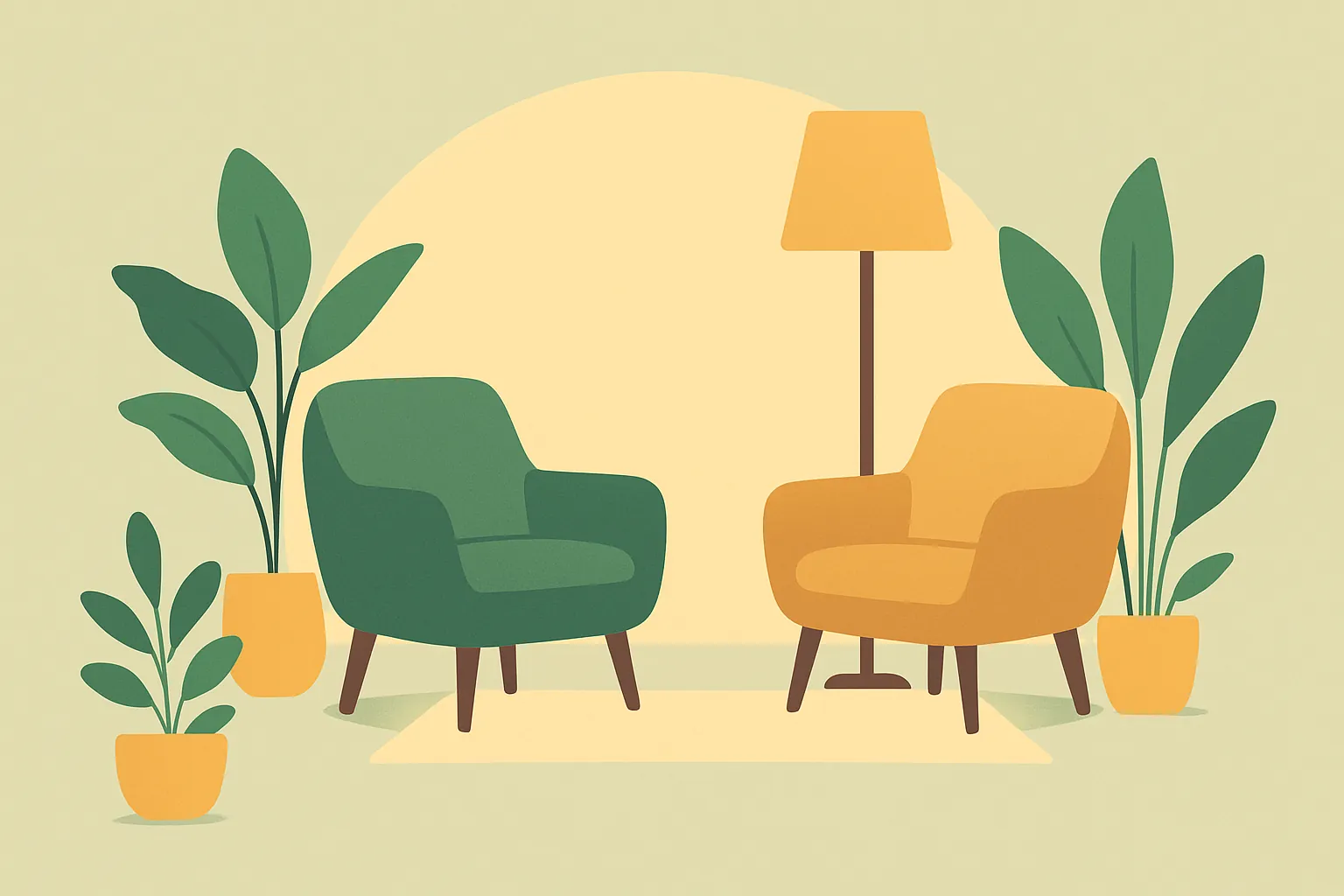
The physical space where therapy happens is never neutral. A counseling room should function as a secure base—a place safe enough that a client can lower their guard and do hard emotional work. In that sense, the room itself acts as a kind of third presence in the session, shaping the encounter alongside you and your client.
The emerging field of neuroarchitecture has shown that the atmosphere of a space affects human brain activity and stress-hormone levels almost immediately. For clients who arrive already depleted by busy, depersonalized urban life, bringing nature indoors (biophilic design) and using intentional lighting are no longer aesthetic extras—they are part of building a therapeutic environment. This article looks at the physical environment we clinicians tend to overlook, and offers changes you can make in your own room this week.
1. Biophilic Design and the Psychology of Lowering Defenses
Humans have an innate pull toward the natural world—what researchers call the biophilia hypothesis. We feel safer, and think more clearly, when living things are nearby. A widely cited study from Texas A&M University found that simply placing plants in an indoor environment improved working memory and reduced tension by more than 20%.
In a therapy room, greenery sends an unconscious message: this is a living, growing, safe place. That message helps a guarded client relax their defenses before a single word is spoken.
Plants also do quiet work during silence. Pauses in therapy are clinically valuable, but they can spike anxiety for clients who feel exposed. A plant gives the eye somewhere to rest. The gentle movement of leaves, the steadiness of green, offers a third object to look at—neither you nor the floor—which eases the pressure of being watched and lets a client stay in the moment a little longer.
Choosing plants for a clinical space
Therapy rooms often have limited ventilation or low natural light, so the best choices are low-maintenance, hard to kill, and psychologically calming.
| Plant | Clinical / psychological effect | Care notes |
|---|---|---|
| Areca palm | Natural humidifier; soft, full foliage that reads as warmth and shelter | Avoid direct sun; water when the soil dries out |
| Monstera | Sculptural, slightly exotic presence that invites curiosity and draws the eye | Tolerates partial shade; avoid overwatering |
| Pothos | Excellent air purifier; trailing form that feels relaxed and unstructured | Grows in water or soil; nearly indestructible |
Table 1. Plants well-suited to a therapy room and their effects.
2. The Magic of Kelvin: Light That Regulates Emotion
Lighting may be the single most powerful lever for setting the emotional temperature of a room. Cool, white fluorescent light (6000K and above) raises physiological arousal and reads as clinical and impersonal—exactly the wrong cue when you're asking someone to show you their most vulnerable feelings. Warmer light, by contrast, helps engage the parasympathetic nervous system and signals that it's safe to slow down.
Favor indirect light over overhead fixtures. Direct ceiling lights cast harsh shadows on a client's face and can feel interrogative. A floor lamp or table lamp wraps the room in softer, indirect light and lowers psychological guardedness. Light positioned slightly below the client's eye line tends to feel especially safe.
Match color temperature to the work. You can tune the room to the kind of session you're doing:
- 3000K (warm white) suits early-stage rapport-building, emotionally supportive work, and trauma-focused sessions where safety and containment come first.
- 4000K (neutral white) suits more cognitive, insight-oriented, or psychoeducational work, where a clearer, more alert quality of light is helpful.
3. Multisensory Healing—and Protecting Your Own Bandwidth
Visual elements are only part of the picture. A genuinely therapeutic room engages more of the senses—scent (an aroma diffuser), sound (a white-noise machine for privacy and soothing). A space that combines a subtle lavender scent with warm, low lighting can have a synergistic, calming effect, and may help ease somatic symptoms in clients with anxiety. The goal is for the client to feel that treatment has already begun the moment they open the door.
A comfortable room is also for you. You spend your whole day in it. A pleasant, well-tended environment lowers your own fatigue and conserves the energy you need to stay fully present session after session. Remember: when you're at ease, your client can feel it—and is more able to be at ease too. This is part of how good environments protect against burnout.
Finally, the physical space is only half of the equation. The other half is your psychological space. If the attention you should be spending on a client's nonverbal cues is instead being drained by writing progress notes or transcribing sessions, even the most beautiful room can't do its job. To be fully present inside that calm environment, your documentation workload has to be manageable.
Great therapy-room design isn't about expensive furniture. It's about creating a distraction-free environment where you and your client can give each other your full attention. Plants bring the room to life; warm light helps unlock a client's guard; the depth of the conversation that follows is yours to build.
One practical note on protecting your attention: lightening the documentation load makes the rest of this possible. Tools that streamline session notes and transcripts—Modalia AI among them—let clinicians set down the burden of record-keeping so they can stay in the room, look the client in the eye, and listen.
So this week, consider setting a small pothos in the corner, switching off the glare of overhead fluorescents in favor of a warm lamp, and letting your notes take care of themselves while you listen. Small changes can quietly change the depth of the work.
References
- 1.
Frequently asked questions
What color temperature is best for a therapy room?
Aim for warm light between 3000K and 4000K. Use 3000K (warm white) for rapport-building, emotionally supportive, and trauma-focused work where safety comes first, and 4000K (neutral white) for more cognitive or insight-oriented sessions. Avoid cool fluorescent light at 6000K and above, which raises arousal and makes vulnerable disclosure harder.
Do plants actually have a clinical effect in a counseling space?
Yes. Research grounded in the biophilia hypothesis—including a frequently cited Texas A&M University study—found that indoor plants improved working memory and reduced tension by more than 20%. In session, greenery also gives clients a neutral object to look at, easing the pressure of being watched during silences.
Which low-maintenance plants work best for a therapy room?
Areca palm (a natural humidifier with soft, sheltering foliage), monstera (a sculptural plant that draws the eye and tolerates partial shade), and pothos (an excellent air purifier with a relaxed trailing form that is nearly indestructible) all do well in rooms with limited light or ventilation.
Why does the therapist's comfort in the room matter?
A comfortable, well-tended environment lowers your own fatigue and conserves the energy needed to stay present across a full day of sessions, helping protect against burnout. When you're at ease, clients tend to feel it and are more able to relax themselves.
This article was written and reviewed using Modalia AI's clinical guidelines, with professional human review before publication.
Related articles
 Clinical Skills
How to Write Better Supervision Questions: Getting What You Actually Need from Your Supervisor
Stuck on what to ask in supervision? Use these structured question strategies to turn vague check-ins into focused clinical insight.
7 min read Clinical Skills
From "The Client Seems Depressed" to a Clinical Hypothesis: How Word Choice Elevates Your Case Reports
Turn vague observations into precise clinical hypotheses. A practical guide to terminology and sentence formulas that make your case reports read like expert work.
7 min read Clinical Skills
The Wounded Healer Trap: Why "I Want to Heal Myself" Sinks Your Counseling Grad School SOP
Why admissions faculty flinch at "I want to heal my own wounds"—and how to transform personal pain into a research-grade statement of purpose that gets you in.
6 min read