Vicarious Trauma in Clinicians: How to Recognize It and Protect Your Practice
Vicarious trauma is an occupational hazard of empathy, not weakness. Learn to spot the signs and build structural self-care that protects you and your clients.
Key takeaway
Vicarious trauma is a permanent shift in a clinician's cognitive schemas caused by repeated empathic exposure to clients' traumatic material — distinct from burnout or compassion fatigue. Research suggests roughly 15–20% of therapists who specialize in trauma work develop PTSD-like symptoms, which can erode therapeutic neutrality and drive negative countertransference. Prevention depends on structural strategies: trauma-specific supervision, firm boundaries, and reducing the re-exposure that comes from administrative tasks like transcription and report writing.
When the Stories Follow You Home
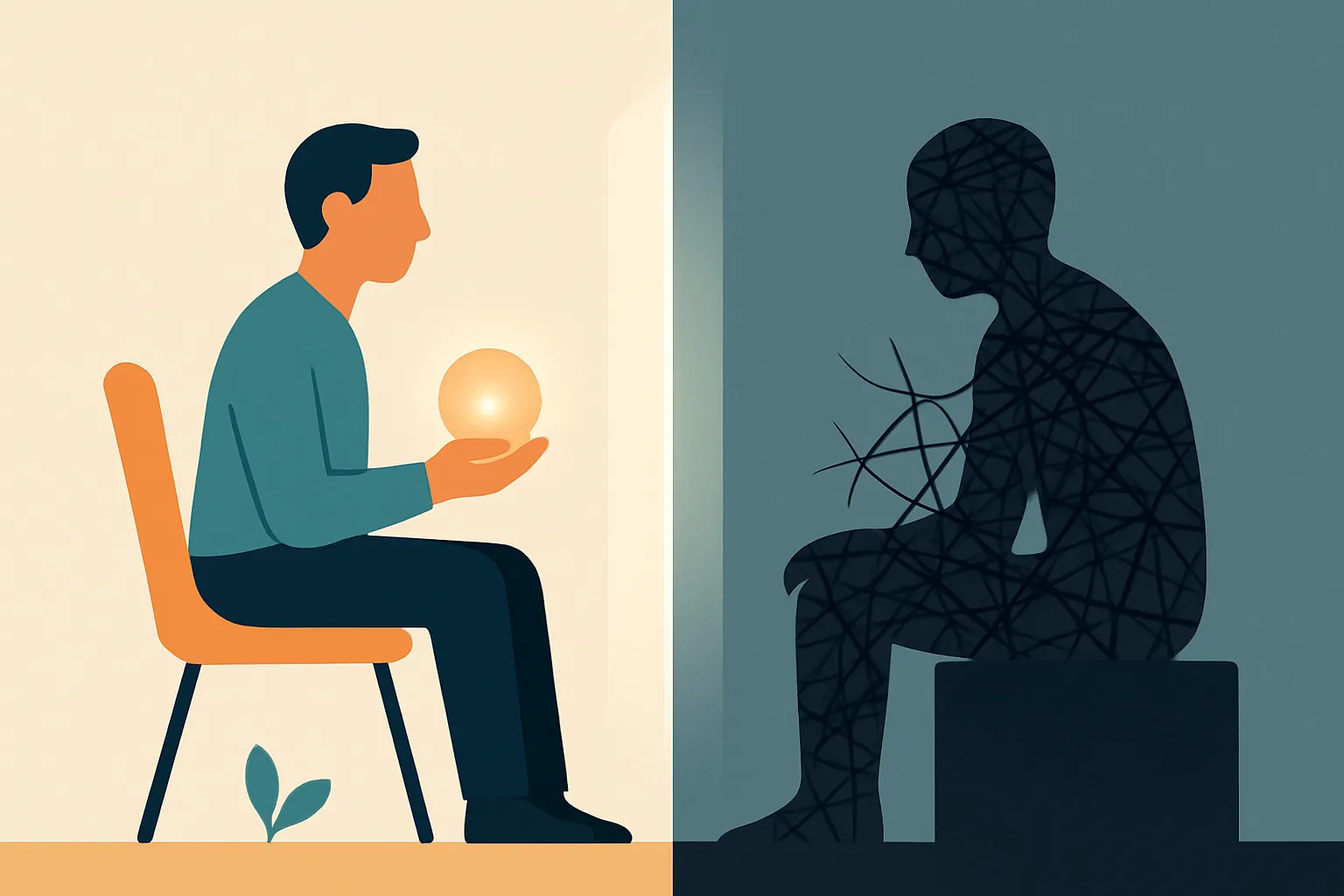
Day after day, you sit with the most painful material a person can carry — and somewhere in the work, the question gets lost: Is your own mind staying safe? Assessing and treating survivors of severe trauma can feel like walking through a minefield. As you help a client reconstruct a terrible memory and listen, empathically, to the fear and helplessness they lived through, something shifts. The images become vivid for you, too. The distress starts to feel like your own.
This is vicarious trauma — common in clinical practice, rarely discussed openly, and almost never built into our training the way it should be.
For clinicians, empathy is an essential therapeutic instrument. Paradoxically, it is also the very thing that makes us vulnerable. "I still hear my client's voice after I leave the office." "The world feels dangerous now — I've started overprotecting my own family." These are not ordinary job stress; they are clinical signs. Research suggests that roughly 15–20% of therapists who specialize in trauma work experience PTSD-like symptoms. Beyond the toll on the clinician's own quality of life, this can quietly compromise therapeutic neutrality and fuel negative countertransference toward the very clients we are trying to help.
This article looks closely at that "silent crisis" among trauma clinicians — and lays out practical, structural ways to keep practicing healthily over the long term.
The Mechanism: Why Vicarious Trauma Is Not Just Burnout
Vicarious trauma is conceptually distinct from both burnout and compassion fatigue. It refers to a permanent change in the therapist's cognitive schemas that results from repeated exposure to clients' traumatic experiences. Constructivist Self-Development Theory frames it this way: as clinicians take in account after account of horror, their own core beliefs — about safety, trust, and control — begin to erode. The impact tends to be greatest when the trauma stems from deliberate human cruelty, such as child abuse, sexual assault, or torture, rather than accident or disaster.
Drawing these distinctions matters clinically, because each calls for a different intervention. Use the table below as a quick self-check.
| Dimension | Vicarious Trauma | Burnout | Compassion Fatigue |
|---|---|---|---|
| Primary driver | Empathic immersion in and repeated exposure to the client's traumatic material | Excessive workload, organizational dysfunction, lack of accomplishment | The collision between the wish to help and real-world limits |
| Core features | Cognitive change (loss of trust in the world), intrusive thoughts, nightmares | Emotional depletion, cynicism, declining effectiveness | Acute stress response, a sense of helplessness about helping |
| Onset | Gradual, cumulative, chronic | Slow and progressive | Can appear relatively suddenly |
Table 1. Clinical features of vicarious trauma, burnout, and compassion fatigue.
A Self-Care Strategy for Trauma Clinicians
Vicarious trauma is not a sign that a clinician is "weak." It is an occupational hazard that arises precisely because you empathized deeply. So rather than treating it as a personal failing, the answer is to build structural, practical self-care into how you work. The following steps can be applied in clinical practice immediately.
-
Use trauma-specific supervision and peer support
Unlike general supervision, trauma cases require supervision that explicitly addresses the contagious quality of the content. A good supervisor helps the supervisee avoid being overwhelmed by the client's material — training them to separate the factual details of the case from their own emotional reactions (a healthy, deliberate kind of detachment). A peer support group serves a parallel function: it offers a safe space to confirm "I'm not the only one struggling with this," and to ventilate the emotions the work stirs up.
-
Set deliberate exposure limits and boundaries
Entering fully into a client's pain matters — but so does the ability to come back out. Protect a psychological buffer by holding firm boundaries: no work contact outside session hours, and a sensible balance between trauma cases and general caseload so your week isn't saturated with the heaviest material. A brief transition ritual at the end of the day can help, too. Some clinicians visualize leaving the client's story in the room as they close the door; others wash their hands as a way of symbolically rinsing off what they've absorbed.
-
Cut re-exposure by streamlining documentation
Exposure to traumatic material doesn't end when the session does. Clinicians encounter it again — repeatedly — while writing up session transcripts and case reports. Re-listening to and typing out harrowing statements can inflict greater psychological damage than the session itself. Shortening this work, and reducing the time you spend dwelling inside traumatic memories, is one of the most overlooked self-protection strategies available.
The Clinician's Well-Being Sets the Ceiling on Care
Vicarious trauma may be an unavoidable shadow of this work, but being consumed by that shadow is not. In fact, when we acknowledge our own vulnerability and manage it actively, we become steadier, more grounded clinicians. Trauma-specific supervision, firm boundaries, and an efficient documentation system are not luxuries — they are survival strategies.
Reducing unnecessary re-exposure during administrative tasks deserves particular attention in modern practice. Rather than re-listening to a client's most painful statements while you transcribe them by hand, consider a security-first AI partner built for clinicians. A tool like Modalia AI can accurately convert and summarize the client's key statements and emotional arc into text, so you spend less time on the "replay loop" of traumatic content and more on what actually moves therapy forward — clinical insight and treatment planning. That shift protects you against burnout and, in turn, raises the quality of care your clients receive. A practical next step: book a supervision or peer-consultation session, and take an honest look at how your documentation workflow is affecting you.
References
- 1.
Frequently asked questions
How is vicarious trauma different from burnout and compassion fatigue?
Vicarious trauma involves a lasting change in the clinician's cognitive schemas — beliefs about safety, trust, and control — caused by empathic exposure to clients' traumatic material. Burnout stems mainly from workload and organizational strain and shows up as emotional depletion and cynicism. Compassion fatigue is a more acute reaction tied to the gap between wanting to help and real-world limits. The distinctions matter because each calls for a different response.
What proportion of trauma clinicians are affected?
Research suggests roughly 15–20% of therapists who specialize in trauma work experience PTSD-like symptoms, including intrusive thoughts, nightmares, and a shaken sense of the world's safety.
What are the most effective ways to prevent vicarious trauma?
Structural strategies work best: trauma-specific supervision that helps you separate case facts from your own emotional reactions, firm boundaries around exposure and after-hours contact, transition rituals to mentally leave the work behind, and streamlined documentation that reduces re-exposure to traumatic content.
Why does documentation increase the risk?
Exposure to traumatic material doesn't stop when the session ends. Re-listening to and transcribing harrowing statements forces you back into the content repeatedly — sometimes with greater psychological impact than the session itself. Reducing that re-exposure is an important, often overlooked, form of self-protection.
This article was written and reviewed using Modalia AI's clinical guidelines, with professional human review before publication.
Related articles
 Case Conceptualization
Breaking the "Yes, But" Game: A Transactional Analysis Guide for Therapists
Every suggestion you offer gets met with "Yes, but..." Here's the TA structure behind that stall—and four clinical moves to break it.
7 min read Case Conceptualization
Yalom's The Gift of Therapy: Passages Every New Counselor Should Copy by Hand
Irvin Yalom's prescription for therapists who fear silence: meet your client as a "fellow traveler" and let the here-and-now become the heart of the work.
6 min read Case Conceptualization
Working With Silence in Therapy: What Client Silence Means and How to Hold It
Silence in session isn't empty space. Learn to read its clinical meaning, tell productive from defensive silence, and use it as a therapeutic tool.
6 min read