Washing It Off: Self-Care Rituals for Vicarious Trauma After Abuse and Assault Cases
Vicarious trauma is more than burnout. Learn three post-session rituals — water, threshold, and containment — plus how AI documentation reduces re-exposure.
Key takeaway
Clinicians who repeatedly work with survivors of sexual assault and abuse can develop vicarious trauma — a phenomenon distinct from burnout in which the therapist's core cognitive schemas about safety, trust, and self are gradually distorted by exposure to traumatic material. Left unmanaged, it can drive countertransference and boundary erosion, making active self-care an ethical obligation rather than a luxury. This article details three concrete "washing-off" rituals you can use after difficult sessions and explains how AI-assisted documentation can reduce the re-exposure that comes from transcribing and reviewing traumatic disclosures.
When Your Client's Nightmare Becomes Your Own: Rituals for After Abuse and Assault Sessions
Have you ever walked out of the consulting room feeling as if you were wearing a heavy, invisible coat — your shoulders pressed down by a weight you can't name? On days when you sit with someone who has survived sexual assault or child abuse, the client's painful narrative can feel as though it has seeped beneath your own skin. We sometimes call this "the cost of empathy." Clinically, it has a precise name: vicarious trauma.
As counselors, we serve as the wounded healer — a vessel that holds the client's pain. But keeping that vessel from overflowing or cracking is not simply a matter of rest. It is an ethical obligation and a core part of clinical competence. Questions like "How do I shake off the terrible story I heard today?" or "Is my client's trauma eroding the way I see the world?" do not signal that you are failing. They arise precisely because you engaged deeply and empathically. This article walks through concrete rituals for washing off that heavy residue and protecting your professional self.
1. The Mechanism of Vicarious Trauma — and How to Recognize It
Intrusive pain: not the same as compassion fatigue
In clinical settings we often use burnout and vicarious trauma interchangeably. When working with sexual assault and abuse cases, however, distinguishing the two matters enormously. According to Constructivist Self-Development Theory (McCann & Pearlman, 1990), vicarious trauma is the process by which repeated exposure to a client's traumatic experience negatively alters the therapist's own cognitive schemas.
In other words, this is not merely "the work is hard." It is a destabilization of fundamental beliefs about the world and the self — "the world is not safe," "people cannot be trusted," "I am powerless." In sexual assault cases especially, vivid descriptions of bodily violation can activate the clinician's mirror-neuron system, producing a visceral physical discomfort as if the clinician were in the situation themselves. Left unaddressed, this can lead a counselor to unconsciously avoid the client's pain — or, conversely, to over-identify and collapse therapeutic boundaries through countertransference behavior.
A self-assessment comparison
To help you discern whether what you are experiencing is ordinary job stress or a sign of serious vicarious trauma, use the comparison below.
| Dimension | Burnout | Vicarious Trauma | Secondary Traumatic Stress (STS) |
|---|---|---|---|
| Primary cause | Excessive workload, administrative pressure, organizational conflict | Repeated, prolonged exposure to traumatic content | Contact with a single shocking client case (acute) |
| Core symptoms | Emotional exhaustion, cynicism, reduced sense of accomplishment | Shift in worldview (loss of safety, trust, sense of control), nightmares | PTSD-like intrusive thoughts, avoidance, hyperarousal |
| Onset | Gradual accumulation | Accumulates over time and becomes internalized | Can appear suddenly |
| Recovery focus | Rest, adjusting the work environment, reassignment | Rebuilding cognitive schemas, cleansing rituals, supervision | Crisis intervention, immediate symptom relief |
Table 1. Comparing the types of psychological strain clinicians experience.
2. The Art of Washing Off: Three Healing Rituals for Practitioners
To keep a client's trauma from becoming internalized, you need to draw a clear sensory boundary between the session and your personal life. This is more than simply clocking out — it is a deliberate act that signals to your brain, "The therapist's role ends here."
1. A water-based purification ritual
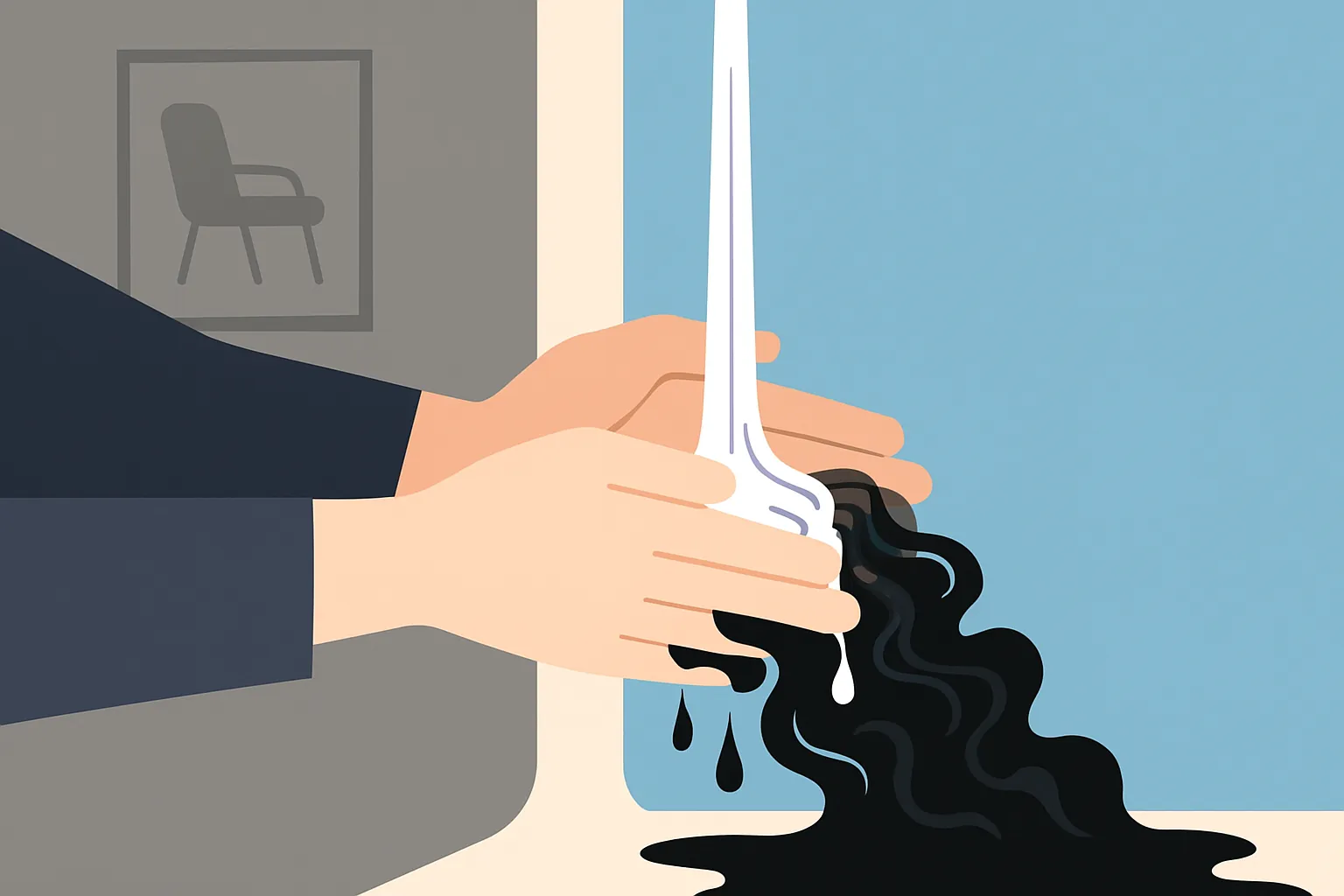
- Symbolic handwashing. Right after a sexual assault or abuse session, step to the restroom and wash your hands under running water. Do this not as hygiene but as visualization: picture the emotional residue your client poured out, and the sediment of the trauma, flowing down the drain with the water.
- Using temperature. Alternate cold and warm water to reawaken bodily sensation. When you have resonated with a client's dissociation, your own physical awareness can go numb; this is a grounding technique that returns you to the here and now.
- A shower at home. On especially hard days, stand under the water from head to toe and imagine rinsing away the "skin" that carries the air of the consulting room.
2. The "threshold" ritual: separating space and role
- Build a buffer on the way home. Instead of going straight from the office to your front door, create a transition window — a 10-to-15-minute walk, or a few minutes on a particular bench. This is a buffer zone where you are neither the counselor nor a family member, but simply yourself.
- Change your clothes. As soon as you get home, take off your work clothes and put them in the laundry basket. This is a powerful symbolic act of setting down "the counselor persona."
- Use scent. Keep the smell of your office and your home distinctly separate. Use a neutral scent at work and, after hours, light a candle in a citrus or woody note you enjoy — shifting your brain's olfactory memory.
3. Adapting the containment technique
- Physical sealing. After a session, focus on the act of placing the client's chart or notes in a drawer and locking it, or closing the file. Tell yourself: "This painful story is stored safely inside this folder. I do not need to carry it home with me."
- A discarding ritual. If there are scrap papers or notes from the session that can be discarded, tear them into small pieces and drop them in the bin — physically destroying the negative energy.
3. The Documentation Dilemma: Minimizing Re-Exposure
The second wound of documentation
One major route to vicarious trauma that many clinicians overlook is writing session transcripts and progress notes. Disclosures from survivors of sexual assault or abuse can be extraordinarily specific and disturbing. During the session itself, the therapeutic self is engaged and offers some protection. But sitting alone afterward, replaying a recording over and over and typing it out, is like being re-exposed to the traumatic scene with no defenses at all. This re-stimulates the amygdala and is a primary driver of deepening vicarious trauma.
Using technology to create distance
To prevent psychological depletion, it is essential to reduce the emotional load that comes from repetitive documentation. Increasingly, clinical settings are adopting AI tools specifically for this kind of ethical and psychological protection.
- Less re-listening. Rather than listening again to an hour of painful testimony, scanning an AI-generated text draft with your eyes helps you maintain emotional distance. Auditory stimuli tend to carry a stronger emotional charge than visual information.
- Surfacing the essentials. Modern AI session-note tools can automatically organize and summarize a client's core presenting problems, risk factors, and emotion words. This frees you to focus on therapeutic structure and intervention strategy instead of getting lost in the graphic details of the trauma.
- Accuracy and ethics. Accurate, AI-assisted text data is more reliable than memory-based notes — an efficient way to secure objective records that protect you in abuse cases where legal questions may later arise.
Used well, a security-first AI partner like Modalia AI can handle transcription, case conceptualization support, and documentation, so your energy goes toward the work that only you can do — being present with the client and caring for yourself.
Conclusion: Caring for Yourself Is How You Keep Helping Clients
Vicarious trauma is an occupational hazard that any competent, empathic clinician may face. In the work of suturing the torn hearts of assault and abuse survivors, it may be unavoidable that some blood ends up on the healer's hands. But if you leave it there unwashed, the wound becomes infected — until eventually you can no longer help anyone.
Start the water, threshold, and containment rituals described here as soon as your next difficult session ends. And to cut the unnecessary re-exposure that comes from administrative tasks like documentation, give serious consideration to modern tools such as AI session-note services. Your energy should not be spent on transcription — it should be spent on empathizing with your clients and healing yourself. Never forget: your own healthy mind is the most powerful therapeutic instrument your clients have.
If you ever notice the weight of this work pulling you toward thoughts of harming yourself, reach out to your local or national crisis line or emergency services, and lean on supervision and peer support — caring for yourself is part of the work, not a departure from it.
References
- 1.
Frequently asked questions
What is the difference between vicarious trauma and burnout?
Burnout stems from workload, administrative pressure, and organizational conflict, producing emotional exhaustion and cynicism. Vicarious trauma, by contrast, comes from repeated exposure to clients' traumatic material and actually shifts the clinician's core beliefs about safety, trust, and control. Recovery from burnout centers on rest and environmental change; recovery from vicarious trauma requires rebuilding cognitive schemas, cleansing rituals, and supervision.
Why does writing session transcripts worsen vicarious trauma?
During a session, the therapeutic self offers some protection. Sitting alone afterward and replaying recordings to transcribe disclosures re-exposes you to the traumatic scene without those defenses, re-stimulating the amygdala. Auditory material also carries a stronger emotional charge than text, which is why repeated re-listening is so depleting.
Are post-session rituals evidence-based or just symbolic?
They are deliberately symbolic, but the mechanisms are grounded in clinical practice. Grounding techniques (such as temperature and sensory cues) restore present-moment awareness after dissociative resonance, while threshold and containment routines create the clear role and sensory boundaries that constructivist self-development theory identifies as protective against schema disruption.
How can AI documentation tools reduce a counselor's trauma exposure?
AI transcription lets you scan a text draft instead of re-listening to an hour of painful testimony, preserving emotional distance. AI session-note tools can also surface presenting problems, risk factors, and emotion words automatically, so you focus on structure and intervention rather than graphic detail — while producing accurate records that protect you in legally sensitive abuse cases.
This article was written and reviewed using Modalia AI's clinical guidelines, with professional human review before publication.
Related articles
 Case Conceptualization
Breaking the "Yes, But" Game: A Transactional Analysis Guide for Therapists
Every suggestion you offer gets met with "Yes, but..." Here's the TA structure behind that stall—and four clinical moves to break it.
7 min read Case Conceptualization
Yalom's The Gift of Therapy: Passages Every New Counselor Should Copy by Hand
Irvin Yalom's prescription for therapists who fear silence: meet your client as a "fellow traveler" and let the here-and-now become the heart of the work.
6 min read Case Conceptualization
Working With Silence in Therapy: What Client Silence Means and How to Hold It
Silence in session isn't empty space. Learn to read its clinical meaning, tell productive from defensive silence, and use it as a therapeutic tool.
6 min read