Vocal Hygiene for Therapists: How to Get Through Five Back-to-Back Sessions Without Losing Your Voice
Practical voice and hydration strategies so clinicians can run a full day of sessions with a clear, warm voice—plus how AI documentation protects your vocal rest.
Key takeaway
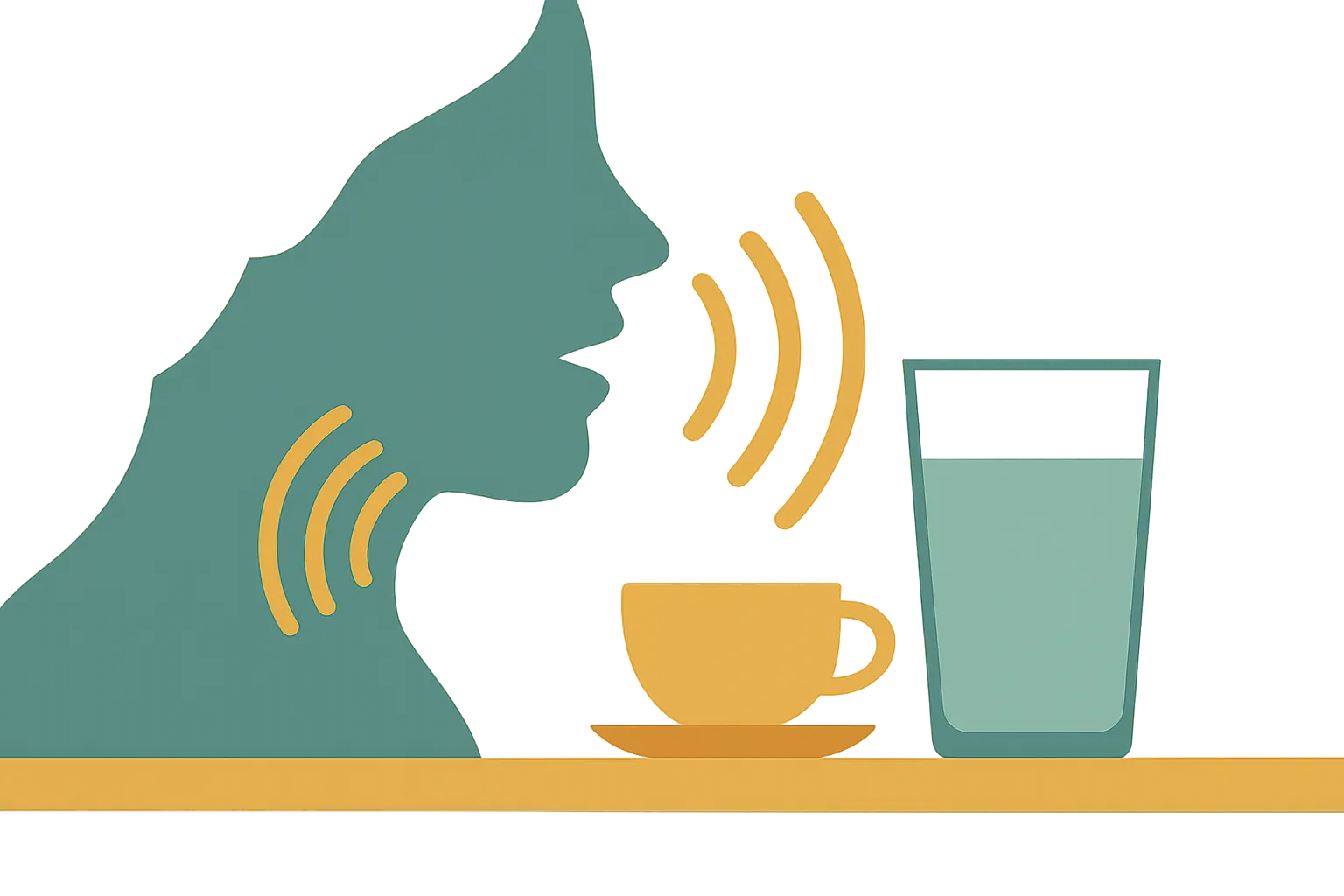
Therapists strain their vocal folds far more than ordinary conversation requires, because emotional attunement means constantly modulating tone, pace, and volume—and suppressed affect can physically tighten the throat. To prevent vocal fatigue, clinicians should shift resonance from the larynx to the face (mask resonance), support the voice with diaphragmatic breathing, sip room-temperature water before and during sessions, and protect true silence between clients for vocal rest. Reducing unnecessary vocal load—including the documentation burden, which AI transcription tools can ease—reclaims the recovery time your voice needs.
When the Client Notices First: Protecting Your Voice Across a Full Caseload
It's 4 p.m. Your fourth session of the day is winding down, and there's a faint, raw burning at the back of your throat. By the time you've walked your last client out, your voice is so worn that you'd rather not even pick up the phone to a friend. If that sounds familiar, you're not imagining it—vocal fatigue is one of the quietest occupational hazards in our field.
We talk often about using the self as the primary instrument of therapy. But the most direct medium through which that self reaches a client is the voice. Most clinicians are highly attuned to psychological burnout, yet we tend to overlook its physical counterpart: vocal fatigue. A cracking voice or frequent throat-clearing can plant unconscious unease in a client and quietly undermine the therapeutic alliance. Caring for your voice isn't only a health matter—it's part of responsible, ethical self-care.
What follows is a clinician-focused guide to phonation technique, strategic hydration, and a smarter working environment—drawn from the physiology of the voice and the realities of a back-to-back caseload. 🍵
Why a Therapist's Voice Wears Out Faster
Unlike everyday conversation, psychotherapy demands continuous emotional attunement. We adjust our tone, pace, and volume moment to moment to match a client's affect, and the micro-tension this places on the laryngeal muscles is greater than most clinicians realize.
Breathy phonation and chronic muscle tension. The therapy room is usually hushed and calm. To stay non-threatening and receptive, we instinctively soften and lower the voice—often slipping into a breathy voice in which the vocal folds never fully close. Counterintuitively, that incomplete closure forces the surrounding muscles to overwork and is a leading contributor to vocal fold nodules.
Somatic resonance and the tightened throat. A client's grief or suppressed anger can register in the clinician's own body through countertransference. The throat, as the organ of expression, is a common landing site: when a client chokes back feeling, you may feel your own throat constrict—a sensation clinically akin to globus pharyngeus. That tension lifts the larynx and makes clean phonation harder.
Too little real rest. The classic "50 minutes on, 10 minutes off" rhythm rarely gives the voice a break—those ten minutes evaporate into prep and progress notes. Five-plus hours of near-continuous load dries out the mucosa covering the vocal folds, with no window for recovery.
Clinical Phonation: A Technique Built for the Consulting Room
A therapist's vocal technique should differ from a singer's or a broadcaster's. We aren't projecting sound across a hall—we need a voice that conveys trust and warmth at close range without straining the folds. Two techniques you can apply in your very next session:
Use mask resonance. Instead of pressing the sound down into the larynx, bring the point of resonance up into the "mask" of the face. Hum a gentle "mmm" and notice the buzz around your nose and lips; hold that buzz as you say, "I see—that makes sense." Mask resonance produces a clear, carrying voice on far less effort, which dramatically lowers vocal-fold fatigue.
Avoid vocal fry; support the breath. As energy flags later in the day, it's easy to let sentences trail off into a gravelly creak—vocal fry. That dragging sound is like sanding the vocal-fold mucosa. Instead, keep the breath flowing through to the end of each phrase, supported from the diaphragm. Posture helps: rather than slumping back into the chair, sit deep in the seat with your lower back upright so the diaphragm can do its work.
Habits That Protect the Voice vs. Habits That Wear It Down
| Area | Do | Don't | Clinical effect |
|---|---|---|---|
| Phonation | Use mask resonance; support with diaphragmatic breathing | Whisper; let phrases trail into fry | Better vocal-fold closure efficiency, less fatigue |
| Hydration | Room-temperature water ~20 min before sessions | Cold coffee or strong tea right before | Avoids diuresis; keeps mucosa lubricated |
| Rest | Stay quiet; gentle throat massage; yawn to release | Chat with colleagues; take phone calls | Relaxes and resets the laryngeal muscles |
| Environment | Keep humidity around 50–60%; use an air purifier | Sit in the direct draft of a heater or AC | Prevents drying of the folds; protects the airway |
Hydration Is Strategy, Not Just "Drink Water"
Newer clinicians sometimes worry that sipping water mid-session will break a client's focus. In practice, sitting there flushed and swallowing a cough is far more distracting. What matters is what, when, and how you drink.
The caffeine dilemma. Coffee and tea are fixtures of the consulting room, but caffeine is a strong diuretic that pulls moisture away from the vocal-fold mucosa. If you have a cup of coffee, follow it with two cups of plain water to rebalance. On heavy clinical days, keep caffeine to the morning and switch to a caffeine-free option—chamomile, rooibos, or another herbal tea—in the afternoon.
Sip, don't gulp. Water swallowed in one big gulp heads straight to the stomach; it can't bathe the vocal folds directly. Holding a little water in the mouth and swallowing it in small amounts is far more effective at keeping the mouth and throat humid. Use the natural silences—when a client is gathering themselves—to quietly wet your throat.
Lowering Vocal Load by Working Smarter
Technique and hydration matter, but the most fundamental fix is to reduce unnecessary vocal load in the first place. By unnecessary, I don't mean therapeutic intervention—I mean repeated clarifying questions asked just to jog your own memory, and the muttering that comes with re-listening to recordings to write things up.
Economical intervention. Lean into listening, and practice brief, well-aimed reflections rather than long explanations. Concise interventions give the client room to think—raising therapeutic value—while sparing your voice.
Automate documentation and reclaim vocal rest. Many clinicians rush to type up notes the moment a session ends, before memory fades, or replay recordings to build a verbatim transcript. That work adds real cognitive load and stress. A growing set of AI tools can now transcribe sessions automatically and surface key themes—globally available options include Otter, Notta, and similar services.
Using AI transcription and documentation frees you from the compulsion to memorize every word a client says, so you can stay fully present in the relationship. Just as importantly, the time you save on writing can become genuine recovery—a true vocal nap in that ten-minute gap—measurably improving the quality of your next session. Approached this way, AI isn't merely a note-taker; it's a form of vocal insurance and a quiet partner in your clinical work. (Whatever tool you choose, confirm it meets your jurisdiction's privacy and consent requirements before recording a client.)
Your Voice Is a Therapeutic Instrument Worth Protecting
Your voice is the channel through which a client reconnects with the world and the steadying presence that helps them feel safe. Carrying a full caseload while keeping that voice clear and warm isn't just a technical skill—it's part of practicing responsibly.
Three small practices to start today:
- 🧘♀️ Warm up before sessions: one minute of humming to wake up your mask resonance.
- 💧 Build a hydration habit: keep a bottle of room-temperature water on your desk, always.
- 🎙️ Let technology help: adopt an AI transcription tool to ease the documentation burden, and spend the reclaimed minutes in restorative silence.
Here's to a healthy voice that can reach the deepest places in your clients—and to protecting your own well-being along the way.
Frequently asked questions
Why do therapists lose their voices more easily than other professionals?
Therapy requires constant emotional attunement—continuously adjusting tone, pace, and volume to match a client's affect. Clinicians also tend to soften into a breathy voice that prevents full vocal-fold closure, and suppressed emotion in the room can physically tighten the throat. Combined with five-plus hours of near-continuous talking and little true rest, this dries and strains the vocal folds.
What is mask resonance, and how does it help?
Mask resonance shifts the point of vibration from the larynx up into the face (around the nose and lips) rather than pressing sound down into the throat. Hum a gentle 'mmm,' feel the buzz, and keep it as you speak. It produces a clear, carrying voice on far less muscular effort, reducing vocal-fold fatigue across a long day of sessions.
Is it unprofessional to drink water during a session?
No—sitting flushed while suppressing a cough is far more distracting to a client than a discreet sip. The key is technique: hold a little room-temperature water in your mouth and swallow it in small amounts during natural silences, rather than gulping. This keeps the mouth and throat humid without interrupting the work.
How can AI documentation tools help protect my voice?
AI transcription tools automatically capture and summarize sessions, removing the need to re-listen to recordings or rush through notes between clients. That reclaimed time can become genuine vocal rest in the gap between sessions. Choose a tool that meets your jurisdiction's privacy and consent requirements before recording any client.
This article was written and reviewed using Modalia AI's clinical guidelines, with professional human review before publication.
Related articles
 Case Conceptualization
Breaking the "Yes, But" Game: A Transactional Analysis Guide for Therapists
Every suggestion you offer gets met with "Yes, but..." Here's the TA structure behind that stall—and four clinical moves to break it.
7 min read Case Conceptualization
Yalom's The Gift of Therapy: Passages Every New Counselor Should Copy by Hand
Irvin Yalom's prescription for therapists who fear silence: meet your client as a "fellow traveler" and let the here-and-now become the heart of the work.
6 min read Case Conceptualization
Working With Silence in Therapy: What Client Silence Means and How to Hold It
Silence in session isn't empty space. Learn to read its clinical meaning, tell productive from defensive silence, and use it as a therapeutic tool.
6 min read