Working With Client Resistance: What Lateness, No-Shows, and Silence Are Really Saying
Resistance—lateness, missed sessions, silence—is communication, not defiance. A 3-step clinical framework for turning it into alliance.
Key takeaway
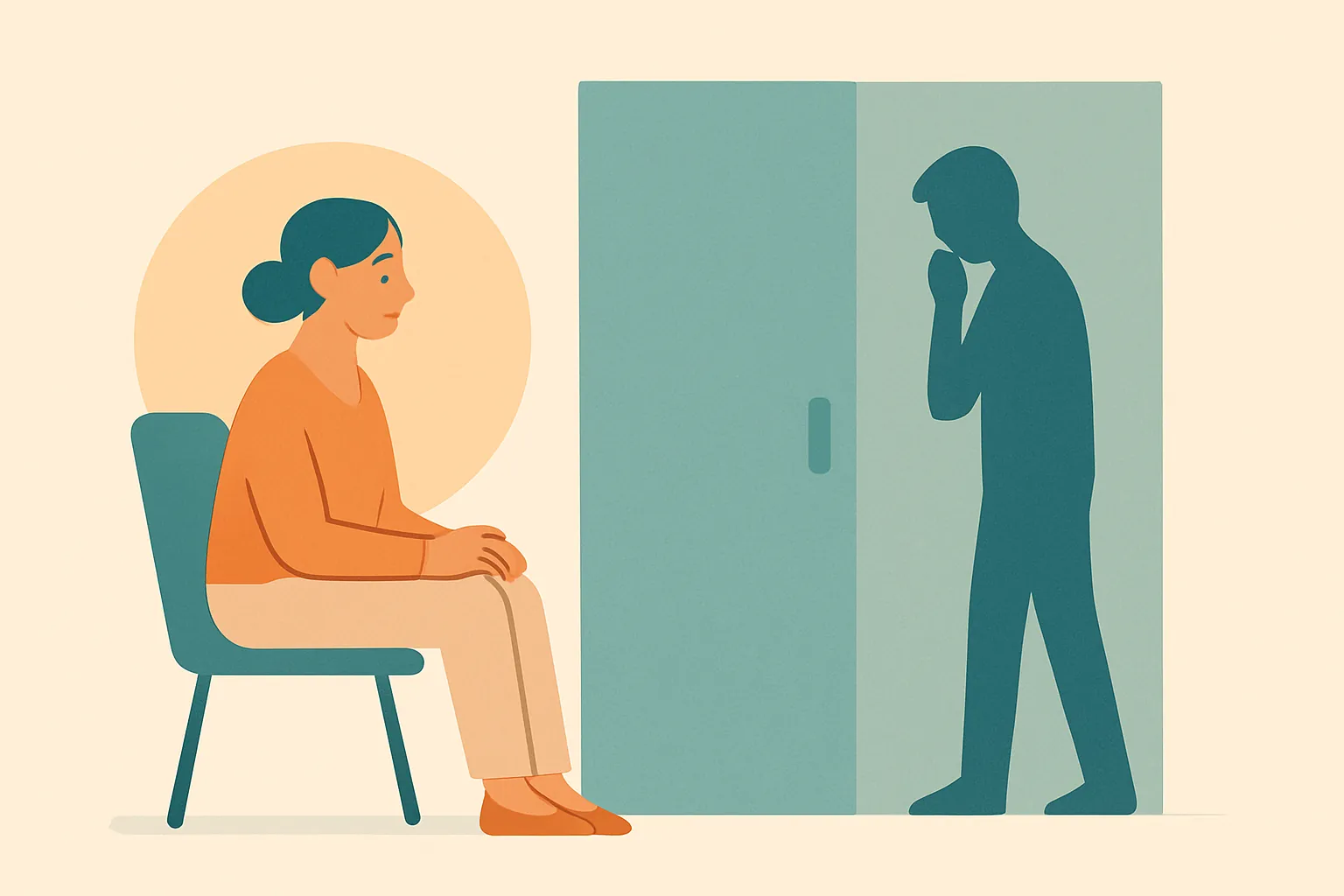
When clients arrive late, cancel without notice, or fall silent, they are rarely just being difficult—they are enacting fears about change and unspoken conflict through behavior. As Freud observed, resistance is not an obstacle to treatment but can become the treatment itself. Clinicians can convert these moments into opportunities to strengthen the working alliance through a three-step approach: validation, immediacy, and interpretation. Spotting the underlying pattern depends on systematically tracking the trajectory of lateness, the context of silences, and nonverbal cues.
Why Do Clients Go Quiet at the Most Important Moment?
The door opens and your client walks in—exactly fifteen minutes late. Last session went somewhere deep, and you'd both agreed that today you would sit with the core feeling underneath it. Instead, your client drops into the chair, slightly out of breath, mutters something about traffic, and falls into a long silence.
If you've been doing this work for any length of time, you know the internal weather that follows. The more invested you are in a client's progress, the easier it is to feel frustrated or quietly helpless in moments of resistance. Did I fail to earn their trust? Was my approach wrong? The self-doubt can arrive fast.
But as Freud recognized over a century ago, resistance is not an obstacle to the work—it can be the work. Lateness, no-shows, and silence are among the most eloquent ways clients communicate the conflicts they cannot yet put into words. They are forms of acting out: the unconscious made visible through behavior. For practicing clinicians, the capacity to work with resistance is not merely a technique for keeping sessions on track—it's a core competency for understanding a client's defenses and guiding them toward deeper insight.
This article looks at three of the most common forms of resistance you'll meet in the room—lateness, absence, and silence—and offers concrete strategies for using each as an opportunity to strengthen the therapeutic alliance.
Decoding the Behavior: What Lateness, Absence, and Silence Mean Clinically
Resistance is rarely a conscious refusal. More often it's an unconscious bid to manage the fear of change and preserve a familiar equilibrium—a kind of psychological homeostasis. Labeling it a "bad attitude" forfeits the clinical opportunity. Our task is to read the dynamics underneath the behavior.
Lateness: The Tug-of-War Between Control and Avoidance
Chronic lateness often expresses ambivalence about the work itself: the part of the client that wants to come, pulling against the part that doesn't. It can also be a passive-aggressive way of holding the reins in the relationship—an unspoken declaration that I will not fully submit to your rules, including your clock. Worth noticing, rather than correcting.
Absence: A Defense Against Being Overwhelmed
A no-show or a same-day cancellation can signal that a painful theme is looming—one the client isn't ready to face. Perhaps the previous session stirred too much shame, or the very experience of becoming dependent on you feels threatening enough to flee. Absence is sometimes the safest available exit.
Silence: The Loudest Form of Resistance
Silence is one of the most anxiety-provoking experiences for a clinician, yet it carries many meanings: it can be attack (refusal), defense (gathering one's thoughts), or simply rest (staying with something). When a client falls silent while waiting for your response, there's a strong chance an old relational pattern with a significant figure is being re-enacted in the room—transference made present.
The table below compares the surface explanation, the deeper clinical meaning, and the countertransference each behavior tends to evoke in us.
| Resistance behavior | Surface reason (client's report) | Clinical / unconscious meaning | Common countertransference |
|---|---|---|---|
| Lateness | Traffic, work ran over, alarm failure | Devaluing the work, rebellion against an authority figure, failure to regulate anxiety | Irritation, feeling dismissed, preoccupation with time management |
| Absence | Sudden schedule change, feeling unwell | Avoiding a core conflict, a wish to punish (self or therapist), an attempt to terminate | Worry, the sting of rejection, realistic anxiety about income |
| Silence | "I have nothing to say," "I don't know" | Expression of aggression, testing the therapist's control, being emotionally flooded | Boredom, a sense of incompetence, pressure to fill the space |
Table 1. Clinical meaning and countertransference by type of resistance behavior.
A Practical Framework: Three Steps for Working With Resistance
When resistance shows up, the task is not to eliminate it but to explore it. Here is a three-step approach you can apply in session.
Step 1: Validation and a Sense of Safety
When a client arrives late or goes quiet, resist the urge to interpret or correct on the spot. First, accept the state they're actually in—the one that made the behavior necessary. This protects the rapport from rupture.
- For lateness: "Sounds like getting here was a real ordeal. You seem a little winded from rushing—want to take a moment to catch your breath before we begin?"
- For silence: "You're not saying anything right now, but I imagine there's a lot moving in that silence—thoughts, feelings. I'm happy to wait until you're ready."
Step 2: Immediacy in the Here and Now
There's also an ethical dimension to working transparently with the relationship itself. When a pattern repeats, name the dynamic unfolding between you—directly, but gently.
- "I've noticed that for the last three sessions we've been starting a little later each time. I find myself wondering whether something about the work, or about me, has felt uncomfortable."
- "When the silence stretches out, I wonder if there's some worry—or maybe some anticipation—about how I'll respond."
Step 3: Analyzing the Function and Interpreting
Once enough trust is in place, link the resistance to the function it serves in the client's wider life. This is where the depth of your case conceptualization comes through.
- "I have a thought I want to offer: maybe arriving late is a way of letting me know you're angry with me—safely. Out in the world, anger may have felt dangerous. I wonder what it could be like to bring it in here."
How Accurate Records Sharpen Clinical Insight
Resistance is not a single event—it's a pattern. And patterns only become visible through precise records.
Does silence surface every time a client speaks about their mother? Do they arrive late in the session that follows any attempt at confrontation? These connections are nearly impossible to track from memory alone. To catch the subtle signals, it helps to record:
- The trajectory of lateness: Is it creeping from five minutes to ten to fifteen?
- The length and context of silences: What topic was on the table in the moments just before the silence fell?
- Nonverbal cues: Shifts in eye contact, gestures, or breathing during the quiet.
In practice, though, observing every nonverbal cue while simultaneously taking complete notes is close to impossible. Lean too far into documentation and you miss the very thing that matters most—the look in the client's eyes. That's the dilemma.
Conclusion: Using Tools So You Can Be Fully Present
A client's resistance is an invitation. When they show you in behavior the pain they cannot say in words, our job is to listen for the voice beneath the action. Doing that well takes both finely tuned sensitivity and objective data you can return to in order to read the pattern.
Increasingly, clinicians are using AI session-notes tools to ease exactly this tension. Used well, the technology offers more than a raw transcript:
- Precise measurement of silence: Marking where and for how long silences occurred, so you can see at a glance which topics tend to trigger resistance.
- Preserving nonverbal context: Capturing shifts in vocal pitch, tremor, and pace—signals that vanish in text-only notes—so the client's emotional state isn't lost.
- Strengthening your presence: By lifting the burden of note-taking, the tool frees you to meet the client's eyes and stay immersed in the here-and-now exchange.
Working with resistance is demanding, but the therapeutic payoff is worth it. The next time a client arrives late or sits in silence, try setting down the pressure to document and simply breathe the air of that silence with them. That moment may be exactly where the healing begins.
A note on safety: if a client's withdrawal or absence ever raises concern about risk to themselves, follow your standard risk-assessment protocol and connect them with your local or national crisis line or emergency services.
References
- 1.
Frequently asked questions
Is client resistance a sign that therapy isn't working?
Not at all. Resistance is often a sign the work is approaching something important. As Freud noted, it can become the treatment itself—an unconscious communication about the fear of change. The clinical task is to explore it with curiosity rather than eliminate it or read it as personal failure.
How should I respond when a client falls silent for a long time?
Start with validation rather than interpretation: acknowledge that the silence likely holds meaning and signal that you can wait. Once trust is established, you can use immediacy to name the dynamic in the room and explore whether the silence reflects a relational pattern being re-enacted with you.
What's the difference between immediacy and interpretation when handling resistance?
Immediacy names what is happening between you and the client in the present moment—gently observing a repeating pattern. Interpretation goes a step further, linking the resistant behavior to its function in the client's broader life and history. Immediacy generally precedes interpretation, which requires a stronger alliance.
Why does tracking resistance over time matter?
Resistance is a pattern, not a one-off event. Memory alone rarely reveals whether lateness is escalating session to session, or whether silences cluster around a specific theme such as a parent. Systematic records of timing, context, and nonverbal cues turn scattered moments into actionable clinical insight.
This article was written and reviewed using Modalia AI's clinical guidelines, with professional human review before publication.
Related articles
 Case Conceptualization
Breaking the "Yes, But" Game: A Transactional Analysis Guide for Therapists
Every suggestion you offer gets met with "Yes, but..." Here's the TA structure behind that stall—and four clinical moves to break it.
7 min read Case Conceptualization
Yalom's The Gift of Therapy: Passages Every New Counselor Should Copy by Hand
Irvin Yalom's prescription for therapists who fear silence: meet your client as a "fellow traveler" and let the here-and-now become the heart of the work.
6 min read Case Conceptualization
Working With Silence in Therapy: What Client Silence Means and How to Hold It
Silence in session isn't empty space. Learn to read its clinical meaning, tell productive from defensive silence, and use it as a therapeutic tool.
6 min read